eng
 English
 русский
 Español
 Français
Home / News / Industry News / Doppler Ultrasonic Flow Meter: Working Principle, Applications & Selection Guide

Industry News
Sep 23,2026
Doppler Ultrasonic Flow Meter: Working Principle, Applications & Selection Guide
In industrial process measurement, few challenges are as common as obtaining reliable flow readings from liquids that are not perfectly clean. Slurries, wastewater, chemical suspensions, and liquids carrying entrained gas or solids can defeat conventional flow technologies. Over the years, we have helped process engineers work through these measurement headaches, and the Doppler ultrasonic flow meter is often the practical answer. In this guide, we explain how this technology works, where it performs best, and what to consider before you select one for your site.
What Is a Doppler Ultrasonic Flow Meter?
A Doppler ultrasonic flow meter is a non-contact or clamp-on flow measurement device that uses high-frequency sound waves to determine the velocity of a liquid moving through a pipe. Unlike transit-time ultrasonic meters, which rely on the difference in travel time between upstream and downstream signals, Doppler meters send a continuous ultrasonic signal into the flow and analyse the frequency shift reflected by moving particles or bubbles in the liquid.
This frequency shift, known as the Doppler effect, is directly proportional to the velocity of the reflecting particles. Because the particles move with the surrounding liquid, their velocity approximates the overall flow velocity. The meter’s electronics convert this into a flow rate, giving you a continuous measurement without breaking into the pipe or stopping the process.
How Does a Doppler Ultrasonic Flow Meter Work?
The transmitter sends a sound wave into the pipe at a known angle. When the wave encounters a suspended particle, gas bubble, or other discontinuity, it bounces back to a receiver. If the reflecting object is moving toward the transmitter, the reflected wave has a higher frequency; if it is moving away, the frequency is lower. The difference between emitted and received frequencies is the Doppler shift.
A simple way to express this is:
df = 2 * f0 * v * cos(theta) / c
where df is the Doppler shift, f0 is the transmitted frequency, v is the flow velocity, theta is the angle between the ultrasonic beam and the pipe axis, and c is the speed of sound in the liquid.
Because the speed of sound in the liquid must be known or compensated for, many modern Doppler meters include temperature input or automatic sound-speed correction. This is one reason why temperature monitoring is often integrated into flow measurement systems, an area we have worked with extensively in process instrumentation.
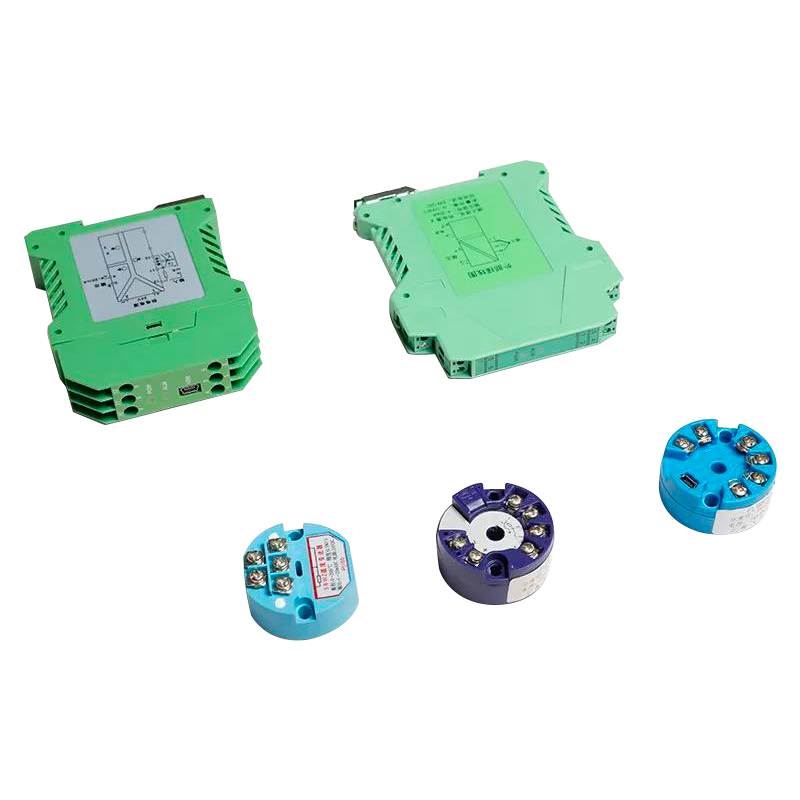 Integrated Temperature Transmitter with 4-20mA OutputThis two-wire temperature transmitter provides linear 4-20mA output with accuracy within 0.5% FS for thermocouples and 0.2% FS for RTDs. It complements Doppler flow meters by supporting temperature compensation in process lines.View Product →
Advantages and Limitations
Choosing the right flow meter means balancing capabilities and constraints. The table below summarises the main strengths and limitations of Doppler ultrasonic flow meters in everyday industrial conditions.
| Advantages | Limitations |
|---|---|
| Non-invasive clamp-on design reduces installation cost and downtime | Requires suspended solids, bubbles, or particles in the liquid |
| No moving parts, so lower maintenance | Accuracy depends on flow profile and particle distribution |
| Can handle corrosive and abrasive liquids | Not suitable for very clean liquids or pure gases |
| Portable models allow spot checks on existing pipes | External pipe coatings and lined pipes can weaken the signal |
| Cost-effective for large-diameter pipes | Requires a sufficiently long straight run for best accuracy |
Typical Applications in Industrial Processes
Doppler ultrasonic flow meters have earned a reputation in industries where liquids are anything but clean. From our experience supporting industrial customers, the most common applications include:
- Wastewater and sludge flow measurement in treatment plants
- Slurry and tailings lines in mining and mineral processing
- Chemical and petrochemical processes with suspended catalysts or polymers
- Food and beverage lines carrying fruit pulp, mash, or viscous products
- Pulp and paper stock lines
- Cooling water circuits with sand, rust, or algae
In the petrochemical sector, reliable flow data under changing process conditions is essential for safety and efficiency. We have supplied temperature and pressure instrumentation to many petrochemical plants, and flow measurement is almost always part of the same instrument loop. Understanding how these technologies complement one another helps plant engineers build a resilient measurement system.
Key Selection Factors for a Doppler Flow Meter
Before specifying a Doppler ultrasonic flow meter, it pays to carefully review the process conditions. Here are the factors we usually discuss with customers during selection.
Liquid Characteristics
The minimum level of reflectors is often stated as a concentration of 100 mg/L for particles and even less for bubbles of sufficient size. If your liquid is clean, a Doppler meter will not give you reliable data. Check whether the particle size and concentration remain within the manufacturer’s specifications throughout normal operation.
Pipe and Installation Conditions
Pipe diameter, wall thickness, lining material, and temperature all affect signal coupling. Clamp-on transducers work best on steel, plastic, and most metallic pipes, but thick linings, external scale, or air gaps between transducer and pipe will weaken the signal. The recommended straight pipe length upstream and downstream of the sensor—usually at least 10 diameters upstream and 5 downstream—should be respected to maintain a stable flow profile.
Process Temperature and Pressure
Doppler ultrasonic meters themselves have limits on ambient and process temperature. The transducer material and mounting method must tolerate the pipe surface temperature. For high-temperature lines, you may need special mounting accessories or a different meter technology. At the same time, the pressure rating of the pipe is not compromised because the meter is clamp-on, but pressure can influence the speed of sound and bubble behaviour, so it should be considered during configuration.
 Pressure Transmitter for Industrial Process ControlThis pressure transmitter converts pressure readings into proportional 4-20mA or voltage signals for automation systems. Its compatibility with various outputs helps ensure integration with existing control loops alongside flow measurement.View Product →
Signal and Data Integration
Check whether the meter outputs 4–20 mA, pulse, or digital communication such as Modbus. This must match your existing control system. Some devices also offer data logging, which is useful for trending and diagnostics.
If you are not sure which model fits your application, our engineering team can review your process data and recommend a suitable arrangement. You can contact our team with your pipe details and liquid characteristics.
Installation and Maintenance Tips
Even a well-selected Doppler meter can fail if the installation is poor. Based on field experience, a few practical points are worth repeating:
- Clean the pipe surface thoroughly before attaching the transducer. Old paint, rust, or dirt can scatter the ultrasonic signal.
- Apply a thin layer of acoustic coupling gel between the transducer and the pipe. This removes the air gap that would otherwise block transmission.
- Mount the transducer on the side or slightly lower side of a horizontal pipe to avoid signal interruption by air pockets at the top.
- Verify that the pipe is full. Empty or partially filled pipes produce unstable readings.
- Recalibrate the zero-flow offset if the meter is moved to a different pipe size or liquid.
Because clamp-on transducers have no contact with the process liquid, maintenance is usually minimal. Periodic checks of the coupling compound and transducer cables are enough for most installations.
Building a Complete Process Measurement System
In our years of supplying industrial instrumentation, we have learned that flow meters work best when they are integrated with other process measurements. Temperature compensation, pressure monitoring, and level control are frequently part of the same automation loop. As a manufacturer of temperature and pressure instrumentation, Jiangsu Zhaolong Electrics Co., Ltd. offers a range of products that complement your flow measurement installation. For instance, when you install a Doppler flow meter on a slurry line, you often need to monitor the tank level feeding that line. Our level gauge products provide straightforward options for such duties.
Level Gauge for Tank and Slurry MonitoringThis level gauge offers straightforward monitoring options for tanks feeding slurry lines. It pairs well with Doppler flow meters to provide complete process visibility, enhancing automation and control in industrial settings.View Product →Doppler ultrasonic flow meters are a practical choice for liquids that are difficult to handle with other technologies. They offer true non-invasive measurement, low maintenance, and strong performance in slurries, wastewater, and chemical streams. But like any flow instrument, they must be chosen and installed with care. If you are evaluating a flow measurement solution and need support from engineers who understand process instrumentation as a whole, reach out to us. We are happy to share our experience and help you find the right combination of instruments for your process.
Recommended Products

PRODUCT
CONTACT INFO.
-
 +86-181 1593 0076 (Amy)
-
 +86 (0)523-8376 1478
-
 [email protected]
-
 No. 80, Chang'an Road, Dainan Town, Xinghua City, Jiangsu, China
QR CODE