 eng
 English
 русский
 Español
 Français
As China Thermocouple sleeves Manufacturers and Thermocouple sleeves Suppliers, Jiangsu Zhaolong Electrics Co., Ltd. is a regional high-tech enterprise and a production base of temperature sensors and temperature control instruments. We have jointly developed and produced a series of thermocouples (thermal resistances) and temperature control electronics with numerous R&D institutions and academies in Shanghai. These products are salable throughout the country and the world, offering an advantage in cost performance. Our products have a renowned reputation in the market and win customers' trust due to their excellent performance, attractive appearance, high reliability, advanced technology, and good cost performance.
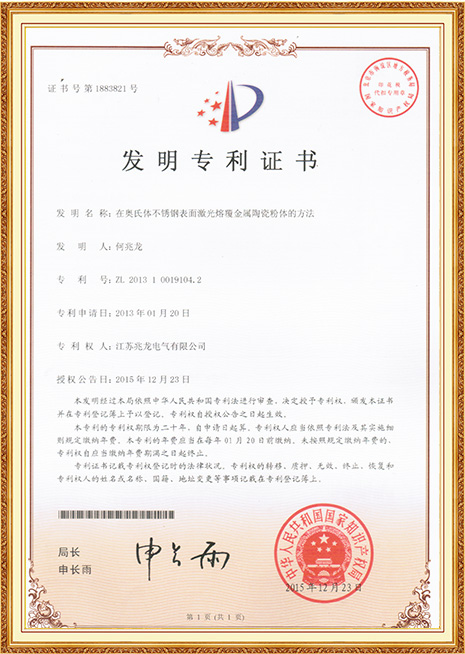
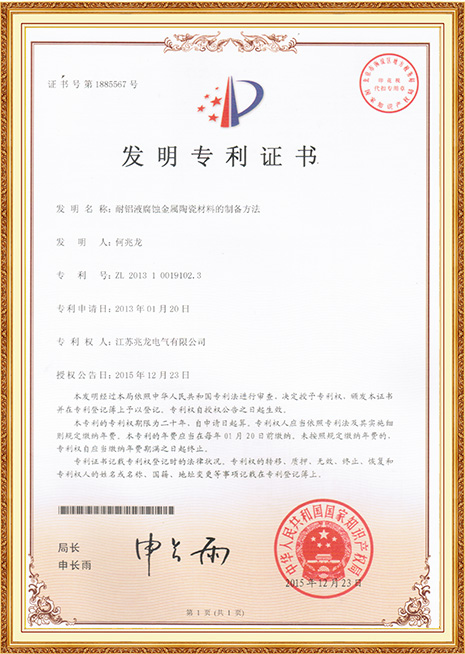
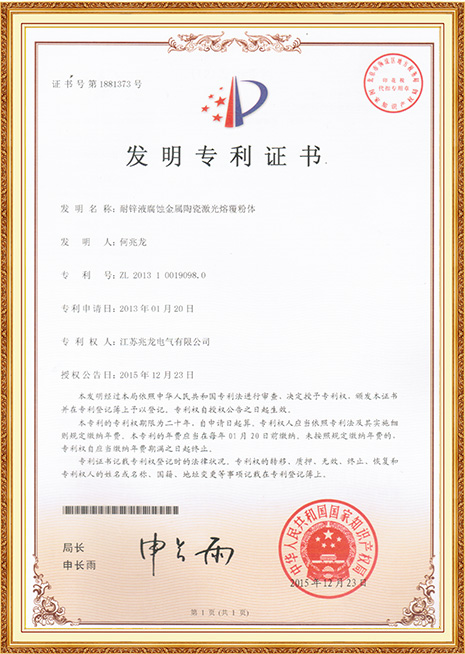
With strong technical development team and patent results, we can undertake business for normal and special specifications, and can design & install various large-scale and small-scale automatic temperature control boxes and temperature control rooms and remote monitoring temperature control systems for customers.
Thermocouple sleeves Suppliers
information to be updated
-
If you have ever compared two thermocouples on the same pipe and watched them disagree by a few degrees, the sensor tip probably was not the problem. More often, the answer sits at the other end of the loop, in the terminal block where the thermocouple wires meet the instrument. That connection point is the cold junct...
READ MORE -
If you have ever aimed an infrared thermometer at a stainless steel surface and received an unexpectedly low reading, emissivity is almost certainly the reason. Stainless steel is one of the most common materials in industrial plants, yet its emissivity ranges widely depending on how the surface is finished, how hot i...
READ MORE -
Resistance temperature detectors, or RTDs, are among the most reliable temperature sensors used in industrial automation. As a manufacturer that has designed and built temperature sensors and temperature control instruments for years, we often hear the same question from process engineers and maintenance teams: how do...
READ MORE
As a Thermocouple sleeves manufacturer and OEM/ODM supplier, Jiangsu Zhaolong Electrics Co., Ltd. supplies protective tubes—also called thermowells—that isolate thermocouples and resistance temperature detectors from high temperature, pressure, vibration and corrosive media. We produce standard and special specifications from our 33,300 m² production base in Jiangsu, China, and support each sleeve with machining, testing and application expertise developed across 20 years of temperature sensor manufacturing.
A thermocouple sleeve is a mechanical component, but it directly influences measurement reliability, sensor service life and plant uptime. We therefore treat it as an engineered part of the temperature loop, matched to the sensor element, process connection, material compatibility and installation geometry.
A Focused Product Family Within Thermocouple Accessories
Our Thermocouple Accessories program includes the protective sleeve as a core element. Rather than presenting a fixed list of catalogue items, we engineer the sleeve around the sensor type, the process nozzle, and the way the measurement point will be maintained.
We also manufacture the complete sensor side of the loop, so sleeves can be supplied with our assembled thermocouple range, with bore diameter and insertion length matched to the sheath diameter and thermal response target. For retrofit projects, we work from the existing drawing or a sample and confirm the interface dimensions before production.
Where Thermocouple Sleeves Earn Their Value
In continuous processes, a failed sensor can force an unscheduled shutdown if the measuring point must be opened. A closed-end sleeve keeps the process sealed while the element is withdrawn, cleaned or replaced. That is why the sleeve selection has as much operational impact as the sensor accuracy class.
- Chemical production: reaction vessels, storage tanks and pipelines where media can be corrosive or toxic.
- Petroleum and petrochemical: refineries, distillation columns and process units where reliable readings protect both quality and safety.
- Natural gas: pipelines, compressors and storage facilities exposed to high flow velocity and vibration.
- Power and cement: high-temperature, abrasive environments where long service life is part of the measurement specification.
- Daily chemical production: detergent, soap and cosmetics manufacturing where process stability determines batch consistency.
Material Selection and Critical Specifications
Our standard manufacturing route for thermocouple sleeves is stainless steel or alloy material, selected according to process temperature, corrosivity, pressure and allowable stress. The choice is not just about maximum temperature—media compatibility, chloride exposure and cleaning media can be equally demanding.
| Application area | Typical conditions | Selection emphasis |
|---|---|---|
| Chemical process | Corrosive liquids, moderate pressure | Stainless steel with closed end and threaded or flanged connection; selected for media compatibility and easy removal. |
| Petroleum / petrochemical | Hydrocarbons, elevated temperature, thermal cycling | High-temperature alloy construction, straight or tapered profile, flanged or welded connection for pressure integrity. |
| Natural gas | High flow velocity, vibration, alternating loads | Tapered or stepped tip to reduce stress and vibration; robust wall thickness and leak-tight connection. |
| Power / cement | High temperature, abrasive particles, long campaigns | Heavy-wall alloy design with sufficient immersion; matched to long-life thermocouple constructions. |
| Daily chemical | Cleaning cycles, lower pressures, product quality | Stainless steel with smooth surface, compact mounting and quick access for sensor exchange. |
Bore diameter and wall thickness are selected together with the sensing element diameter. A smaller bore improves response time and reduces dead air space, while a thicker wall adds service life. We balance the two on the basis of the operating temperature, process pressure and expected maintenance interval.
Accuracy, Response and Process Fit
Immersion length is the most common cause of measurement error after connection issues. Too short an immersion creates stem conduction losses; too long a sleeve creates mechanical stress in high-flow lines. For fast response, tapered profiles are often used because they combine low wake vibration with a smaller thermal mass at the tip.
We specify the insertion length from the inside wall of the nozzle, the position of the sensing element within the thermowell, and the required accuracy at the working point. Factory calibration of the complete assembly is part of our testing process.
Configuration Options and Integration
- Process connection: threaded, flanged, welded or sanitary mounting to match the vessel nozzle or piping tee.
- Sleeve profile: straight, tapered, stepped or heavy-wall design based on pressure, flow and required response.
- Sensor interface: bore diameter, spring-loaded mounting or compression fitting arranged for the thermocouple or RTD sheath.
- Head and wiring: the measuring point can be completed with matching thermocouple connectors or thermocouple heads when factory assembly is required.
For projects beyond the sleeve itself, we can design and install automatic temperature control boxes, temperature control rooms and remote monitoring temperature control systems. That allows us to take responsibility for the loop from the sensing point to the control panel.
Factory Manufacturing, Testing and Quality Approach
Zhaolong Electrics is a factory in the full sense: production, testing and trading are integrated at one site. We implement quality supervision through the entire process, from cutting and welding to assembly and calibration. Our testing laboratory includes low-temperature test tanks, high-temperature test furnaces, oil tank test furnaces and base metal test furnaces.
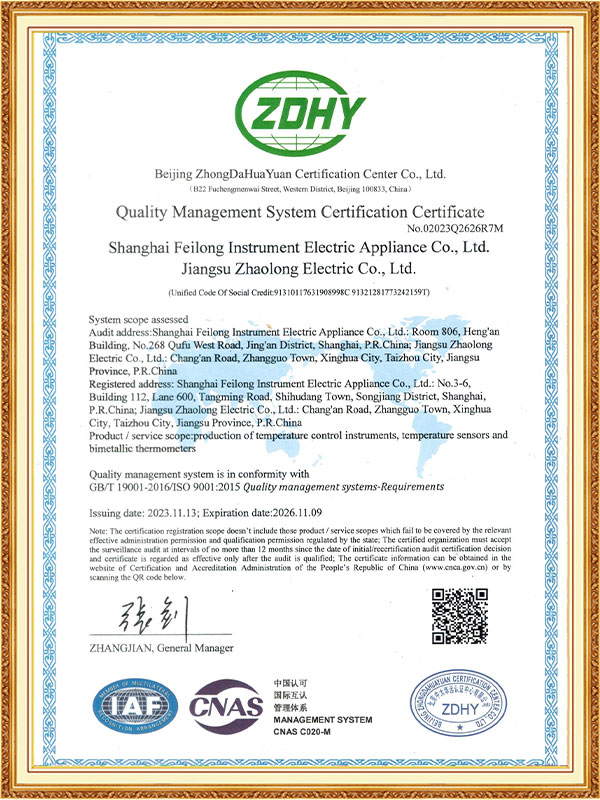
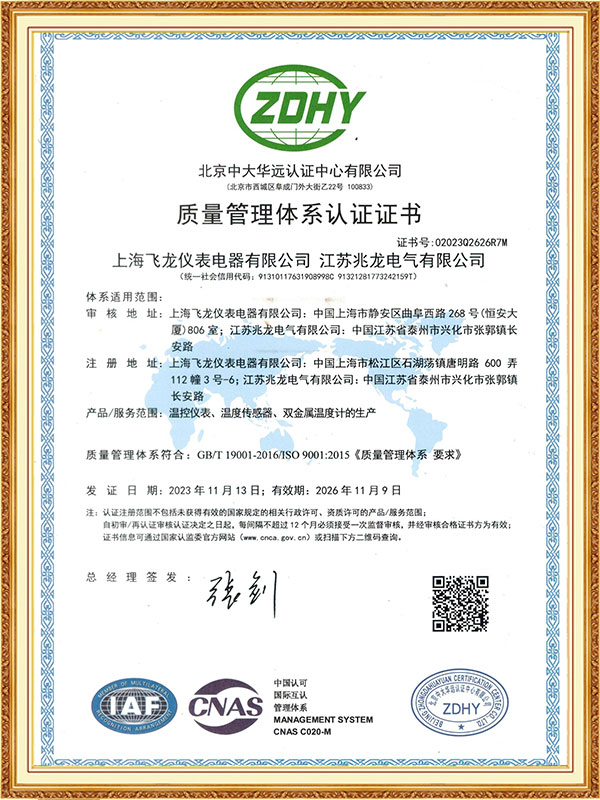
- ISO9001 quality system certification, issued under GB/T 19001-2016/ISO9001:2015.
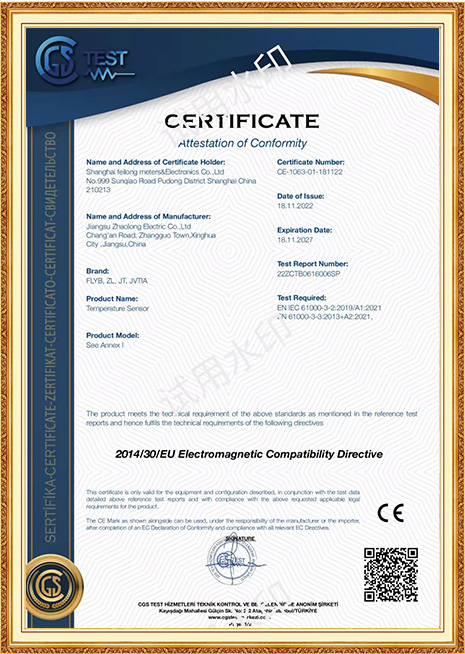
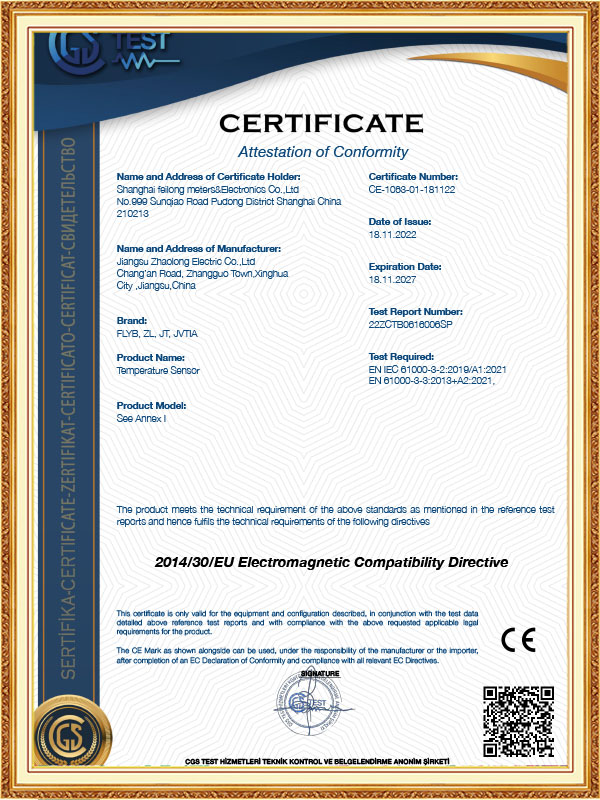
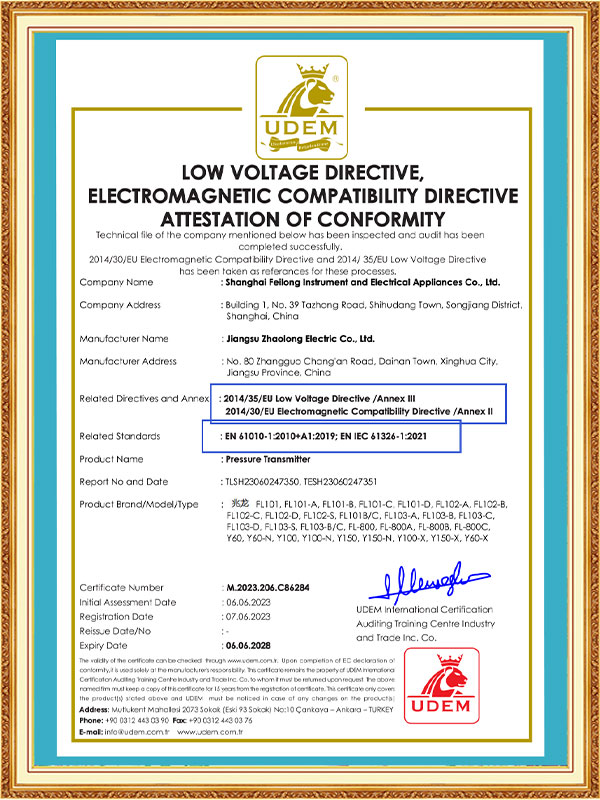
- CE certification and ISO14001 environmental management certification.
- National explosion-proof production qualification for explosion-proof thermocouples and resistance temperature detectors.
- Factory calibration from -200 °C to +2000 °C with calibration resolution up to 0.01 °C.
Engineering Support, Customization and Service
Customized production is central to our work. We develop normal and special specifications from drawings or samples, and we have developed special thermocouples for molten steel, aluminum, copper and zinc as well as salt furnace conditions. The same engineering approach applies to the sleeves that protect those sensors.
Products carry a 12-month warranty, we provide calibration service for sensors and related equipment, and we maintain spare parts supply to reduce downtime. OEM and ODM projects are supported from specification review through serial delivery.
Information we use to configure your solution
- Process medium, concentration and any corrosive components.
- Operating temperature, design temperature and maximum pressure.
- Flow velocity, vibration or cyclic thermal loading.
- Nozzle or installation detail: insertion length, process connection type and size.
- Sensor type and sheath diameter of the thermocouple or RTD.
- Required response time, maintenance interval and target service life.
- Mounting environment: hazardous area classification, insulation, enclosure.
- Quantity, packaging preference and delivery destination.
Frequently asked questions
What is the difference between a thermocouple sleeve and a thermowell?
In practical use, they are the same product type. We use the term thermocouple sleeve to describe a closed-end protective tube installed in a process line or vessel that accepts a temperature sensor. Some clients call it a thermowell or protective tube; the engineering requirement is identical.
Can you supply the sleeve together with a complete thermocouple assembly?
Yes. Because we manufacture assembled thermocouples and RTDs, we can supply the sleeve, sensor, connection head and transmitter as a complete measuring point. Bore diameter, insertion length and mounting thread are machined to match.
What information do you need to produce a custom thermocouple sleeve?
Send the working temperature, process pressure, media, nozzle size and insertion length. If you have an existing drawing or sample, that speeds up the process and reduces interface risk. We confirm the material and profile before production.
Which materials do you use for chemical and high-temperature processes?
Our sleeves are manufactured from stainless steel or alloy material depending on the application. The correct grade is selected from the process chemistry, temperature and mechanical stress rather than from a standard catalogue.
Do you support OEM and ODM projects for distributors and plant projects?
Yes. Custom specifications are our core business. We work from drawings or samples, support special sizes and materials, and can design and install automatic temperature control systems when the project extends beyond the sleeve itself.
How are thermocouple sleeves packaged and delivered?
We arrange sea freight by default because our plant is close to the port, and air freight is available for urgent orders. Trade terms, packing and delivery schedule are confirmed in the quotation along with the technical documentation.

-
 +86-181 1593 0076 (Amy)
-
 +86 (0)523-8376 1478
-
 [email protected]
-
 No. 80, Chang'an Road, Dainan Town, Xinghua City, Jiangsu, China

Copyright © 2025. Jiangsu Zhaolong Electrics Co., Ltd.
 OEM/ODM Thermocouple sleeves Suppliers
