eng
 English
 русский
 Español
 Français
As China High temperature wire Manufacturers and High temperature wire Factory, Jiangsu Zhaolong Electrics Co., Ltd. is a regional high-tech enterprise and a production base of temperature sensors and temperature control instruments. We have jointly developed and produced a series of thermocouples (thermal resistances) and temperature control electronics with numerous R&D institutions and academies in Shanghai. These products are salable throughout the country and the world, offering an advantage in cost performance. Our products have a renowned reputation in the market and win customers' trust due to their excellent performance, attractive appearance, high reliability, advanced technology, and good cost performance.
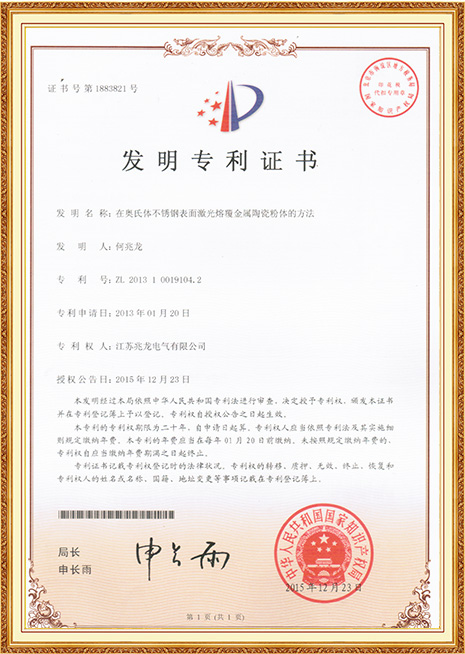
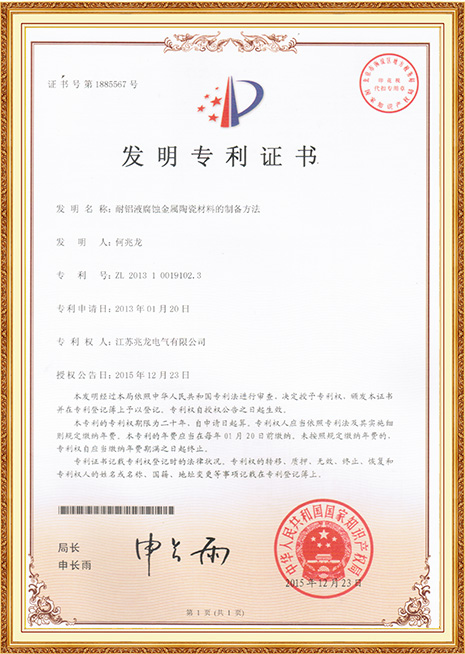
With strong technical development team and patent results, we can undertake business for normal and special specifications, and can design & install various large-scale and small-scale automatic temperature control boxes and temperature control rooms and remote monitoring temperature control systems for customers.
High temperature wire Manufacturers
information to be updated
-
If you have ever compared two thermocouples on the same pipe and watched them disagree by a few degrees, the sensor tip probably was not the problem. More often, the answer sits at the other end of the loop, in the term...
READ MORE -
If you have ever aimed an infrared thermometer at a stainless steel surface and received an unexpectedly low reading, emissivity is almost certainly the reason. Stainless steel is one of the most common materials in ind...
READ MORE -
Resistance temperature detectors, or RTDs, are among the most reliable temperature sensors used in industrial automation. As a manufacturer that has designed and built temperature sensors and temperature control instrum...
READ MORE -
In industrial process measurement, few challenges are as common as obtaining reliable flow readings from liquids that are not perfectly clean. Slurries, wastewater, chemical suspensions, and liquids carrying entrained g...
READ MORE
Jiangsu Zhaolong Electrics Co., Ltd. is a China high temperature wire manufacturer with a production base dedicated to temperature sensors and temperature control instruments. Our High temperature wire is engineered for continuous, accurate transmission of thermocouple and RTD signals in furnace, kiln, power generation, and chemical processing environments. Because we also make the sensor and the control instruments around the wire, every cable configuration is treated as part of the complete measurement chain.
High Temperature Wire Range and Construction
The range covers conductor and insulation constructions for thermocouple extension, sensor lead-in, and connection to transmitters and control panels. Selection starts with the thermocouple type and the temperature profile along the route. We supply single-pair and multi-core configurations, color-coded insulation, and can customize length, termination, shielding, and protective covering. Orders can be cut to length for a single repair or spooled for a complete furnace, kiln, or power plant project. We undertake normal and special specification work from our China factory.
- Conductor alloys are selected for stable thermoelectric output at high temperature, preventing an unwanted secondary junction between the sensing point and the instrument.
- Insulation systems are chosen for heat, chemical exposure, mechanical wear, and moisture resistance in industrial environments.
- Color-coded construction simplifies field wiring and maintenance, reducing the chance of reversed or wrong connections.
- Reinforced mechanical design protects against bending, twisting, vibration, and accidental contact during installation and operation.
Application Fit by Industry
High temperature wire is used wherever the measurement point, cable route, or terminal zone is too hot for standard PVC or PE insulated cable. The table below maps the wire role to typical process environments.
| Industry | Typical Environment | Wire Role |
|---|---|---|
| Furnaces and kilns | Burner blocks, furnace walls, kiln shells | Connects thermocouples to junction boxes while exposed to radiant and ambient heat. |
| Power generation | Boilers, turbines, flue gas ducts | Maintains stable signal transmission over long runs in high ambient temperatures. |
| Chemical processing | Reactors, heaters, transfer lines | Resists chemicals and heat while preserving low-level mV signals. |
| Cement and building materials | Kiln shells, preheaters, clinker coolers | Supports high-precision, long-life thermocouple systems in abrasive environments. |
| Metallurgy | Molten metal, salt furnaces, heat treatment | Matches special thermocouples developed for molten steel, copper, aluminum, and zinc. |
Critical Specifications for Cable Selection
We confirm the following parameters before preparing a proposal:
- Sensor type and calibration: K, N, S, R, B, tungsten-rhenium, or RTD. The conductor alloy must match the thermocouple type so the millivolt signal is not distorted.
- Temperature rating: Continuous and peak ambient temperature along the route, not only the process temperature at the sensor.
- Conductor construction: Number of cores, pair configuration, conductor cross-section, and whether a shield or armor layer is needed.
- Termination: Bare leads, lugs, thermocouple connector, terminal block, or direct connection to a transmitter input.
- Environmental factors: Moisture, chemicals, vibration, mechanical impact, and hazardous area classification.
The wire itself does not determine the accuracy class of the loop, but incorrect alloy, low insulation resistance, or poor termination can create drift and intermittent readings. By matching the conductor to the sensor calibration and specifying insulation for the full temperature profile, we help maintain the accuracy of the assembled thermocouple system.
Sensor-to-Control Integration
High temperature wire is one link in a loop that starts at the assembled thermocouple and ends at a temperature transmitter, controller, or DCS input. We match the wire to the sensor type and the input device so the complete chain is electrically consistent. For long routes through normal plant temperature areas, thermocouple compensation wire may be the correct choice, while high temperature wire is used closer to the process or where ambient heat is high.
Beyond cable supply, we design and install automatic temperature control boxes, temperature control rooms, and remote monitoring temperature control systems. This allows us to coordinate the Temperature sensor, wiring, transmitter, and controller as one project package.
Quality Assurance, Calibration and Acceptance
Production follows a supervised process from conductor cleaning and insulation to final inspection and packaging. Our laboratory is equipped with precious-metal high-temperature test furnaces, low-temperature test tanks, and oil tank test furnaces. Calibration for thermocouples and RTDs covers -200 °C to +2000 °C with resolution up to 0.01 °C and temperature difference control within ±0.1 °C.
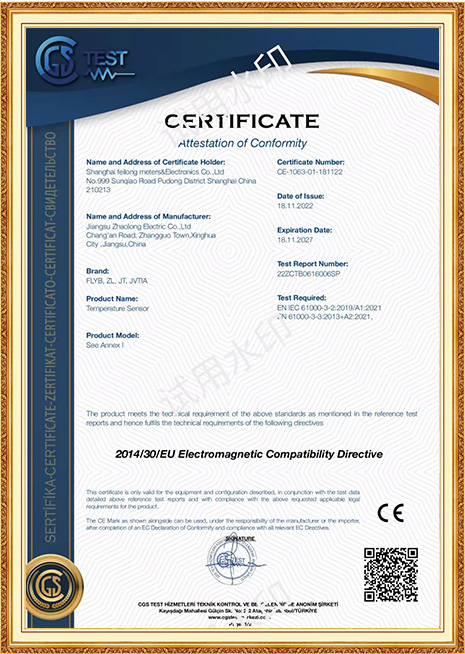
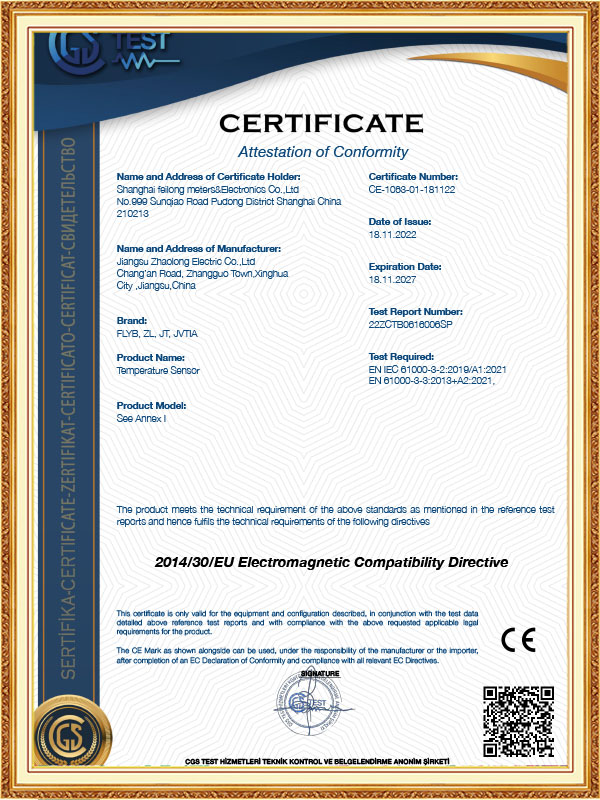
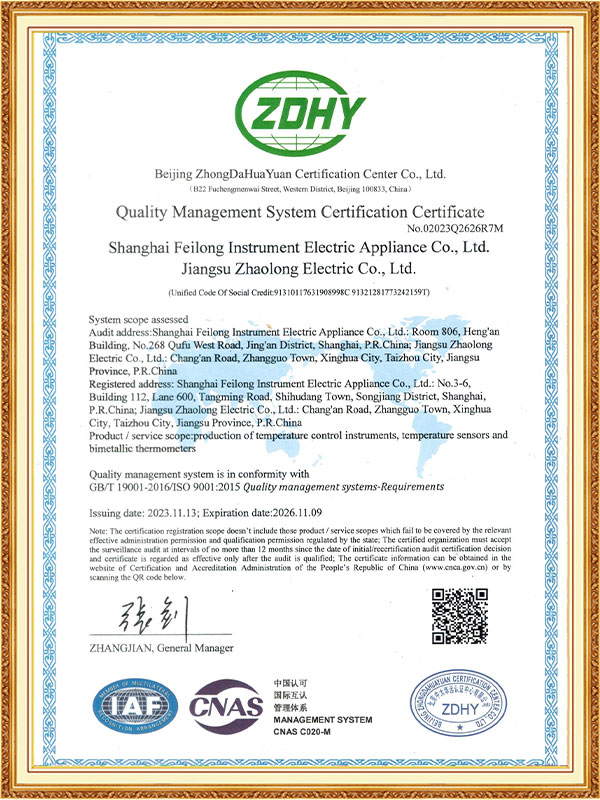
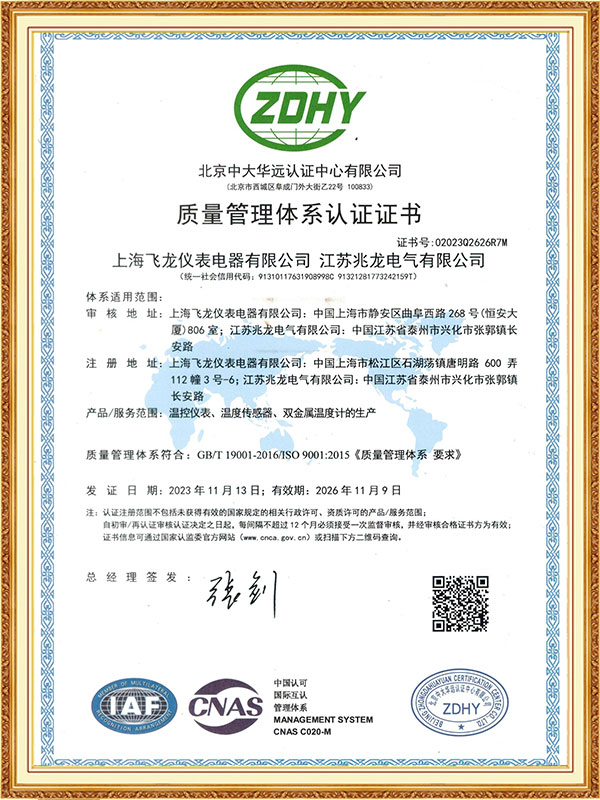
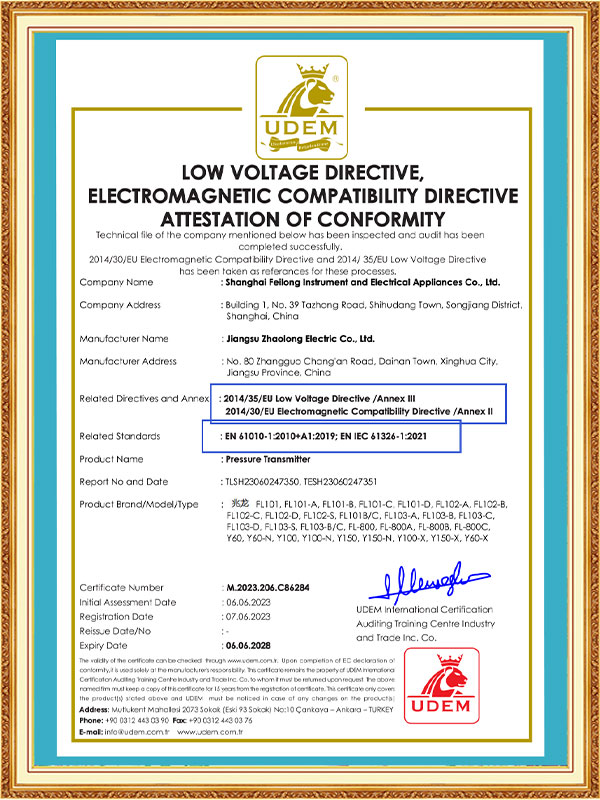
Our quality system is certified to GB/T 19001-2016/ISO9001:2015, relevant products carry CE certification, and explosion-proof thermocouples and RTD assemblies hold national explosion-proof production qualification certificates. Products are covered by a 12-month warranty against non-human damage, and spare wire and replacement parts are available to reduce downtime.
Installation, Maintenance and Serviceability
Installation starts with confirming that the insulation class matches the highest expected ambient temperature, not just the process setpoint. We recommend protecting the wire from direct flame impingement, using heat shields or ceramic sleeves at wall penetrations, and allowing extra length near the sensor for re-termination. In hazardous areas, cable entry and conductor separation must preserve the protection concept of the enclosure.
Periodic inspection should check insulation condition, moisture ingress, and tightness of connections. Because the wire is color-coded, field troubleshooting is faster and safer. Replacement lengths can be prepared from the same specification used for the original order. For multi-point projects, each cable can be labeled with loop number and sensor type to simplify commissioning and future maintenance.
Information We Use to Configure Your Solution
To prepare a configuration and quotation, we use:
- Thermocouple or RTD type and calibration, including K, N, S, R, B, WRe, or Pt100.
- Continuous and peak temperature at the sensor and along the cable route.
- Environmental conditions: moisture, chemicals, vibration, mechanical impact, hazardous area classification.
- Number of measurement points, cores per cable, conductor cross-section, shielding, and armor requirements.
- Termination style and required length, including spool or cut-length packaging.
- Control system interface: transmitter, PLC/DCS analog input, or temperature controller.
- Quantity, delivery terms, and any project-specific documentation or inspection requirement.
High Temperature Wire FAQs
What is the difference between high temperature wire and thermocouple compensation wire?
High temperature wire is selected where the ambient or process heat is too high for standard cable. Thermocouple compensation wire is used in the cooler part of the same loop and is matched to the thermocouple type so the signal reaching the instrument remains correct. We define the transition point when we know the route and the expected temperatures.
Can I order high temperature wire in custom lengths and terminations?
Yes. Custom production is our core business. Provide the required length, number of cores, termination style, and packaging, and we will include the complete configuration in the proposal.
Should high temperature wire be shielded or armored?
Shielding is used where electrical noise from power cables or variable-frequency drives can couple into low-level thermocouple signals. Armor is used where the route is exposed to mechanical impact or high abrasion. Our proposal includes both when the operating environment requires them.
Can high temperature wire be used with explosion-proof thermocouples?
Yes. The wire is selected according to the hazardous area classification and the cable entry system of the explosion-proof enclosure. We confirm the protection concept and termination details before production.
What testing and documentation are provided before shipment?
Products are inspected before leaving the factory. We provide the packing list, inspection report, and calibration certificate when required. The 12-month warranty covers non-human damage during normal use.

-
 +86-181 1593 0076 (Amy)
-
 +86 (0)523-8376 1478
-
 [email protected]
-
 No. 80, Chang'an Road, Dainan Town, Xinghua City, Jiangsu, China