eng
 English
 русский
 Español
 Français
Home / News / Industry News / Understanding Stainless Steel Emissivity: Values, Key Factors, and Measurement Guide

Industry News
Oct 07,2026
Understanding Stainless Steel Emissivity: Values, Key Factors, and Measurement Guide
If you have ever aimed an infrared thermometer at a stainless steel surface and received an unexpectedly low reading, emissivity is almost certainly the reason. Stainless steel is one of the most common materials in industrial plants, yet its emissivity ranges widely depending on how the surface is finished, how hot it is, and how much oxidation has formed. Understanding the emissivity of stainless steel is therefore essential for anyone who relies on non-contact temperature measurement — and it also explains why contact temperature sensors remain so popular in demanding applications.
What Is Emissivity?
Emissivity is the ability of a surface to emit thermal radiation relative to a perfect black body, which has an emissivity of 1.0. A material with an emissivity of 0.10 emits only 10 percent of the radiation that a black body at the same temperature would emit. Most polished metals have low emissivity values because they reflect more radiation than they emit. That is why a shiny stainless steel pipe can appear much cooler to an infrared sensor than it actually is.
For infrared thermometers and thermal cameras, emissivity is the main correction factor. The instrument measures the radiation coming from a target and then converts it into a temperature reading. If the emissivity setting does not match the real emissivity of the target, the displayed temperature will be wrong. This is particularly critical with stainless steel because its emissivity not only is low in many conditions but also changes as the material age.
Emissivity Values for Stainless Steel: A Quick Reference
Engineers and technicians often need a starting value when configuring an infrared thermometer. The table below summarizes typical total hemispherical emissivity values for stainless steel surfaces. Use them as an initial estimate and adjust based on the specific alloy, temperature, and surface condition of your equipment.
| Surface Condition | Typical Emissivity | Practical Notes |
|---|---|---|
| Polished or mirror finish | 0.07 – 0.15 | Strongly reflective; low emission; sensitive to viewing angle |
| Brushed or sanded finish | 0.20 – 0.40 | Surface roughness increases emissivity |
| Weathered or mildly oxidized | 0.40 – 0.70 | Thin oxide film changes radiation properties |
| Heavily oxidized or annealed | 0.70 – 0.85 | High emission; closer to black body behavior |
| Type 301 / standard austenitic alloys | 0.50 – 0.63 | Range covers common alloys at moderate temperatures |
Notice the enormous spread. A polished stainless steel vessel at 300 °C could have an emissivity near 0.1, while a heavily oxidized section of the same vessel might be above 0.8. If an infrared thermometer is set to 0.95, the reading on the polished section will be far too low, and the reading on the oxidized section will be only slightly off. This is why simply taking a single emissivity value from a handbook and forgetting about it is risky.
Factors That Affect the Emissivity of Stainless Steel
Stainless steel emissivity is not a constant. Several variables influence it, and a deeper understanding helps you choose the right measurement strategy.
Surface Finish
Rough surfaces emit more efficiently than smooth surfaces because the repeated geometry gives thermal radiation more opportunities to escape. Polished stainless steel with its mirror-like finish is a poor emitter. Sandblasting, brushing, or chemical etching raises the emissivity significantly. In practice, the material specification and cleaning method can change the reading by a factor of four or more.
Temperature
Emissivity generally increases with temperature for metals, especially when surface conditions change. For stainless steel, the relationship is not linear. Research studies on stainless steel have reported that emissivity can increase by 0.03 at around 395 °C after hours of exposure, and the trend continues as the temperature rises. For high-temperature processes, it is best to use values measured at temperatures close to your process.
Wavelength
All materials emit radiation across a spectrum, but stainless steel does not emit equally at every wavelength. A spectral emissivity value measured at 8 μm may differ from the total emissivity used in a heat-transfer calculation. Infrared thermometers often operate in specific spectral bands, so the emissivity value you enter should ideally correspond to the detector’s wavelength band. Short-wavelength instruments are generally less sensitive to emissivity variation than long-wavelength ones.
Oxidation and Contamination
Oxidation is probably the most practical issue for plant operators. When stainless steel is heated in air, a thin chromium oxide layer forms. This oxide layer has a much higher emissivity than the bare metal. What starts as a bright, low-emissivity surface can become a dark, high-emissivity surface after only a few hours at elevated temperature. Oils, scale, deposits, and even fingerprints temporarily change emissivity as well. Because surface condition changes with time, the emissivity correction that worked last month may not be reliable today.
Why Emissivity Matters in Temperature Measurement
In any infrared measurement, the radiometer’s built-in emissivity setting is a guess unless you have measured the target’s true emissivity. Suppose you point a device set to 0.95 at a stainless steel surface with an actual emissivity of 0.20. The surface is radiating much less energy than the instrument expects, so the displayed temperature will be dramatically lower than the real temperature. The error can exceed 100 °C at elevated temperatures, creating false safety margins, bad process decisions, and energy waste.
This is why so many plants pair non-contact thermometers with reliable contact temperature sensors. A thermocouple or resistance temperature detector measures the temperature directly through conductive contact, without relying on emissivity at all. When you need a trustworthy reading on a stainless steel surface — especially for calibration, quality control, or process control — a contact sensor is often the more dependable choice.
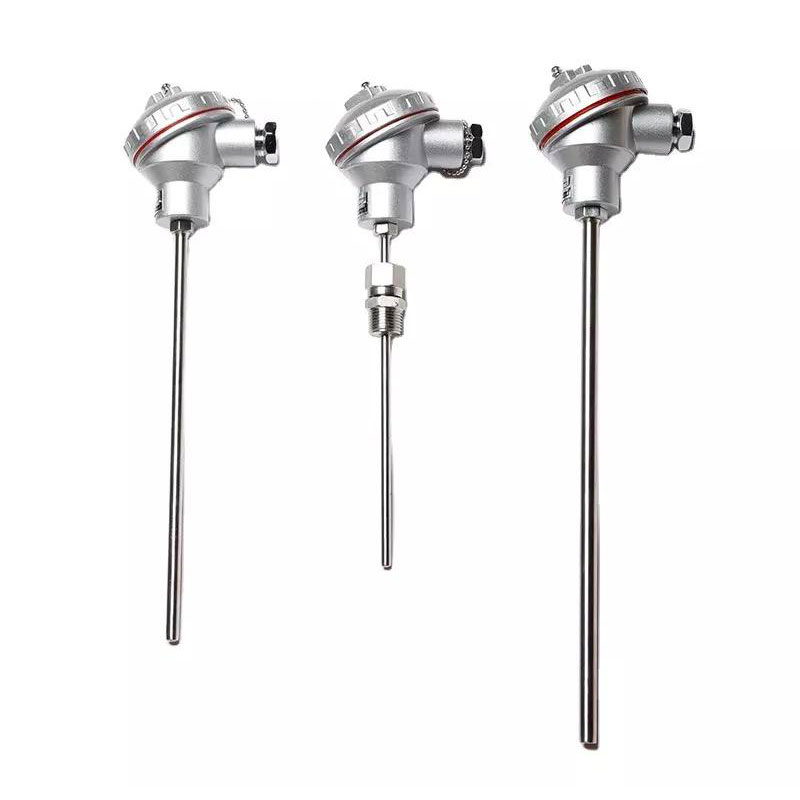
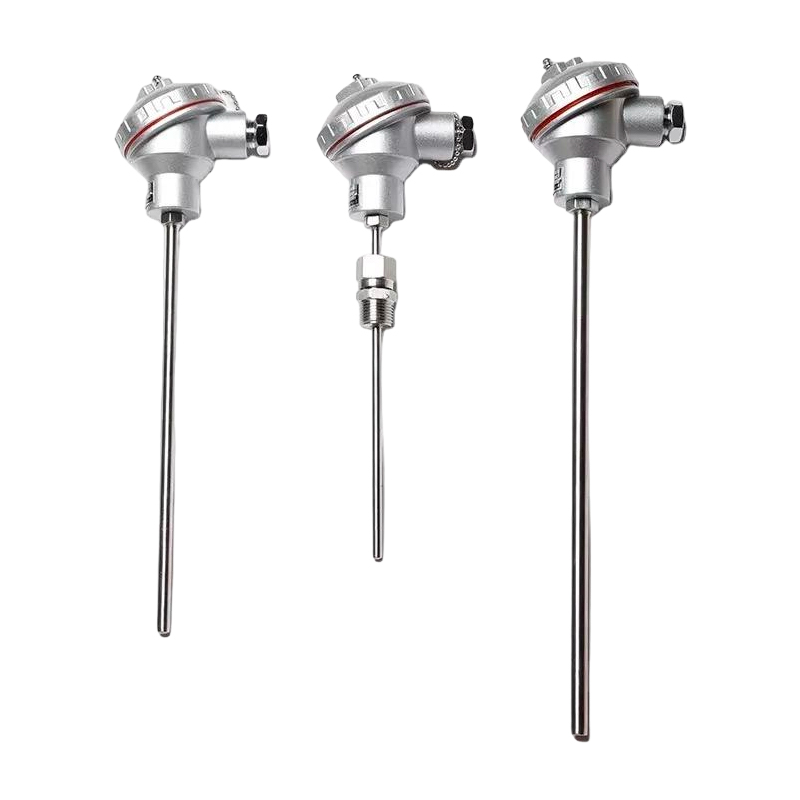
 Premium High-Temperature Sensor PT100 Type K Stainless Steel ThermocoupleType Graduation Tolerance Class Ⅰ Ⅱ Tolerance Value Measuring Range℃ Tolerance Value Measuring Range℃ WRN K ±1.5℃ -40~+375 ±2.5℃ -40~+333 ±0.004/t/ 375~1000 ±0.0075/t/...View Product →
How to Improve Measurement Accuracy
Whether you are using an infrared thermometer or a fixed installation, there are proven ways to reduce the influence of stainless steel emissivity.
- Measure emissivity directly when possible. Heat a sample to a known temperature using a contact probe, then adjust the infrared thermometer until both readings agree. This compensates for most surface and wavelength effects.
- Keep the same viewing angle. Emissivity of polished metal is highly directional. Use a consistent measurement angle, ideally perpendicular to the surface, so that day-to-day readings remain comparable.
- Apply high-emissivity treatment. A flat black coating, high-temperature tape, or a small patch of emissivity paint creates a reliable reference point on stainless steel. This is extremely effective when you must use infrared in a process area.
- Select the right instrument operator. For short-wavelength infrared thermometers, the influence of emissivity error is smaller, which can improve accuracy on clean, bright surfaces.
- Use contact sensors for final verification. When the process allows, insert a thermocouple or RTD into the process or clamp a surface sensor onto the pipe. This bypasses emissivity variation entirely and gives you a direct reference.
For surface temperature measurements, such as pipeline skin temperatures or valve body temperatures, a self-adhesive surface thermocouple can provide a stable reference for comparing against infrared readings. This is especially useful when you want to calibrate an infrared gauge without drilling holes or shutting down the process.
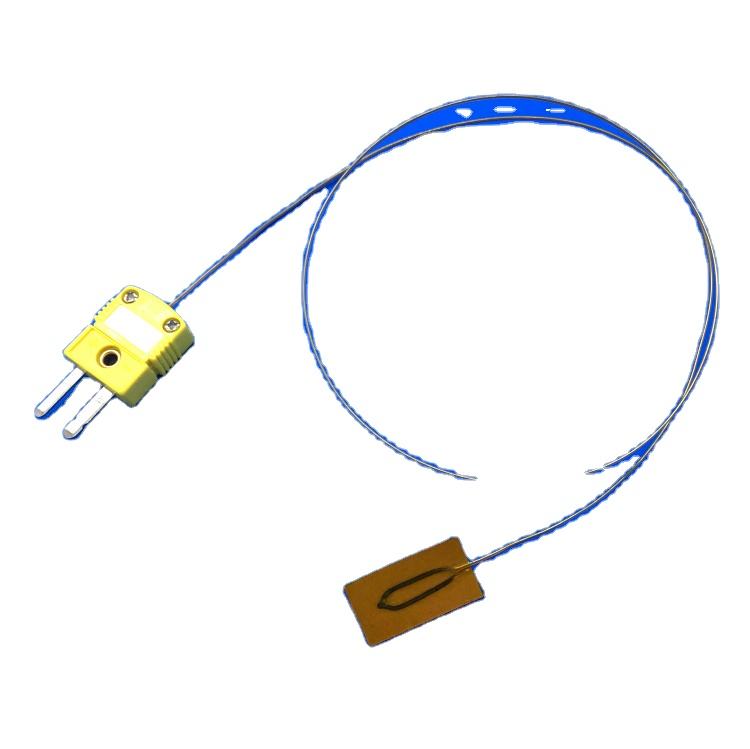 High-Precision Surface-Mount Self-Adhesive K-Type Thermocouple for Temperature MeasurementProduct name Patch thermocouple item value Warranty 1years Certification GS,iso9001,ce,rohs,astm,gb Customized support OEM Place of Origin China Brand Name haoqi Model...View Product →
In a broader control system, industrial temperature sensors are the foundation of accurate feedback loops. To understand how they support temperature control, you may find it useful to review the role of industrial temperature sensors in temperature control systems.
Practical Considerations for Industrial Applications
Stainless steel is everywhere in process industries. In petrochemical plants, for example, stainless steel reactors, heat exchangers, and piping all require accurate temperature monitoring. The exterior of a polished reactor vessel will have a very different emissivity than the insulated, oxidized, or painted nozzle connections. When scanning a large vessel with a thermal camera, operators often miss hot spots because they assume a single emissivity value applies to every surface.
Food and beverage processing is another area where stainless steel dominates. Hygienic designs have smooth electropolished finishes, which are great for cleaning but terrible for infrared temperature measurement. If a food processing line relies on non-contact sensors to check product temperature, the emissivity of the stainless steel equipment and the product itself must be treated separately.
High-temperature heat treatment also illustrates the dynamic nature of emissivity. As stainless steel parts are heated and cooled, the oxide layer thickens, changing the surface emission characteristics. A furnace operator may therefore see very different infrared signals from a batch of parts depending on how many cycles the parts have already been through. In these conditions, fixed-contact temperature sensors such as industrial high-temperature thermocouples are often preferred because they stay in direct contact with the material and ignore radiation effects.
 1200°C Industrial High-Temperature Thermocouple K/S/R/B Type Ceramic Tube Precious Metal TProduct name High temperature sensor Warranty 3 years Certification ISO9001, CE, RoHS, GB, ASTM Customized support OEM Model Number wrr120 Range 0-1200c Accuracy class...View Product →
Whatever the industry, the message is the same: do not assume the emissivity of stainless steel is a fixed number. Document the surface state of your equipment, verify the setting with a contact measurement when feasible, and check your instruments regularly to catch changes in oxidation, contamination, or surface coating. A small amount of care at this stage prevents large measurement errors downstream.
Stainless steel emissivity is a moving target, but it does not have to be a pain point. By selecting emissivity values based on the actual surface condition, using consistent measurement geometry, and relying on contact sensors where the stakes are highest, you can maintain accurate temperature control even on the most reflective steel. If you need help choosing the right temperature sensor for an application with difficult emissivity conditions, our team can recommend a solution matched to your process and budget.
Recommended Products
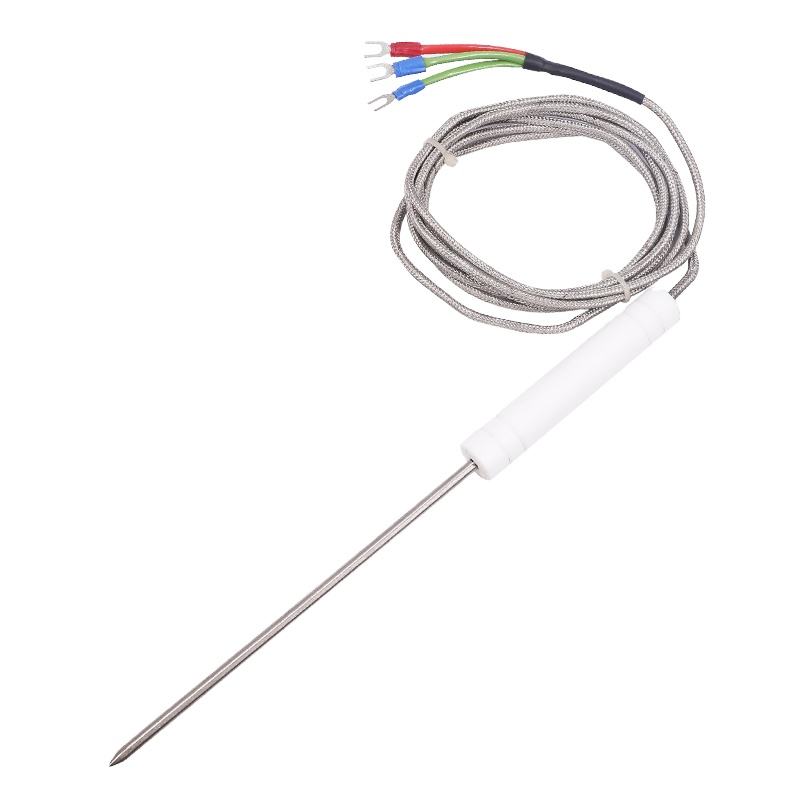
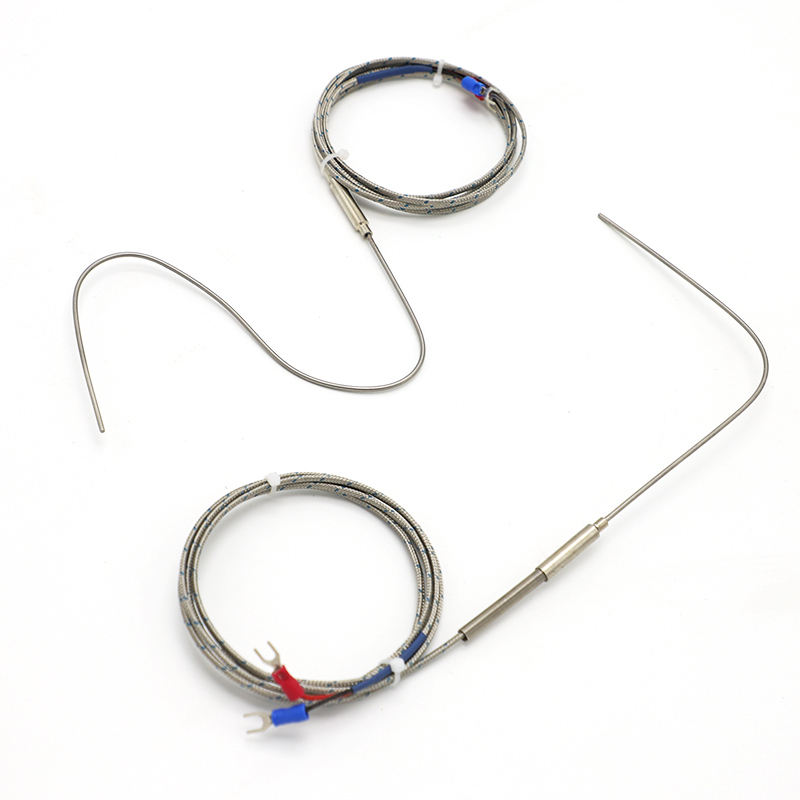
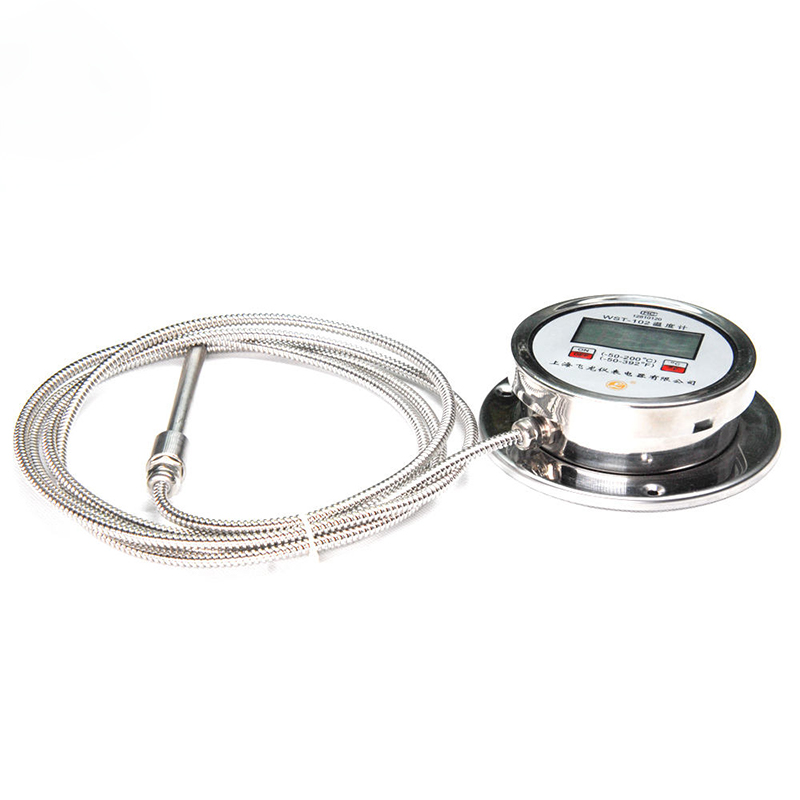

PRODUCT
CONTACT INFO.
-
 +86-181 1593 0076 (Amy)
-
 +86 (0)523-8376 1478
-
 [email protected]
-
 No. 80, Chang'an Road, Dainan Town, Xinghua City, Jiangsu, China
QR CODE