eng
 English
 русский
 Español
 Français
Platinum-rhodium thermocouple Suppliers

About
Jiangsu Zhaolong Electrics Co., Ltd.
As China High Temperature Platinum Rhodium Thermocouple Manufacturers and Platinum-rhodium thermocouple Suppliers, Jiangsu Zhaolong Electrics Co., Ltd. is a regional high-tech enterprise and a production base of temperature sensors and temperature control instruments. We have jointly developed and produced a series of thermocouples (thermal resistances) and temperature control electronics with numerous R&D institutions and academies in Shanghai. These products are salable throughout the country and the world, offering an advantage in cost performance. Our products have a renowned reputation in the market and win customers' trust due to their excellent performance, attractive appearance, high reliability, advanced technology, and good cost performance.
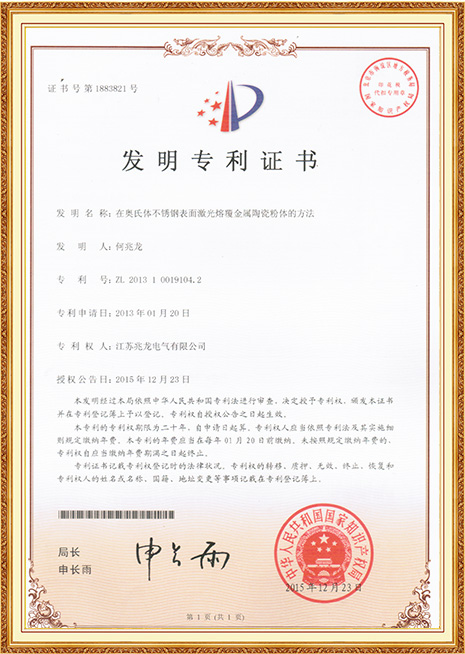
With strong technical development team and patent results, we can undertake business for normal and special specifications, and can design & install various large-scale and small-scale automatic temperature control boxes and temperature control rooms and remote monitoring temperature control systems for customers.
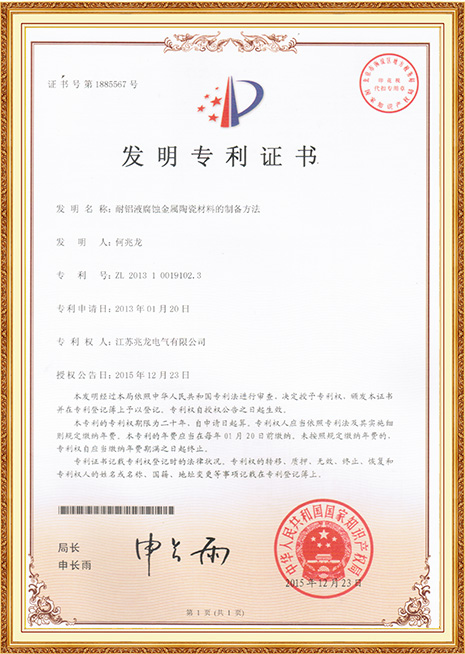
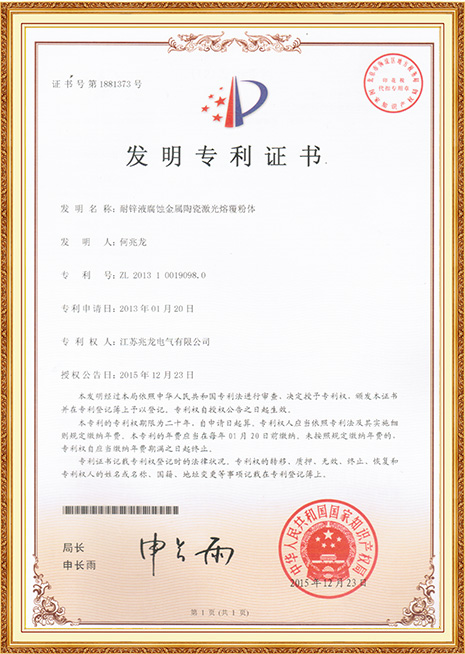
Certificate Of Honor
News
-
If you have ever compared two thermocouples on the same pipe and watched them disagree by a few degrees, the sensor tip probably was not the problem. More often, the answer sits at the other end of the loop, in the terminal block where the thermocouple wires meet the instrument. That connection point is the cold junct...
READ MORE -
If you have ever aimed an infrared thermometer at a stainless steel surface and received an unexpectedly low reading, emissivity is almost certainly the reason. Stainless steel is one of the most common materials in industrial plants, yet its emissivity ranges widely depending on how the surface is finished, how hot i...
READ MORE -
Resistance temperature detectors, or RTDs, are among the most reliable temperature sensors used in industrial automation. As a manufacturer that has designed and built temperature sensors and temperature control instruments for years, we often hear the same question from process engineers and maintenance teams: how do...
READ MORE
Industry knowledge
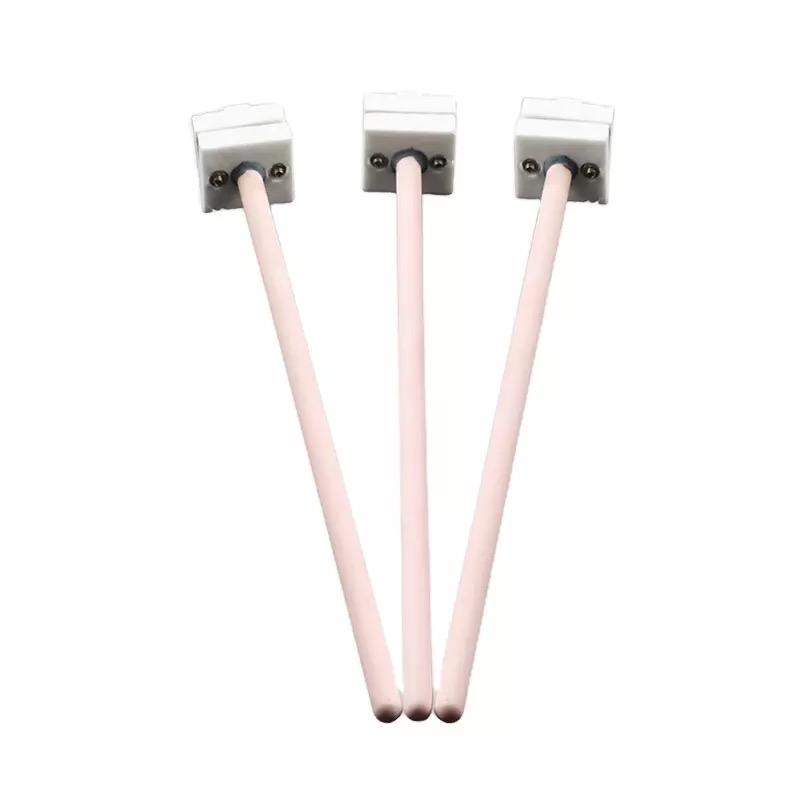
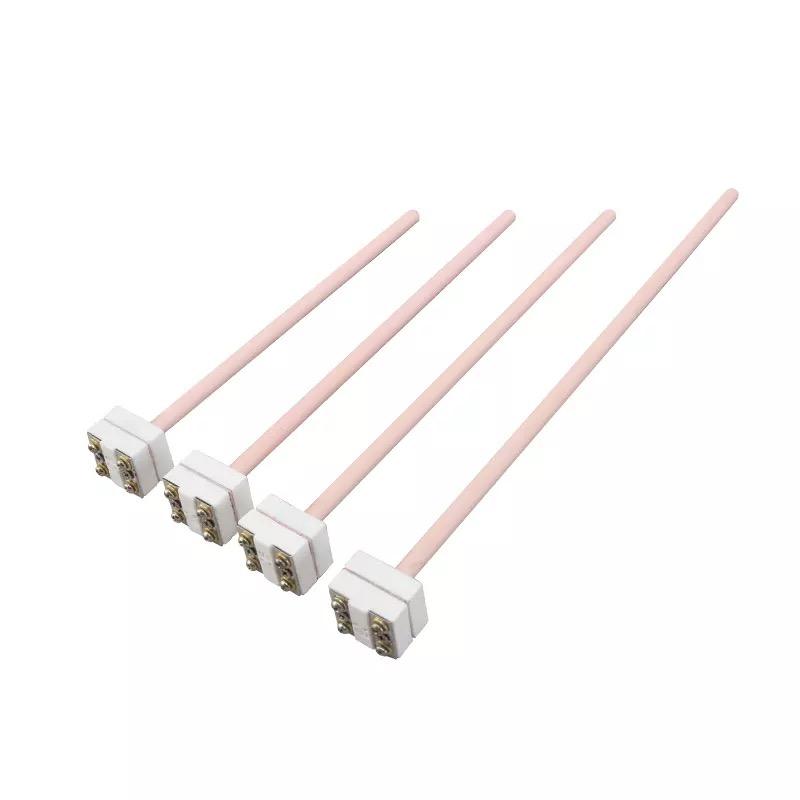
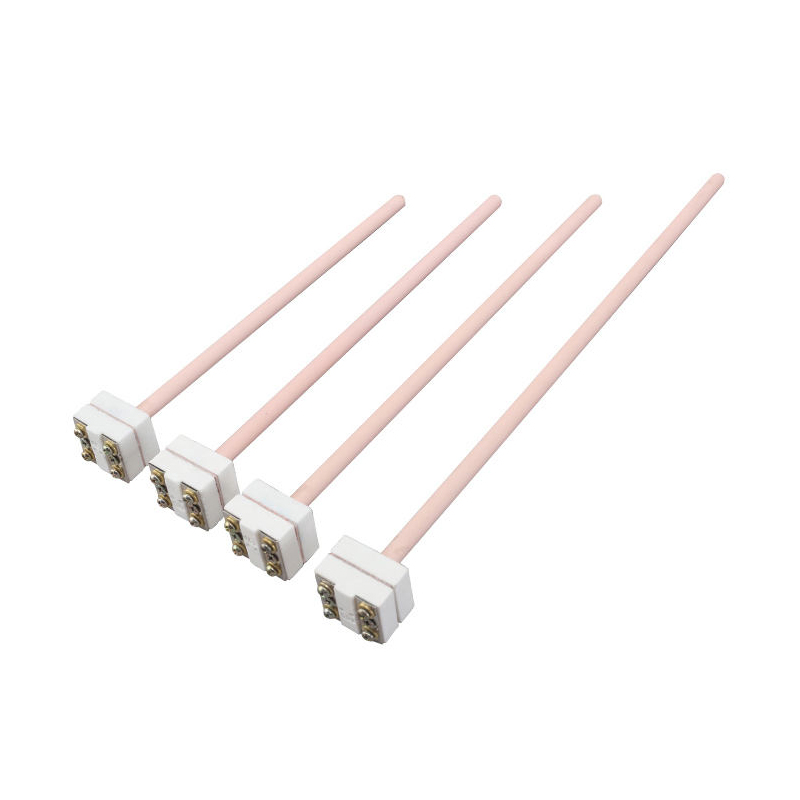
As a Platinum-rhodium thermocouple manufacturer, Jiangsu Zhaolong Electrics Co., Ltd. designs and produces Type S, Type R and Type B noble-metal thermocouples for furnaces, reactors, molten-metal operations and high-temperature process lines. We develop this range jointly with R&D institutions and academies in Shanghai and produce it on a 33,300 m² plant in Jiangsu, China, with in-house high-temperature test furnaces and full-process quality supervision.
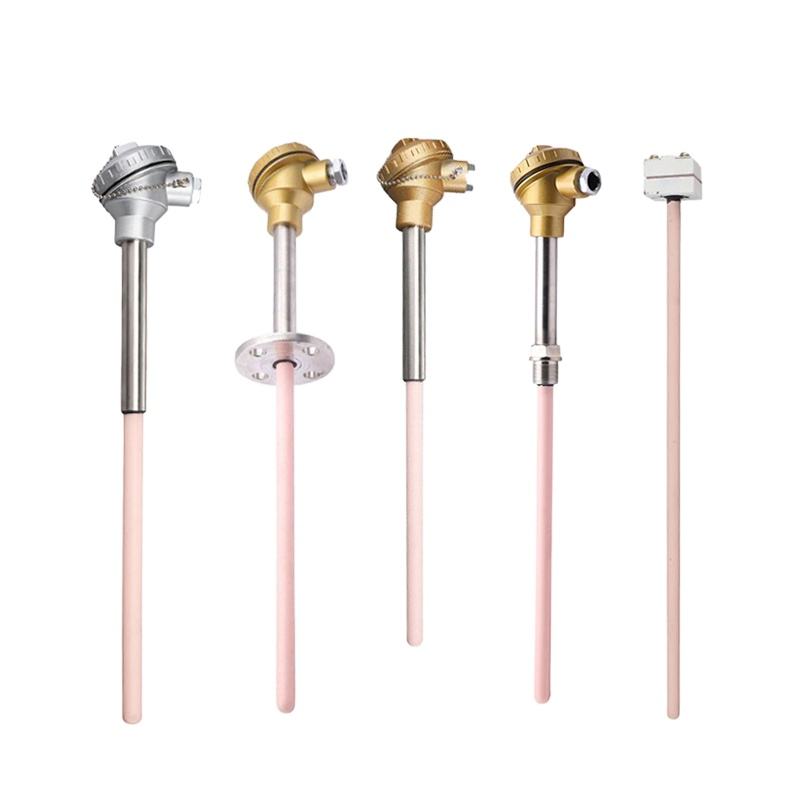
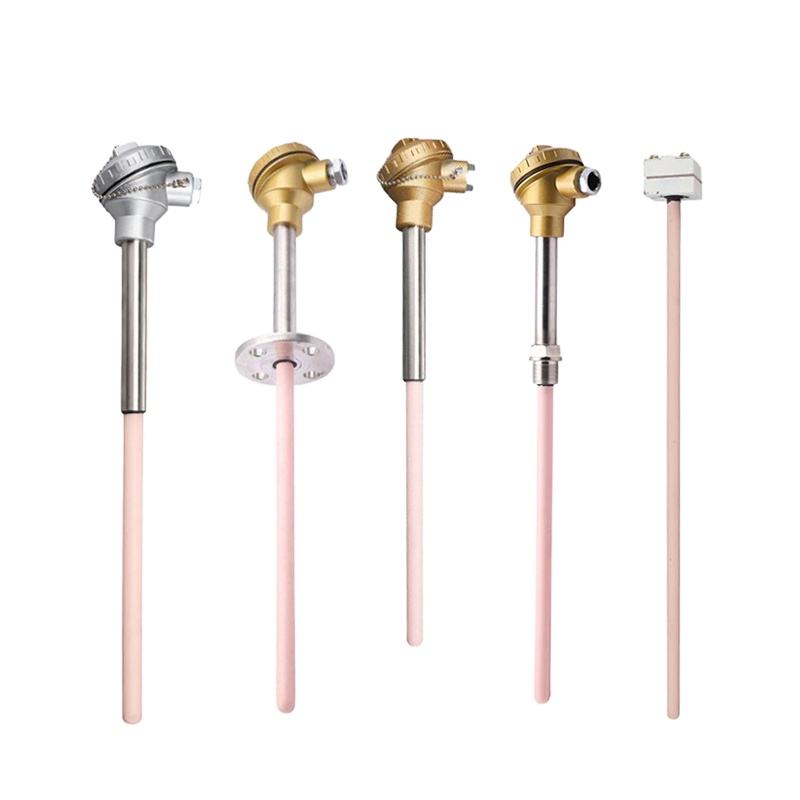
Our platinum-rhodium thermocouples are supplied as assembled thermocouple probes: the noble-metal element is welded, insulated, supported and protected according to the process temperature, atmosphere and installation point. We quote complete assemblies, including connection heads, ceramic or alloy protection tubes, and calibration documentation, rather than supplying loose wire only.
Our platinum-rhodium thermocouple range
The category covers four practical forms, all built around S, R or B calibration:
- Industrial 1800°C high-temperature BRS platinum-rhodium ceramic thermocouple for continuous high-temperature service in glass, ceramic, sintering and metallurgical furnaces.
- 0.2–0.4 mm wire diameter Type S/B/R probes for molten metals and furnace spots where low thermal mass and fast response are required.
- Small platinum-rhodium thermocouples for compact equipment, laboratories and restricted installation spaces.
- Simple platinum-rhodium thermocouples for direct immersion in pipelines, reactor walls and process vessels.
| Calibration / form | Typical range | Selection fit |
|---|---|---|
| Type S (Pt-10%Rh / Pt) | Up to about 1600°C | Heat-treatment furnaces, laboratory references, general high-accuracy measurement. |
| Type R (Pt-13%Rh / Pt) | Up to about 1600°C | Similar high-temperature service with a higher rhodium content. |
| Type B (Pt-30%Rh / Pt-6%Rh) | Up to about 1800°C | Glass, ceramics and sintering furnaces where very high temperature and stability are the priority. |
| 0.2–0.4 mm wire S/B/R probes | Type-dependent | Molten steel, copper, aluminum and zinc; fast immersion response with limited thermal mass. |
| BRS ceramic thermocouple | Up to about 1800°C | Continuous high-temperature furnace service with a ceramic protection tube. |
Where the range fits
Platinum-rhodium thermocouples are used where oxidation resistance, low drift and stable output are required over long periods above the base-metal range. Our configurations are proven in the following environments:
- Metallurgy and foundry: molten steel, copper, aluminum and zinc service, including salt furnace temperature control.
- Chemical, petrochemical and natural gas: reactors, storage tanks, pipelines, distillation units and heat exchangers in demanding process atmospheres.
- Power and cement plants: high-precision, long-life probes for continuous high-temperature measurement in special environments.
- Ceramic, glass and heat treatment: 1800°C-class ceramic thermocouples for continuous furnace service and controlled thermal cycles.
For some high-temperature applications, our anti-oxidation tungsten-rhenium thermocouple range can provide a lower-cost alternative to platinum-rhodium. We match the couple type to the atmosphere, temperature profile and expected service life before proposing a sensor.
Critical specifications and material selection
- Thermoelectric materials: high-purity platinum with rhodium alloy additions provide resistance to oxidation, corrosion and high-temperature drift.
- Temperature range: Type S and R are used for process temperatures up to about 1600°C; Type B extends to higher temperatures in an 1800°C-class ceramic assembly. Our calibration equipment covers -200°C to +2000°C.
- Calibration performance: calibration resolution up to 0.01°C and temperature difference control within ±0.1°C in our factory equipment.
- Wire diameter: 0.2–0.4 mm elements for fast-response molten-metal probes, with heavier element dimensions available for mechanically demanding installations.
- Protection and insulation: ceramic, high-temperature ceramic, alloy or refractory metal tubes selected after reviewing the process atmosphere and media.
Configuration, controls and automation integration
We configure each platinum-rhodium thermocouple around the installation point and the signal that your control system expects. The sensor can be supplied as a bare welded element, as a head-mounted assembly, or as a complete loop with a temperature transmitter for an industrial signal output.
- Termination: ceramic terminal blocks in standard heads, connector plugs, or direct connection to thermocouple compensation wire.
- Mechanical configuration: fixed or adjustable immersion length, process threads, flanges, spring-loaded designs and thermowell-style assemblies.
- Control integration: we can design and install large, medium and small automatic temperature control cabinets, temperature control rooms and remote monitoring systems around the sensors.
- Matched accessories: thermocouple heads, connectors, sleeves and compensation wire are available to keep the complete measurement loop consistent.
Quality assurance and acceptance testing
Our laboratory is equipped with a noble-metal high-temperature test furnace, a high-temperature platinum-rhodium test furnace, a low-temperature test tank, an oil tank test furnace and a base-metal test furnace. Each assembled thermocouple is tested before leaving the factory, with calibration documentation prepared for the specified temperature range.
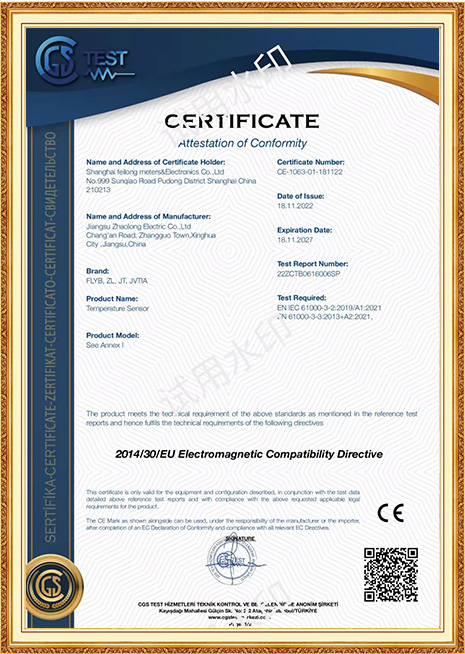
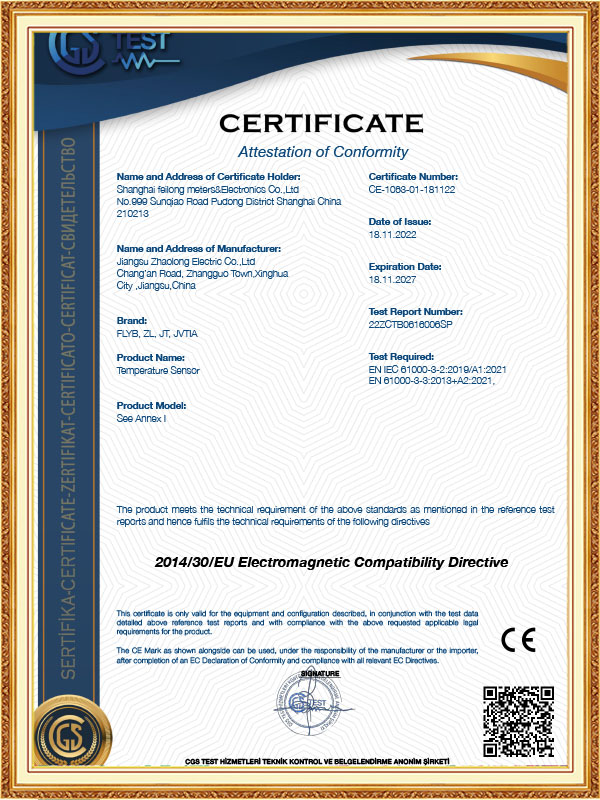
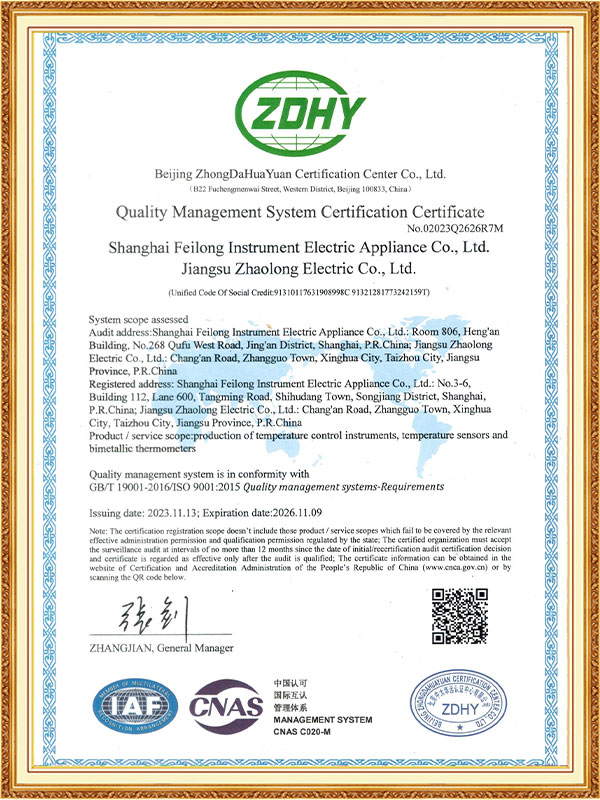
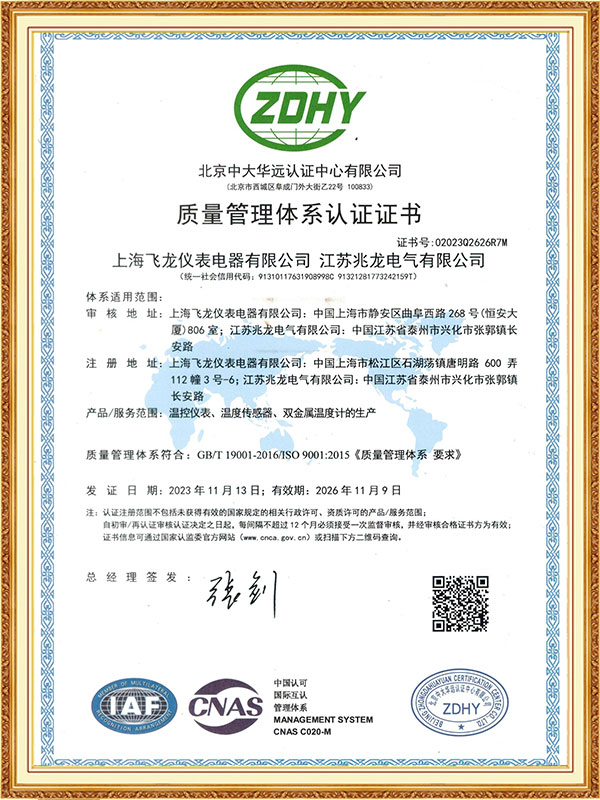
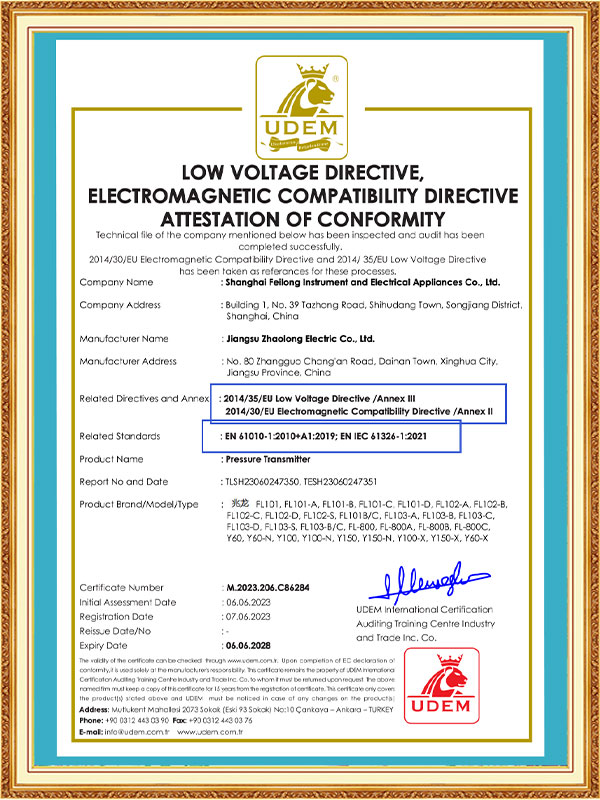
- ISO9001:2015 quality system certification under GB/T 19001-2016, plus CE certification for applicable products.
- ISO14001 environmental management system certification.
- National explosion-proof production qualification for explosion-proof thermocouples and resistance temperature detectors since 2013.
- 12-month warranty against non-human damage, professional calibration service and adequate spare parts supply for maintenance.
Information we use to configure your solution
Send the working point rather than a generic high-temperature request. The inputs below let us fix the thermocouple type, protection, mounting and signal output in the first proposal.
| Project input | Our configuration response |
|---|---|
| Working temperature, including continuous and short-term maximum | Type S, R or B selection, element diameter and protection tube material. |
| Process media and atmosphere | Ceramic or alloy protection, sealing, and explosion-proof construction if required. |
| Probe diameter, insertion length and mounting | Thread, flange, spring-loaded or welded mounting; assembly length and head style. |
| Output and wiring distance | Bare wire, head terminal, transmitter output, or direct connection to compensation wire. |
| Accuracy and calibration requirement | Tolerance grade, calibration points and certificate format. |
| Quantity, trade terms and delivery preference | Quotation with packaging, sea freight or air freight arrangement and delivery schedule. |
Project support, calibration and service
We prepare each proposal from the confirmed operating point and, once accepted, release the order on our temperature-sensor production line with full-process quality supervision. For installed sensors, we support calibration, spare parts and the 12-month warranty period, and we also provide matching accessories so replacement parts match the original specification.
Our products are exported to more than 30 countries and regions, mainly by sea with air freight available for urgent requirements. OEM and ODM production can be arranged for instrumentation houses and system integrators that require their own marking or documentation.
Frequently asked questions
What are the main differences between Type S, Type R and Type B?
Type S and Type R use a platinum versus platinum-rhodium junction and are practical up to about 1600°C. Type B uses higher rhodium content on both legs and reaches about 1800°C, but its low-temperature signal is not intended for use below roughly 50°C. We select the calibration around your working range and accuracy expectation.
Can you supply fast-response probes for molten metal measurement?
Yes. Our 0.2–0.4 mm wire diameter Type S/B/R probes are intended for molten steel, copper, aluminum and zinc temperature checking. Tell us the metal, bath temperature and expected immersion time so the probe length and protection are configured correctly.
What protection tube materials do you recommend for platinum-rhodium thermocouples?
The correct choice depends on the atmosphere and thermal shock. We supply ceramic and high-temperature ceramic protection tubes, including the 1800°C-class BRS ceramic design, and can combine them with suitable mounting hardware. Reducing, vacuum and molten-metal atmospheres each need a different protection strategy.
Can the thermocouple connect directly to our existing control system?
Yes. We can provide a simple head-mounted thermocouple for direct wiring, or a complete measurement loop with a temperature transmitter for an industrial signal output to the PLC or DCS. Compensation wire and transmitter options are matched to the thermocouple type.
What after-sales support is included?
The standard warranty is 12 months against non-human damage. We also provide professional calibration services, calibration documentation, and spare parts such as thermocouple heads, connectors, sleeves and compensation wire to minimize downtime.

PRODUCT
CONTACT INFO.
-
 +86-181 1593 0076 (Amy)
-
 +86 (0)523-8376 1478
-
 [email protected]
-
 No. 80, Chang'an Road, Dainan Town, Xinghua City, Jiangsu, China
QR CODE