eng
eng
 English
 русский
 Español
 Français
Home / News / Industry News / Resistance Temperature Detector Manufacturer: How to Choose a Reliable RTD Supplier

Industry News
Sep 02,2026
Resistance Temperature Detector Manufacturer: How to Choose a Reliable RTD Supplier
A plant engineer once told us why he switched RTD suppliers: his previous vendor delivered probes that drifted by more than a degree within six months, and the replacement process took three rounds of shipping and testing. The problem was not the platinum element itself. It was the manufacturer's lack of control over probe assembly, lead wire quality, and calibration.
When you search for a resistance temperature detector manufacturer, the real question is not whether a company can print "PT100" on a label. It is whether that company controls the full chain from the sensing element to the finished probe, and whether it can document accuracy, tolerate the installed environment, and support you after delivery. In this article, we explain the criteria that matter most when qualifying an RTD supplier, with concrete references to the products and production approach used by Jiangsu Zhaolong Electrics.
What to Look for in a Resistance Temperature Detector Manufacturer
A reliable RTD manufacturer is one that can specify, build, and verify a probe against a recognized standard such as IEC 60751. You should be able to ask for the tolerance class, wiring configuration, sheath material, and calibration method and receive a direct answer. If the supplier hesitates on any of these points, that is a red flag.
Key evaluation criteria
- Accuracy and long-term stability of the platinum element.
- Temperature range matched to your process, not a generic "up to 500 °C" claim.
- Mechanical construction: sheath material, diameter, thread type, and ingress protection.
- Customization flexibility for probe length, fitting, and signal connection.
- Manufacturing consistency verified by batch testing and calibration records.
For the range of industrial temperature measurement environments covered by RTDs, the supplier's own factory capabilities matter more than its marketing materials. A manufacturer that also produces thermocouples, transmitters, controllers, and connection accessories in-house is generally better positioned to recommend a complete package than a trading company reselling generic probes.
RTD Accuracy Classes: The First Technical Filter
Before comparing prices, compare tolerance classes. Per IEC 60751, a Class A platinum RTD has a tolerance of ±(0.15 + 0.002·|t|) °C, while Class B permits ±(0.30 + 0.005·|t|) °C. At 200 °C, that difference is about 0.55 °C versus 1.30 °C. For process control, this gap changes whether a loop can hold its set point.
| Tolerance Class | Formula | At 0 °C | At 200 °C |
|---|---|---|---|
| Class A | ±(0.15 + 0.002|t|) °C | ±0.15 °C | ±0.55 °C |
| Class B | ±(0.30 + 0.005|t|) °C | ±0.30 °C | ±1.30 °C |
Class A is not always necessary. For bearing temperature monitoring or simple over-temperature protection, Class B is often sufficient. But if your process depends on tight temperature control, specify Class A and ask the manufacturer to provide test reports. A factory-direct Class A 316 stainless RTD probe rated from -200 °C to 450 °C gives you a defensible starting point for most industrial loops.
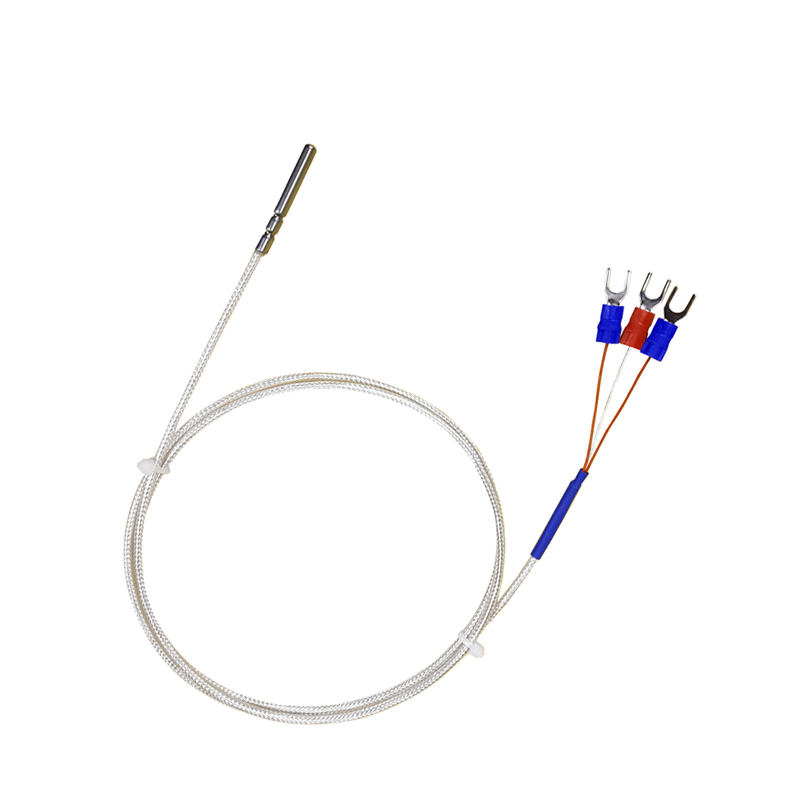
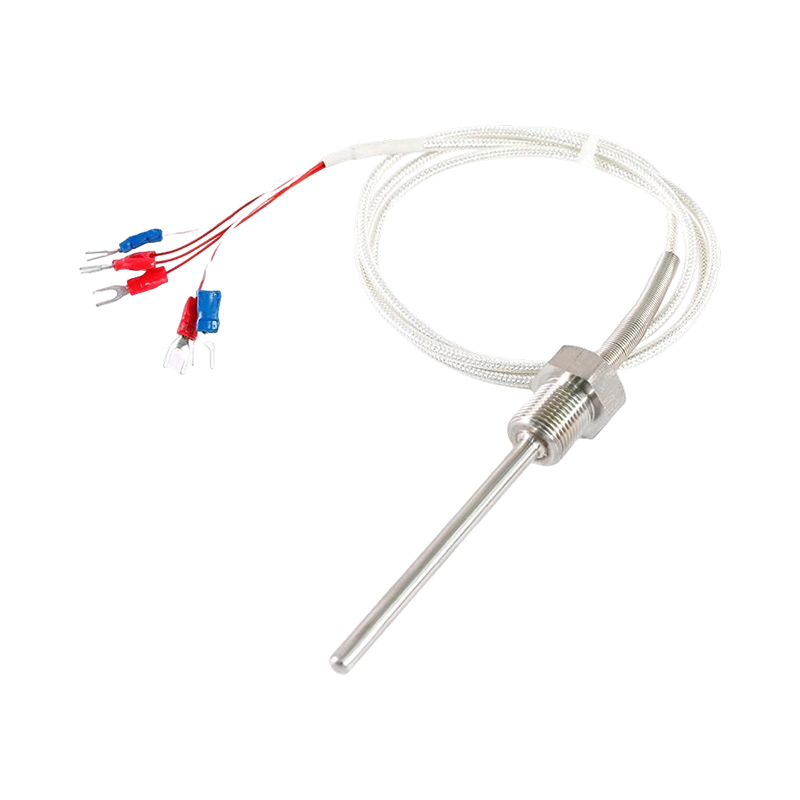
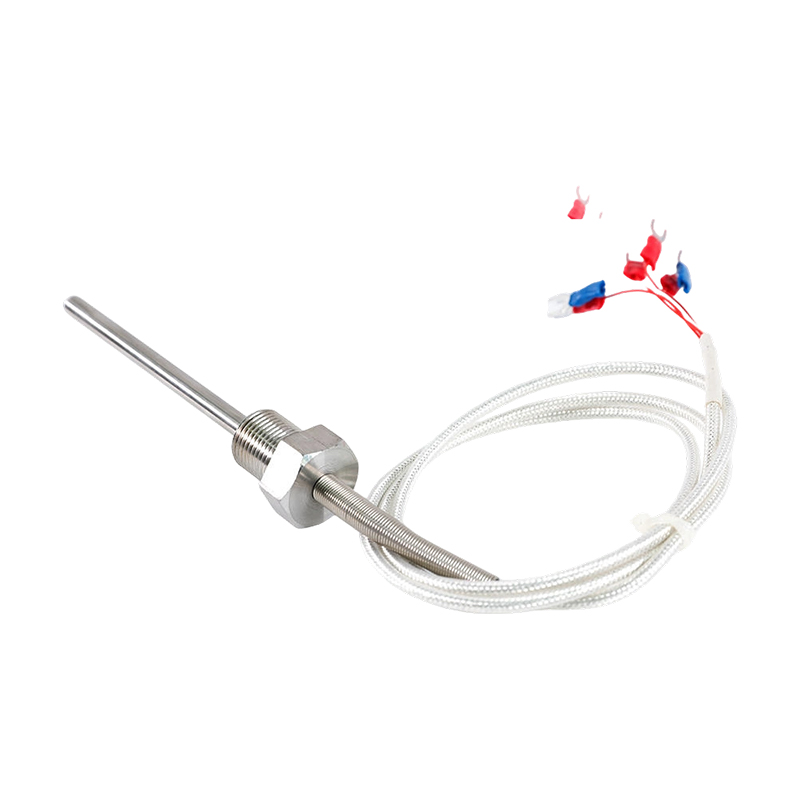 Wholesale Factory Direct - 200 ~ 450°C Class A 316 Rtd Pt100 Temperature Sensor Jiangsu Zhaolong Electrics Co., Ltd. is China wholesale Factory Direct - 200 ~ 450°C Class A 316 Rtd Pt100 Temperature Sensor Platinum Re...View Product →
Probe Construction: Where RTD Suppliers Earn Their Reputation
An RTD is more than the platinum element. The sheath, lead wires, connection head, and mounting thread determine whether the sensor survives vibration, moisture, and thermal cycling.
Ask about the sensing element design. Thin-film elements respond quickly and resist vibration; wire-wound elements offer excellent stability in steady process duty. Both are valid, but a reputable resistance temperature detector manufacturer should explain which it uses and why.
Wiring configurations and signal integrity
Two-wire RTDs are the cheapest, but they include lead resistance in the measurement. Three-wire configurations cancel most lead resistance and are the standard for industrial panels. Four-wire is reserved for laboratory-grade metering. A manufacturer that offers all three, without pushing you toward unnecessary cost, demonstrates genuine engineering judgment. If you plan long cable runs to a PLC, choose a temperature sensor designed for industrial measurement environments with appropriate shielding and termination.
Protection and ingress
Check the ingress protection rating. A probe with an IP65 head prevents moisture from reaching the element terminals, which is a common cause of intermittent readings in food plants and outdoor installations. Probe diameter also matters: a 6 mm probe is more robust than a 3 mm probe, but the thinner version responds faster. There is no universal best answer; there is only the right compromise for your process.
Custom RTD Designs for Real Process Conditions
Off-the-shelf probes cover roughly 80% of general demand. The remaining 20% is where a manufacturer proves its design capability. If your process needs a probe with a particular insertion depth, a food-grade finish, or a magnetic mounting method, the supplier must be able to adapt standard elements without weeks of prototyping.
Food-grade and hygienic measurement
Food processing requires smooth stainless surfaces and often a small-diameter probe that can be inserted into a pipe or product without excessive thermal mass. A food-grade PT100/PT1000 stainless steel probe is a practical choice for inline temperature checks, and it meets the typical cleaning requirements of food machinery. When selecting such a probe, confirm the IP rating and whether the cable connection can withstand frequent washdowns.
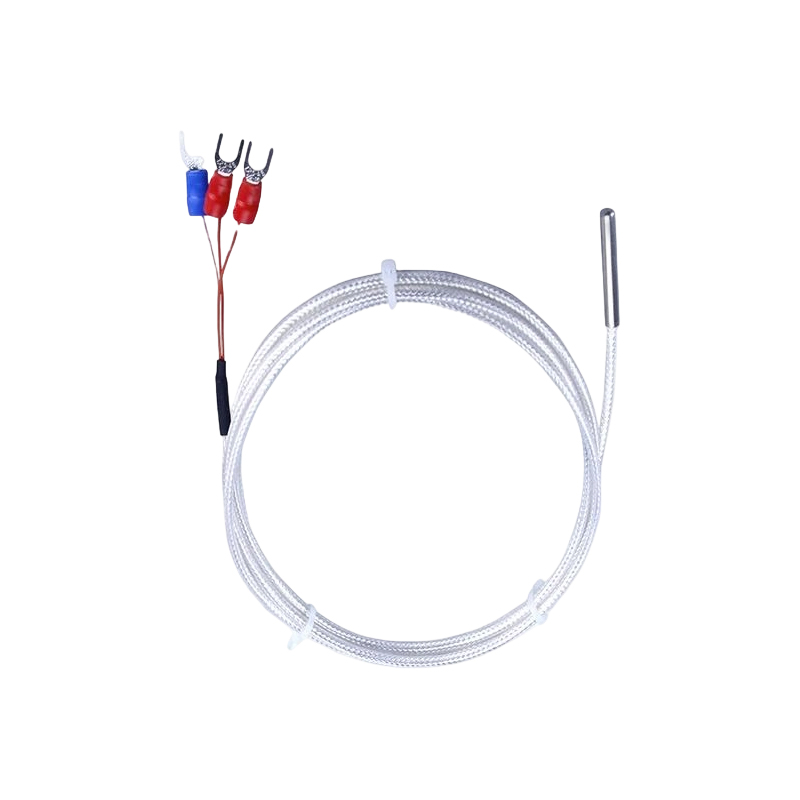
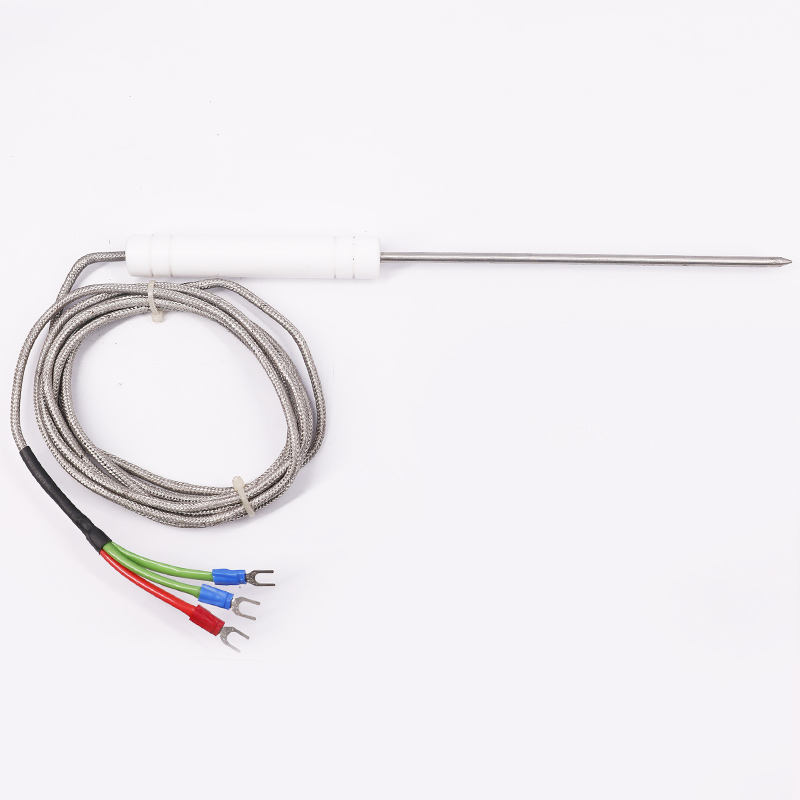 PT100/PT1000 Food-Grade Probe Temperature Sensor Suppliers, FactoryJiangsu Zhaolong Electrics Co., Ltd. is China PT100 PT1000 temperature sensor suppliers and factory, we wholesale PT1000 PT100 NTC food-g...View Product →
For OEMs building food machinery with integrated temperature sensing, the connector type and cable exit angle can be more important than the tolerance class. A good manufacturer will ask how the probe is installed in your machine, not just what temperature range you need.
Surface and non-invasive measurement
Not every RTD sits in a thermowell. Some applications require a sensor attached to a pipe, reactor wall, or motor housing without drilling. A magnetic PT100 sensor provides quick installation and easy repositioning for temporary surveys or periodic temperature mapping. For permanent mounting, a screw-mounted compact sensor with a stainless steel head offers better long-term mechanical retention.
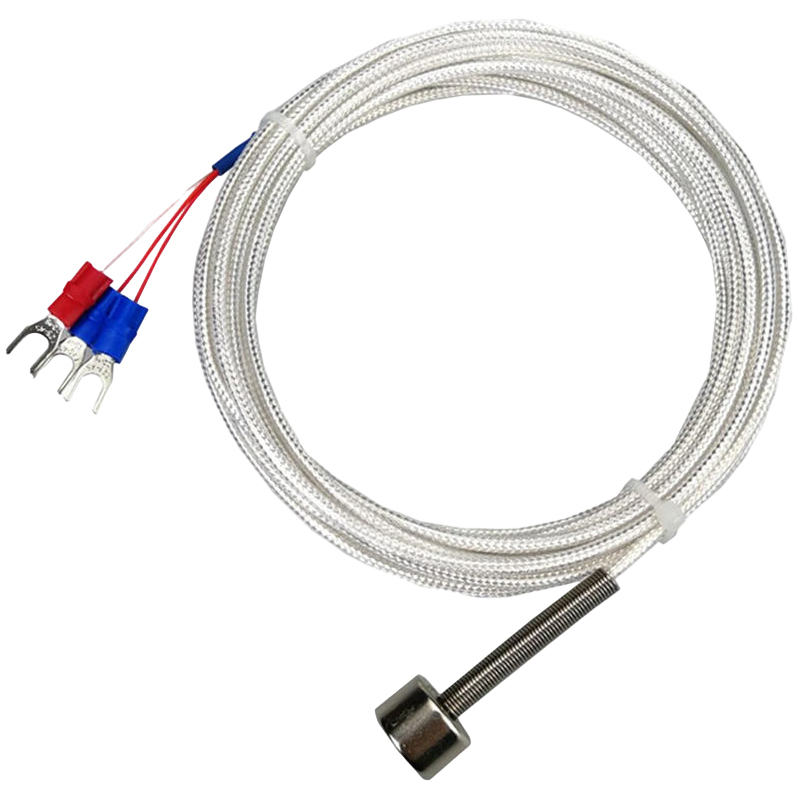 Wholesale Magnetic PT100K temperature sensor with magnetised platinum resistanceJiangsu Zhaolong Electrics Co., Ltd. is China wholesale Magnetic PT100K temperature sensor with magnetised platinum resistance thermomete...View Product →
High-temperature and harsh service
Standard PT100 elements are specified up to about 600 °C, though most industrial probes are derated based on the sheath and lead materials. In furnaces, exhaust systems, and kilns, the manufacturer should recommend a probe with a ceramic or specialized metal protection tube and suitable connection hardware. For processes above the practical RTD limit, thermocouples remain the right choice, and a manufacturer that produces both types can give you an honest recommendation instead of selling you a probe that will fail.
How to Qualify an RTD Manufacturer Before You Order
Narrowing down a resistance temperature detector manufacturer requires more than reading product brochures. Use this checklist during your vendor assessment.
| Question | What the Answer Should Include |
|---|---|
| Do you follow IEC 60751 tolerance classes? | Yes, with Class A and Class B available; ask for test data. |
| Can you customize probe length, thread, and cable? | Yes, with typical lead times for prototypes and batches. |
| How do you verify calibration? | Reference thermometers traceable to national standards; reports available per batch. |
| What is your response time for warranty issues? | Clear process for return, inspection, and replacement. |
| Do you also supply transmitters and controllers? | Yes, ideally; it simplifies responsibility for the whole loop. |
Ask for samples before committing to a large batch. Install them in your actual process, not a laboratory bench, and compare readings against a known reference. This simple step eliminates most supplier quality problems before they become your maintenance headaches.
Why a Factory-Direct RTD Manufacturer Makes the Difference
Buying directly from the factory changes the conversation. You are not limited to the catalog; you can request a specific element tolerance, a custom probe diameter, or a different cable length without waiting for a distributor to relay your request to someone else. This matters because many process problems are solved by small construction details that cannot be described in a standard datasheet.
Jiangsu Zhaolong Electrics has built its production around temperature sensors and control instruments since 2005, with in-house lines for RTDs, thermocouples, transmitters, controllers, and bimetallic thermometers. Its engineering team works with Shanghai research institutions, and the factory supports custom lengths, fittings, materials, and complete temperature control cabinets for system-level projects. For procurement teams, this means fewer intermediaries and a direct line to the people who actually build the sensor.
If you are selecting RTD models for a new project or replacing suppliers after one too many calibration failures, start with the accuracy class. Then check the construction details. Then send a request to the factory with your process conditions and dimensional requirements, and see how quickly you get a concrete answer. A reliable resistance temperature detector manufacturer will respond with specific questions, not generic promises. Discuss your RTD specifications with our factory engineers to get a recommendation based on your actual process.
Recommended Products

PRODUCT
CONTACT INFO.
-
 +86-181 1593 0076 (Amy)
-
 +86 (0)523-8376 1478
-
 [email protected]
-
 No. 80, Chang'an Road, Dainan Town, Xinghua City, Jiangsu, China
QR CODE