eng
 English
 русский
 Español
 Français
Home / News / Industry News / High Temp Thermocouple Wire Type K: Industrial Selection Guide and Key Specs

Industry News
Sep 09,2026
High Temp Thermocouple Wire Type K: Industrial Selection Guide and Key Specs
When a furnace operator asks for a reliable reading at 1100°C, the first wire that comes to mind is often Type K. The truth is that a standard bare Type K thermocouple wire will drift and fail quickly at that temperature unless it is built for the job. For continuous service above 1000°C, you need a high temp thermocouple wire type K with proper insulation, a protective sheath, and often a larger wire gauge. Choosing the right combination up front saves downtime, avoids false readings, and keeps the process under control.
Type K thermocouples use a nickel-chromium positive leg and a nickel-aluminum or nickel-silicon negative leg. This combination gives a stable millivolt output over a wide span, from about -200°C to 1260°C in short-term use. In practice, the continuous temperature limit depends heavily on wire diameter, insulation, and the surrounding atmosphere.
What Makes Type K Thermocouple Wire Different at High Temperatures
At high temperature, the main enemy of Type K is oxidation. The chromium in the positive leg can migrate to the surface and react with oxygen, changing the electromotive force (EMF) of the junction over time. This drift is not a sudden failure; it is a slow, subtle shift that can lead to inaccurate control decisions.
Manufacturers address this in several ways. A larger wire diameter—for example, 14 AWG or 12 AWG—increases the wire's cross-section and slows down oxidation. Ceramic or glass fiber insulation replaces PVC and other low-temperature materials. A stainless steel or Inconel sheath protects the wire from mechanical damage and chemical attack while maintaining a controlled environment around the measuring junction.
For high temp thermocouple wire type K, the insulation and sheath are not optional. They define how long the sensor will hold its calibration at the intended operating temperature.
Key Specifications for High Temp Type K Wire Selection
Selecting a high temp Type K wire means balancing temperature range, response time, durability, and cost. The table below groups the most common insulation materials for Type K wire according to practical service limits.
| Insulation Material | Continuous Service Temperature | Typical Applications |
|---|---|---|
| PVC | Up to 105°C | Indoor, low-temp process measurement |
| PTFE | Up to 260°C | Chemical-resistant, wet environments |
| Fiberglass with silicone coating | Up to 480°C | Industrial ovens, drying equipment |
| Ceramic fiber | Up to 1000°C | High-temp furnaces, kilns |
| Stainless steel braided over ceramic/glass | Up to 800-1000°C | Mechanically demanding, high-temp service |
Another key spec is the wire gauge. Thinner wire responds faster but oxidizes sooner. Thicker wire lasts longer but slows down the response. For most high-temperature work, a 16 AWG to 12 AWG wire provides a sensible compromise. Also consider the required accuracy class. Type K wire is typically available in Class 1 (±1.5°C or ±0.4% of reading) and Class 2 (±2.5°C or ±0.75% of reading) tolerances, with Class 1 reserved for more critical processes.
- Determine the maximum continuous temperature and hold time before selecting the insulation and sheath.
- Verify whether the atmosphere contains sulfur, chlorine, or other contaminants that may attack nickel alloys.
- Choose a wire gauge that balances response and longevity; larger gauge for long-term high-temp duty.
- Decide if you need a grounded or ungrounded junction; grounded junctions respond faster, while ungrounded reduce ground loops.
Where High Temp Type K Thermocouple Wire Is Used
High temp Type K thermocouple wire appears in dozens of industrial settings. In petrochemical and chemical plants, it monitors reactor walls, distillation columns, and process lines where temperatures stay above 500°C. In food machinery, a needle-shaped or compact type K probe can be used for product temperature checks, although the wire itself often needs a food-grade sheath. For analytical instruments, small-gauge Type K sensors are built for precision and short response time.
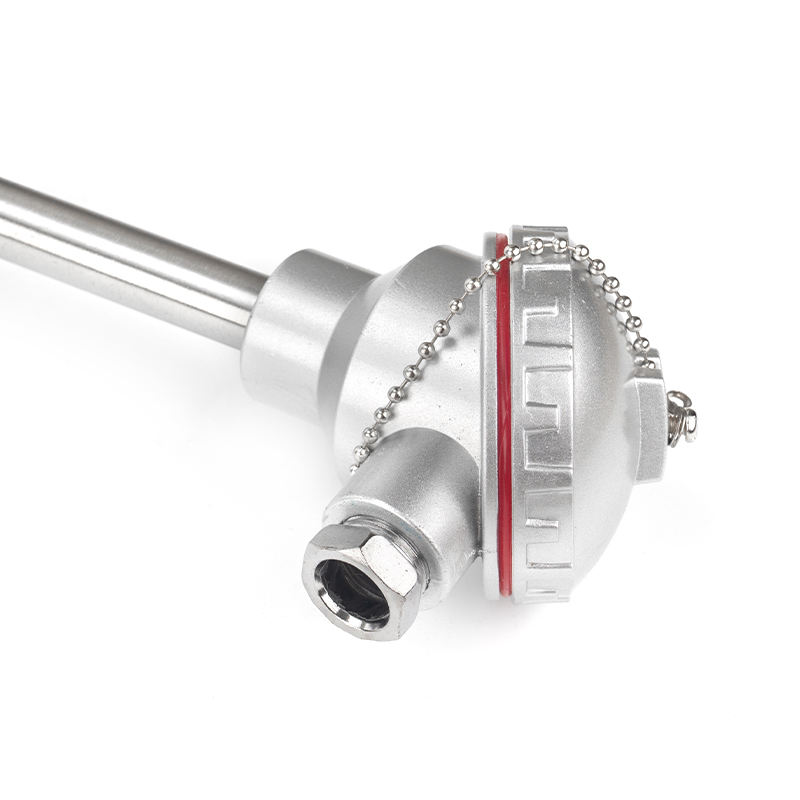 Wear-resistant L-shaped Type K thermocouple for furnaces and aluminium cruciblesThis industrial thermocouple features a heavy-duty L-shaped stainless steel probe built for abrasive and erosive conditions in rotary kilns, furnaces, and aluminium melters, ensuring reliable high-temperature measurement up to 1100°C.View Product →
In furnace and aluminium applications, wear resistance becomes a critical factor. A Type K thermocouple with a heavy-duty L-shaped stainless steel probe can survive the abrasive and erosive conditions of a rotary kiln or an aluminium melter. For exhaust gas temperature monitoring, an L-shaped EGT probe with a high temp Type K wire is a common choice for diesel and gas engines.
No matter the industry, the key is to match the wire and sheath construction to the exact process conditions. A standard PVC-insulated wire will simply char in a 700°C oven, while a properly insulated high temp Type K wire will continue to deliver accurate data for years.
Practical Purchasing Considerations
When buying high temp thermocouple wire type K, lead time and customization matter as much as the spec sheet. Industrial installations rarely use off-the-shelf lengths. You will often need custom wire lengths, specific probe diameters, a particular mounting thread, or an integrated connection head. A manufacturer that can produce “normal and special specifications” simplifies the procurement process.
 Glass fiber insulated stainless steel braided thermocouple compensation wireDesigned for long-distance signal transmission, this compensation wire matches Type K thermocouples while resisting high temperatures and mechanical wear, making it ideal for harsh plant environments where durability and accuracy are critical.View Product →
Compensation wire is also part of the package. If you run a long distance between the sensor and the controller, the extension wire must match the thermocouple type to avoid introducing a second junction error. Glass fiber or high-temperature compensation wire with stainless steel braiding provides the durability needed in harsh plant environments.
Verify that the supplier offers quality control throughout the entire process—from the raw alloy to the final calibration record. Ask about certificates and inspection reports, especially if the product will be used in a regulated process.
For a faster decision, talk directly to the engineering team and share your operating conditions. A manufacturer with experience in multiple industries can help you avoid common mistakes, such as undersizing the wire or selecting an incompatible sheath material.
Working with a Manufacturer That Understands High Temperature Sensing
Jiangsu Zhaolong Electrics Co., Ltd. has produced thermocouples and temperature controllers since 2005. The company works with research institutions in Shanghai to develop sensors that match real industrial needs—not just catalog numbers. Their product range covers Type K, Type S, Type B, and tungsten-rhenium thermocouples, as well as PT100 RTDs, temperature transmitters, and the compensation wires that connect them.
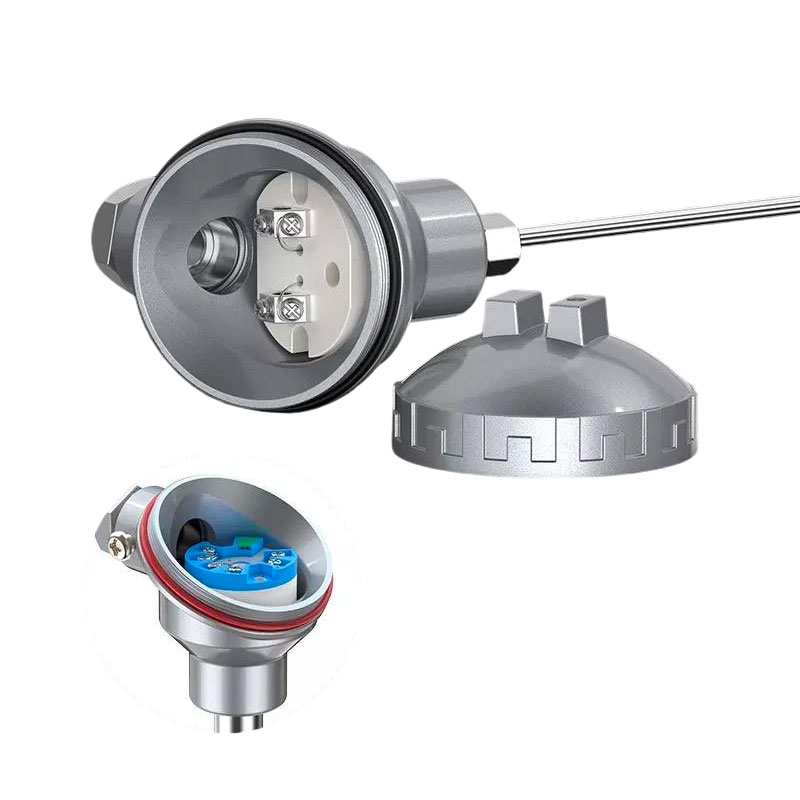 Stainless steel probe K-type thermocouple sensor for industrial furnaces up to 1200°CThis high-temperature sensor combines a 1200°C-rated stainless steel probe with Type K accuracy, offering custom lengths and process connections. It is assembled and tested by the manufacturer, which can also provide complete temperature control systems.View Product →
For high temp thermocouple wire type K, this means you can get a sensor that is assembled, sealed, and tested in the same factory that makes the wire itself. The company also offers custom length probes, special protection tubes, and a variety of process connections. If you need a full temperature control package, they can design and install automatic temperature control boxes and remote monitoring systems.
Before you place an order, share your exact application and let the manufacturer recommend a wire diameter, insulation, and sheath combination. The right answer is not just “the highest temperature rating.” It is the combination that holds calibration in your atmosphere and lasts for the expected maintenance interval.
You can reach the engineering team through the contact page for a specification review and a quote.
Choosing a high temp thermocouple wire type K is not a “one size fits all” decision. The continuous temperature, the atmosphere, the required accuracy, and the expected service life all influence the final specification. If you start with a clear picture of those variables and work with a manufacturer that can produce both the probe and the wire, you will avoid the most common failures: rapid drift, sheath degradation, and premature replacement. Ask for a recommendation based on your actual process conditions, and you will get a sensor that performs reliably for years.
Recommended Products

PRODUCT
CONTACT INFO.
-
 +86-181 1593 0076 (Amy)
-
 +86 (0)523-8376 1478
-
 [email protected]
-
 No. 80, Chang'an Road, Dainan Town, Xinghua City, Jiangsu, China
QR CODE