 eng
 English
 русский
 Español
 Français
Assembled Thermocouple Factory


About
Jiangsu Zhaolong Electrics Co., Ltd.
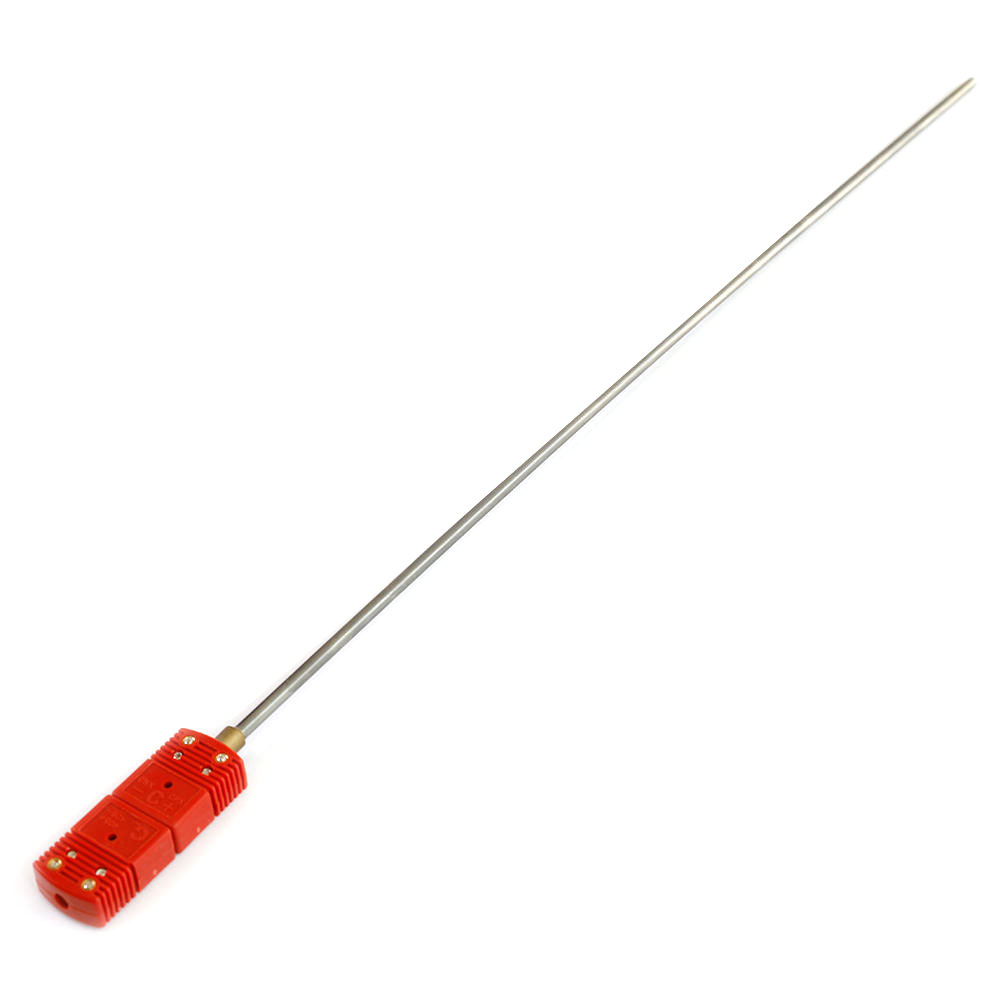
As China Assembled Thermocouple Suppliers and Assembled Thermocouple Factory, Jiangsu Zhaolong Electrics Co., Ltd. is a regional high-tech enterprise and a production base of temperature sensors and temperature control instruments. We have jointly developed and produced a series of thermocouples (thermal resistances) and temperature control electronics with numerous R&D institutions and academies in Shanghai. These products are salable throughout the country and the world, offering an advantage in cost performance. Our products have a renowned reputation in the market and win customers' trust due to their excellent performance, attractive appearance, high reliability, advanced technology, and good cost performance.
With strong technical development team and patent results, we can undertake business for normal and special specifications, and can design & install various large-scale and small-scale automatic temperature control boxes and temperature control rooms and remote monitoring temperature control systems for customers.
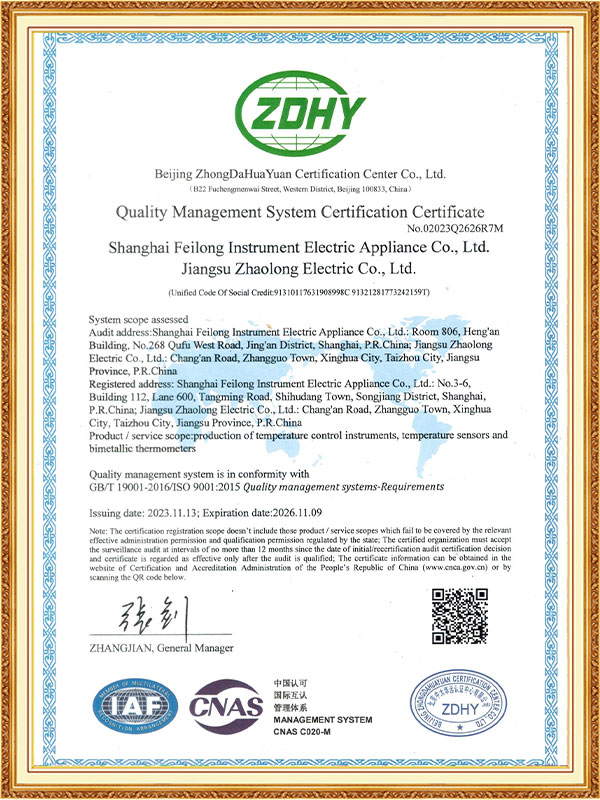
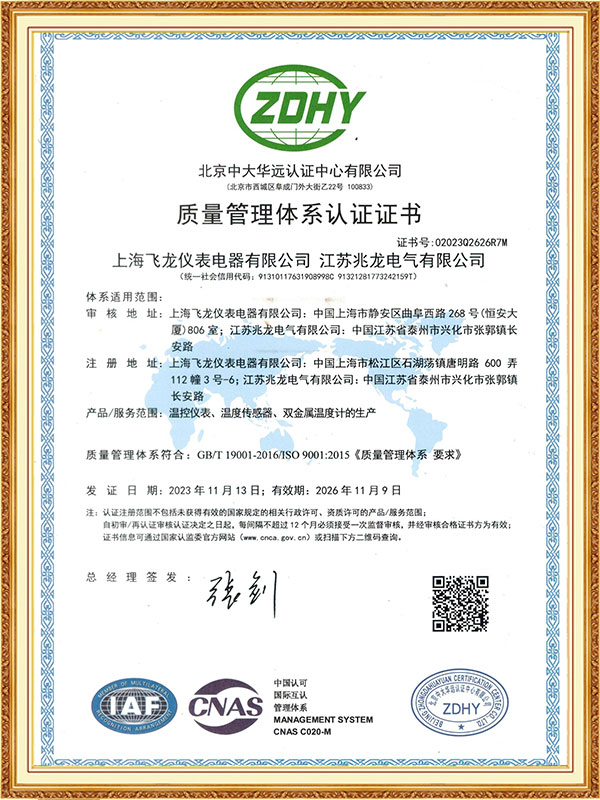
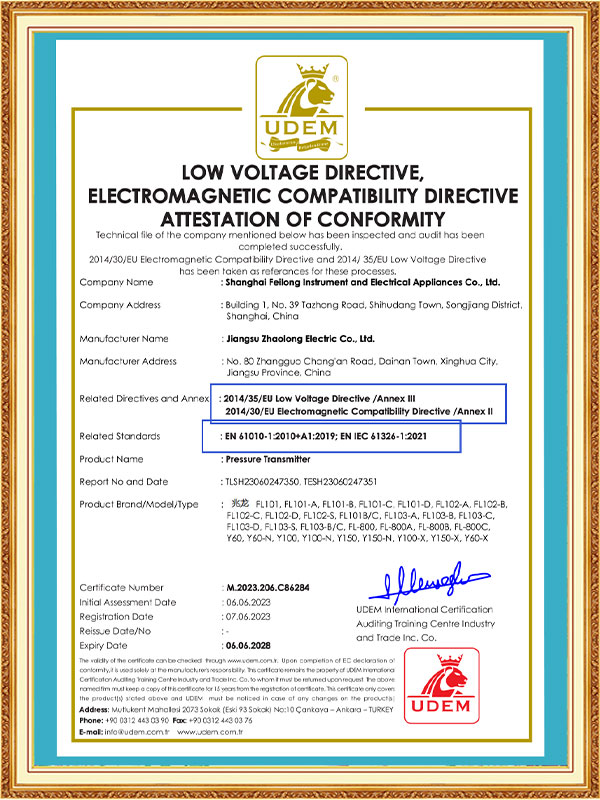
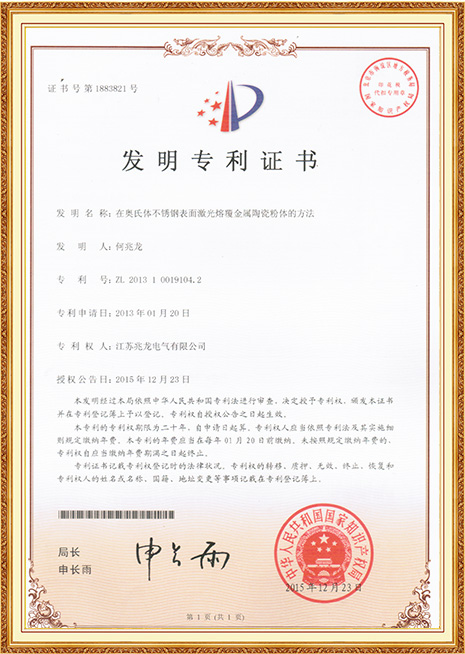
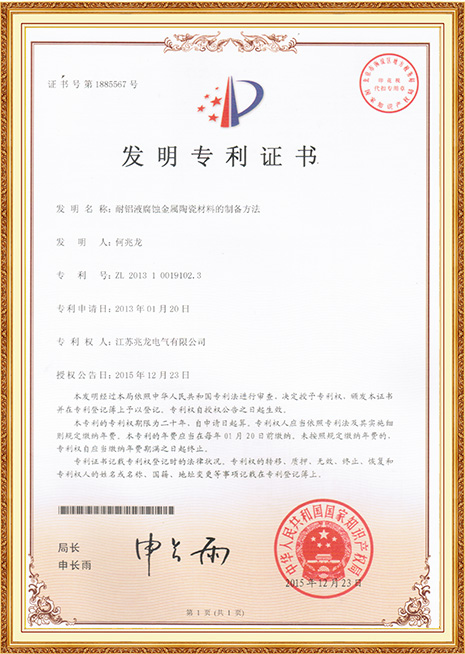
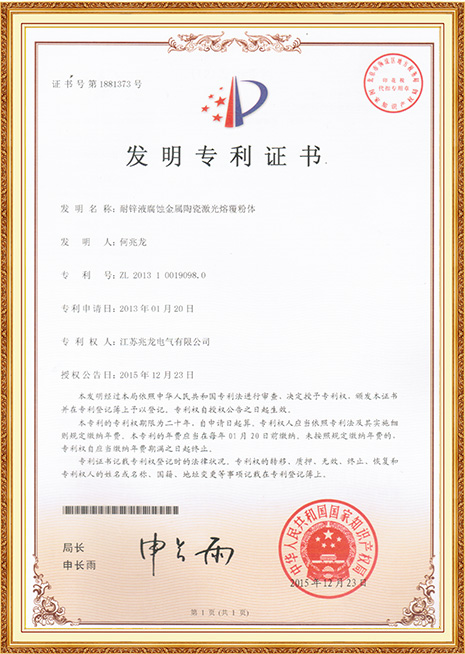
Certificate Of Honor
News
-
If you have ever compared two thermocouples on the same pipe and watched them disagree by a few degrees, the sensor tip probably was not the problem. More often, the answer sits at the other end of the loop, in the terminal block where the thermocouple wires meet the instrument. That connection point is the cold junct...
READ MORE -
If you have ever aimed an infrared thermometer at a stainless steel surface and received an unexpectedly low reading, emissivity is almost certainly the reason. Stainless steel is one of the most common materials in industrial plants, yet its emissivity ranges widely depending on how the surface is finished, how hot i...
READ MORE -
Resistance temperature detectors, or RTDs, are among the most reliable temperature sensors used in industrial automation. As a manufacturer that has designed and built temperature sensors and temperature control instruments for years, we often hear the same question from process engineers and maintenance teams: how do...
READ MORE
Industry knowledge
As an Assembled thermocouple manufacturer and temperature-sensor production base in Jiangsu, China, Jiangsu Zhaolong Electrics Co., Ltd. supplies assembled thermocouples for industrial processes where accurate temperature data drives safety and product quality. Since 2005 we have developed thermocouples, thermal resistances and temperature-control electronics with R&D institutions and academies in Shanghai. Our assembled thermocouple line comes from a 33,300 m² plant staffed by more than 100 skilled employees and backed by our own technical development team and patent results.
We treat an assembled thermocouple as a complete field-ready temperature sensor: calibrated thermocouple element, insulation, protective sheath, connection head and mounting device are assembled, tested and documented before shipment. This reduces installation errors and gives plant teams a predictable, replaceable component.
Assembled Thermocouple Range and Application Fit
We supply three assembled thermocouple families. The table below shows where each type normally fits; the final configuration is based on process temperature, atmosphere, pressure and mechanical duty.
| Assembled thermocouple family | Temperature capability | Typical process fit | Configuration emphasis |
|---|---|---|---|
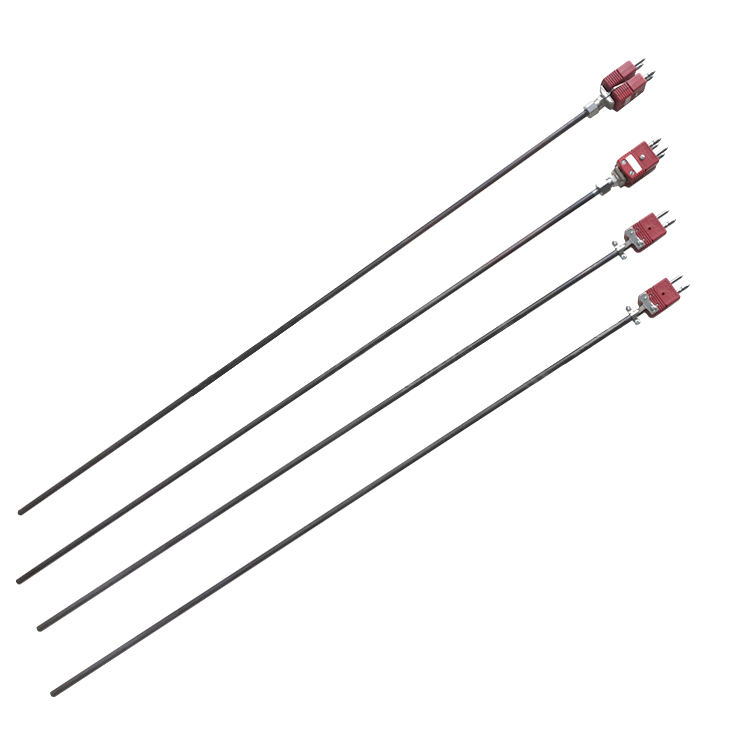
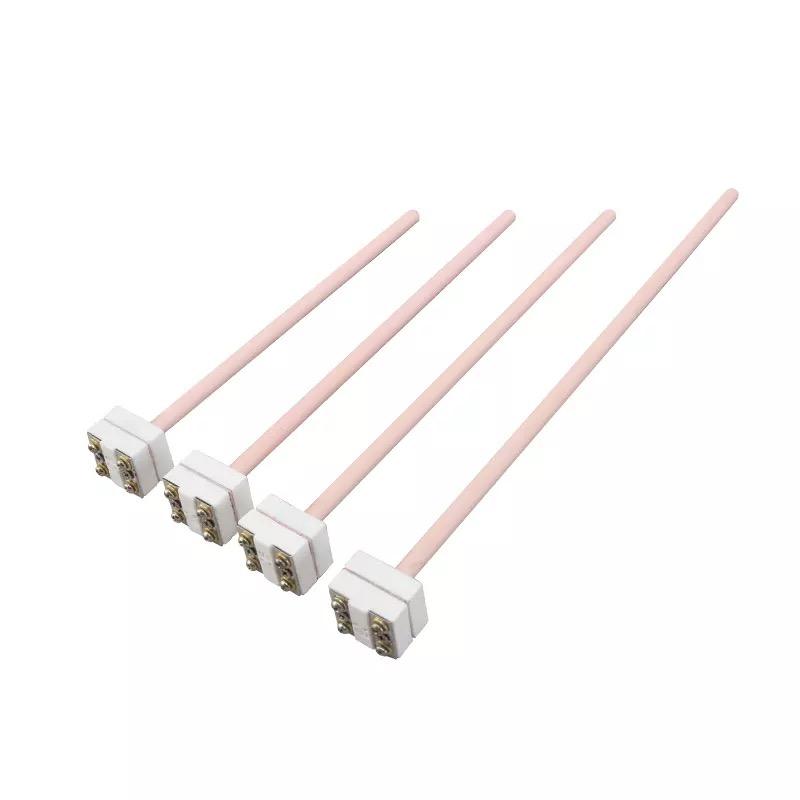
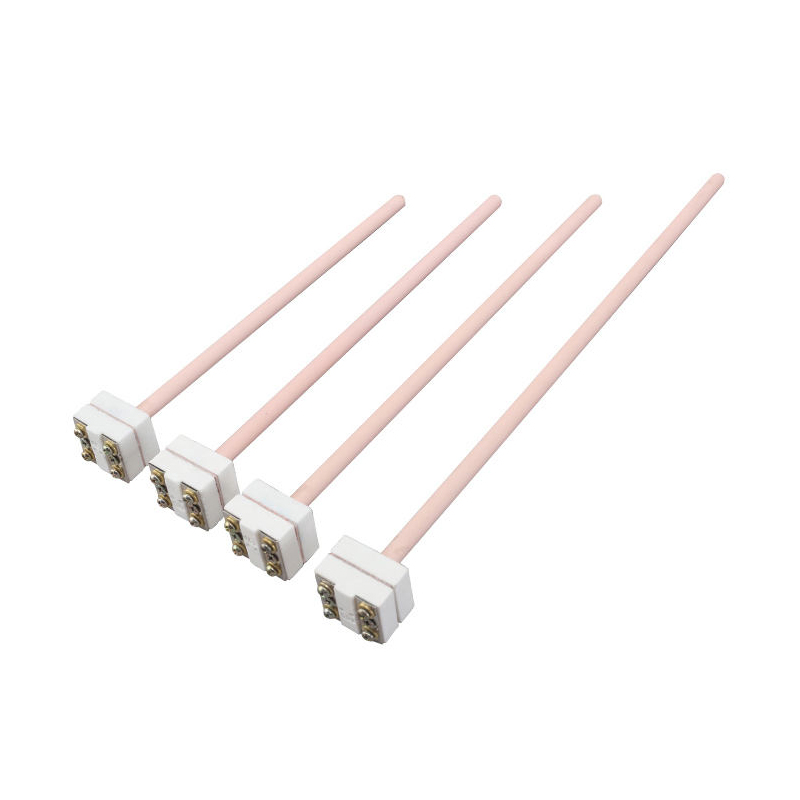
| Platinum-rhodium thermocouple (Types S, B, R) | Up to about 1800°C | Heat-treatment and ceramic furnaces, high-temperature oxidizing atmospheres, molten non-ferrous metal measurement | High-accuracy wire, ceramic protection tubes, fine-wire probes for molten metal, long-term stability |
| Tungsten-rhenium thermocouple (WRe3/25, WRe5/26, Types C and D) | Above 2000°C | Metallurgical and vacuum furnaces, high-temperature chemical reactions, aerospace test equipment | Anti-oxidation construction, high-temperature ceramic sheaths, needle-type probes, lower-cost alternative where platinum-rhodium is over-specified |
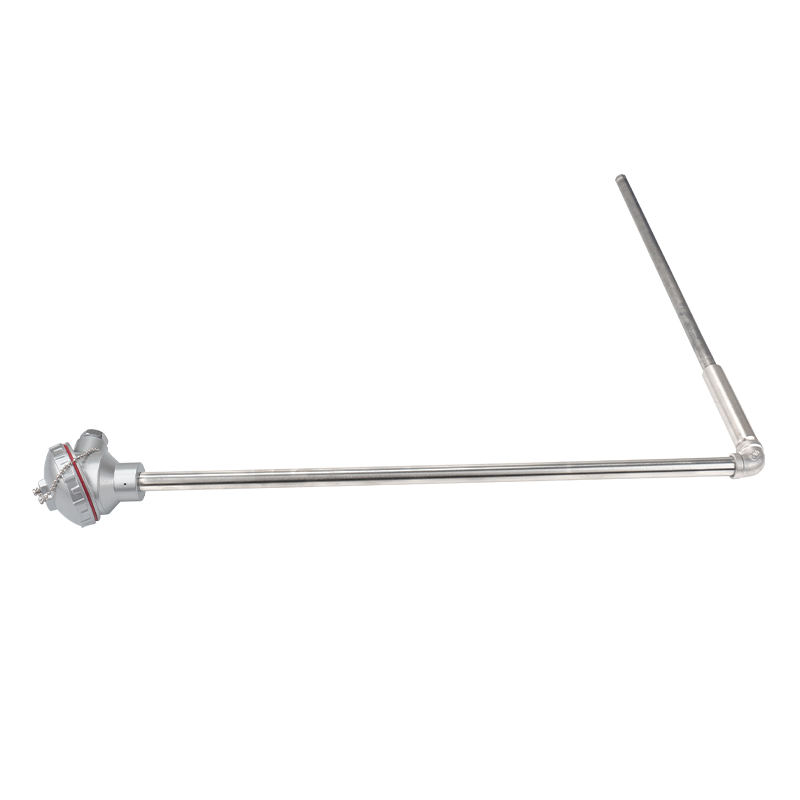
| Stainless steel thermocouple (Type K, N, E, J; PT100/RTD versions) | Up to about 1200°C | Boilers, ovens, exhaust systems, chemical plant, food machinery, HVAC and general industrial monitoring | Stainless steel sheaths, fixed or movable flanges, L-type wear-resistant probes for crucible furnaces, waterproof and insulated construction |
For high-temperature oxidizing service, choose the Platinum-rhodium thermocouple family. For processes above 2000°C, the Tungsten-rhenium thermocouple family provides a cost-effective, anti-oxidation alternative. For general industrial duties, the stainless steel thermocouple range covers Type K/N/E/J and PT100 versions with fixed or movable flanges, L-type wear-resistant probes and waterproof construction.
What We Mean by Factory Assembly
An assembled thermocouple is not just a thermocouple wire. We integrate the element, insulation, protective tube, connection head and mounting hardware into one instrument, then weld, assemble, check and calibrate it before shipment. This gives you a sensor that can be installed directly into a thermowell, flange, pipe or furnace wall without additional fabrication.
- Calibrated thermocouple element in Type K, N, E, J, S, B, R, WRe3/25 or WRe5/26
- Protection sheath in stainless steel, high-temperature alloy, ceramic or abrasion-resistant L-type construction
- Connection head with terminal block, quick connector or pre-wired lead
- Mounting configuration: fixed flange, movable flange, thread or non-fixed insertion
- Optional temperature transmitter integration or compensation wire ready for control panel connection
Material and Element Selection
The process atmosphere often decides the material more than the nominal temperature. Oxidizing furnace atmospheres favor platinum-rhodium elements; reducing or vacuum conditions favor anti-oxidation tungsten-rhenium; normal air, flue gas, steam and liquid service up to 1200°C suits stainless steel sheathed Type K or N elements. For molten aluminum, zinc, copper or steel, and for salt furnaces, we use the special thermocouple constructions we have developed for those solutions.
Critical Specifications We Define for Your Probe
Every assembled thermocouple proposal is prepared around the following data:
- Thermocouple type and accuracy or calibration class
- Protection sheath material, outside diameter and insertion length
- Process connection: thread, fixed flange, movable flange or non-fixed probe
- Connection head style, terminal type and cable entry orientation
- Required signal output: direct mV, 4-20 mA via temperature transmitter, or matched controller input
- Operating pressure, atmosphere, vibration level and required ingress protection
- Explosion-proof or hazardous-area classification when the installation is in a classified zone
Quality Control and Acceptance Evidence
Quality supervision runs through wire processing, welding, element assembly, encapsulation and final inspection. Our test laboratory is equipped with a precious-metal high-temperature test furnace, low-temperature test tank, oil tank test furnace and base-metal test furnace. Calibration equipment in the factory provides resolution up to 0.01°C over −200°C to 2000°C and controls temperature difference within ±0.1°C.
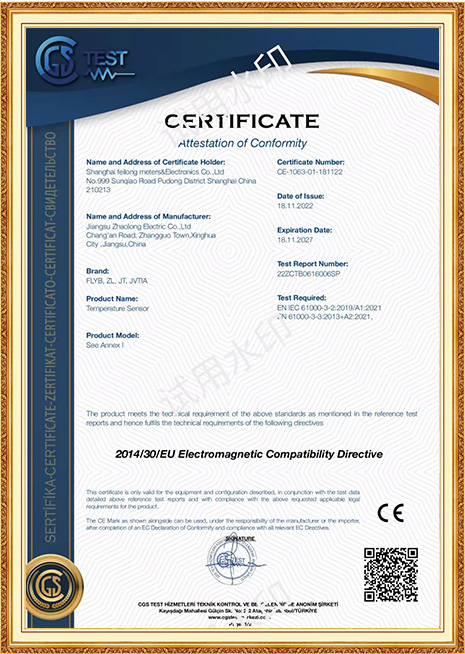
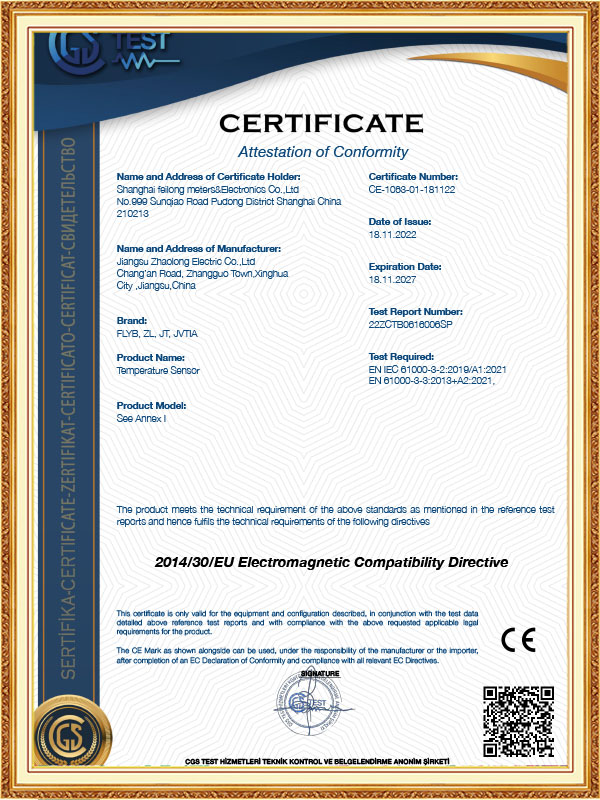
We hold GB/T 19001-2016/ISO9001:2015 and CE certification, and we have national explosion-proof production qualification for explosion-proof thermocouples and RTDs obtained in 2013. The company has multiple invention and utility-model patents, and can supply calibration and inspection documentation for acceptance.
Integration, Installation and Downtime Support
An assembled thermocouple is usually one link in a larger control loop. We match the probe to temperature controllers, rail transmitters and intelligent transmitters, and we can design and install automatic temperature-control cabinets, control rooms and remote monitoring systems for plants that need a complete loop.
Sensor position decides measurement quality. We confirm insertion length against nozzle, thermowell or flange dimensions and advise on immersion depth. During installation, protect the connection head from moisture and impact, and use approved compensation wire between the sensor head and the instrument. We export to more than 30 countries and regions by sea freight, with air freight available for urgent replacement probes.
Information We Use to Configure Your Solution
To prepare a configuration and quotation, our project engineer needs the following inputs:
- Process description, medium, pressure, atmosphere and normal or peak temperature
- Thermocouple type and accuracy class, or process details so we can recommend the element
- Sheath material, diameter, wall thickness and desired insertion length
- Mounting method: fixed flange, movable flange, thread, compression fitting or non-fixed probe
- Connection head, terminal block, quick connector or cable exit
- Required signal: direct thermocouple mV, 4-20 mA through a temperature transmitter, or a transmitter with digital communication
- Explosion-proof or hazardous-area classification, if applicable
- Quantity, target delivery date and any drawing or sample reference
Assembled Thermocouple FAQs
What is the difference between a thermocouple wire and an assembled thermocouple?
A bare thermocouple wire only provides the measuring junction. An assembled thermocouple includes the calibrated sensor, insulation, protective sheath, connection head and mounting device as a ready-to-install instrument. We test and document the complete assembly so you can install it directly.
Can you manufacture special dimensions and mounting styles?
Yes. Customized production is one of our core strengths. Based on your drawing, sample or written specification, we configure sheath length, diameter, flange type, connection head and cable exit. Tell us the design and we adjust the assembly accordingly.
Which assembled thermocouple should I use above 1800°C?
For measurement above 1800°C, tungsten-rhenium elements (WRe3/25 or WRe5/26) are normally the practical choice. Where oxidizing conditions could attack tungsten-rhenium, a suitable ceramic protection tube or anti-oxidation construction is used. Our anti-oxidation tungsten-rhenium thermocouples are also used as a lower-cost option compared with platinum-rhodium for high-temperature measurement.
Do stainless steel assembled thermocouples only work at low temperature?
No. The stainless steel range covers general service up to about 1200°C, with Type K/N elements and MgO insulation inside a stainless or high-temperature alloy sheath. This includes furnace sensors, wear-resistant L-type probes and PT100-type versions in the same package.
What after-sales support is included?
We provide a 12-month warranty covering non-human damage during use, professional calibration guidance and spare parts for thermocouple heads, connectors, sleeves and matching accessories. This shortens downtime when a plant replaces a failed sensor.

PRODUCT
CONTACT INFO.
-
 +86-181 1593 0076 (Amy)
-
 +86 (0)523-8376 1478
-
 [email protected]
-
 No. 80, Chang'an Road, Dainan Town, Xinghua City, Jiangsu, China
QR CODE

Copyright © 2025. Jiangsu Zhaolong Electrics Co., Ltd.
 Wholesale Assembled Thermocouple Factory
