eng
eng
 English
 русский
 Español
 Français
Home / News / Industry News / What Is a Type K Thermocouple? Working Principle, Range, Accuracy Guide

Industry News
Aug 19,2026
What Is a Type K Thermocouple? Working Principle, Range, Accuracy Guide
What Is a Type K Thermocouple?
Walk through a heat-treatment shop, a food processing line, or a petrochemical unit, and you will find Type K thermocouples in most temperature loops. They have become the default industrial temperature sensor because they combine a wide range, low cost, and dependable stability in oxidising atmospheres. A Type K thermocouple is a temperature sensor made from two nickel-based alloy wires: Chromel (nickel-chromium) on the positive leg and Alumel (nickel-aluminium) on the negative leg. When the measuring junction is heated, the Seebeck effect produces a small DC voltage that a connected instrument converts into a temperature reading.
Type K sensors cover roughly -200°C to 1260°C, which is enough for most furnaces, hot-air systems, exhaust monitoring, heat-treatment ovens, and process piping. They are also mechanically flexible: the same basic element can be built into a thin needle probe, a mineral-insulated cable, an industrial stainless-steel probe, a surface-patch sensor, or a heavy furnace assembly. That versatility explains why engineers often reach for Type K before other letter-designated thermocouples.
- Output sensitivity: roughly 41 microvolts per degree Celsius across the working range
- Common standards: IEC 60584, ANSI/ASTM E230
- Available in grounded, ungrounded, and exposed junction styles
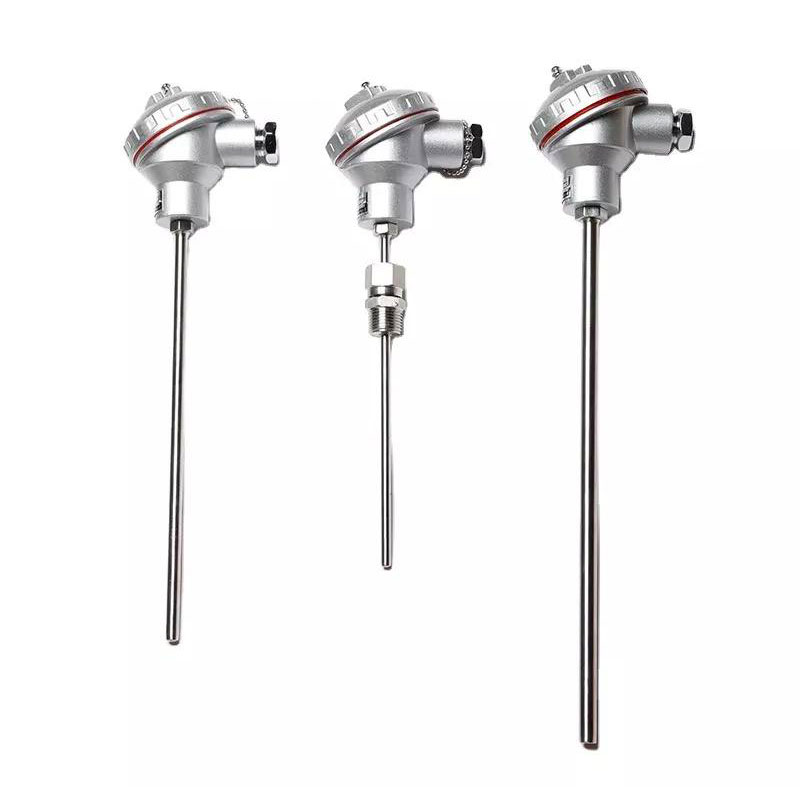
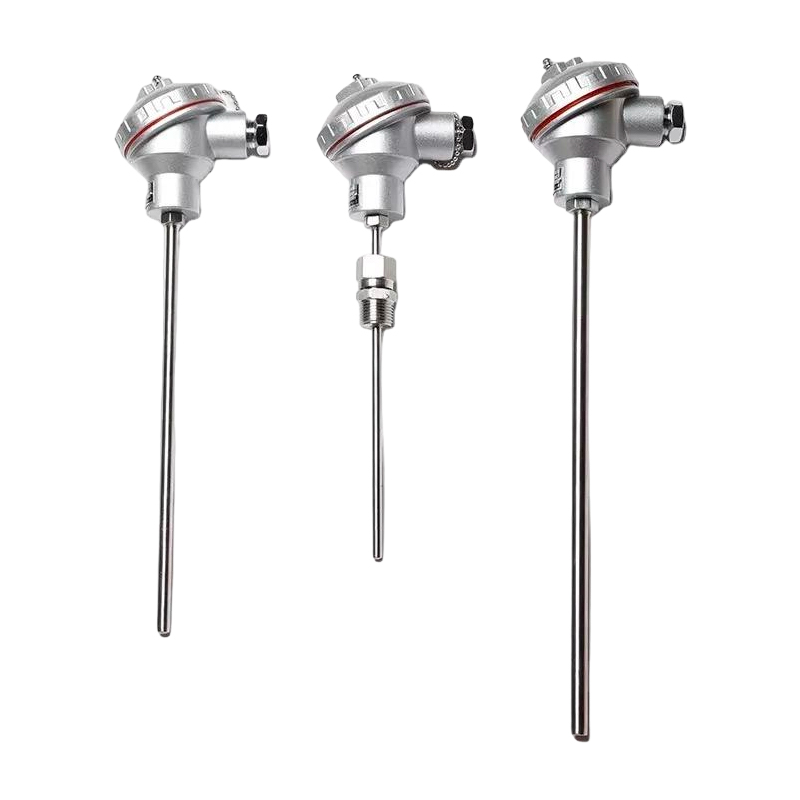
- Wide choice of sheath materials, diameters, and mounting fittings
If you need a probe for a specific machine or process, the range of industrial temperature sensors on this site shows how the same Type K element can be packaged for different operating environments.
How a Type K Thermocouple Works
Two dissimilar metal wires are joined at the measuring end. The measuring junction sits at the process temperature, while the other ends connect to a measurement instrument at a known or compensated temperature. The temperature difference between the two junctions generates a small DC voltage; for Type K the output is roughly 41 microvolts per degree Celsius. The instrument applies cold-junction compensation to remove the effect of the reference end, then displays the calculated process temperature.
This is the same principle for all thermocouple types, but the alloy combination defines the electrical output and temperature limits unique to Type K.
Junction Styles and Response
The junction at the measuring tip can be built in three ways, and the choice affects response time, mechanical strength, and immunity to electrical noise.
| Junction style | Construction | Response | Typical use |
|---|---|---|---|
| Exposed | Wire junction protrudes beyond the sheath | Fastest | Laboratory, non-corrosive gases, clean air |
| Grounded | Junction welded to the inside of the sheath tip | Fast | High-pressure vessels, general industrial probes |
| Ungrounded | Junction insulated from the sheath by mineral powder | Slower | Electrically noisy areas; avoids ground loops |
In practice, most industrial Type K sensors use an ungrounded or grounded junction because the exposed style lacks mechanical protection.
Temperature Range, Accuracy, and Tolerances
Type K is classified as a base-metal thermocouple. In air, a standard construction can be used continuously up to about 1100°C; higher temperatures accelerate oxidation of the nickel-chromium leg. Short excursions to 1260°C are possible, and larger-diameter wires tolerate the upper limit better than thin wires. At the low end, the practical limit is around -200°C, where the signal becomes small and the error budget tightens.
| Parameter | Typical value |
|---|---|
| Continuous temperature range | -200°C to 1100°C (up to 1260°C short-term) |
| Output | 40–42 microvolts per degree Celsius, depending on temperature |
| IEC tolerance, Class 1 | ±1.5°C or ±0.4%, whichever is greater (-40°C to 1000°C) |
| IEC tolerance, Class 2 | ±2.5°C or ±0.75%, whichever is greater (-40°C to 1200°C) |
| Positive leg / negative leg | Nickel-chromium / nickel-aluminium (Chromel / Alumel) |
| ANSI colour code | Yellow positive, red negative |
| IEC colour code | Green positive, white negative |
How Tolerance Classes Work
The “or” in the tolerance statement is important. For a Class 1 sensor at 500°C, 0.4% of 500°C is 2.0°C, so the permitted error is ±2.0°C, not ±1.5°C. At 100°C, the fixed value of ±1.5°C governs. Always compare the fixed value with the percentage value and take the larger one.
What Affects Real-World Accuracy
Beyond the sensor class, accuracy depends on sheath material interaction, immersion depth, heat conduction along the probe, extension wire quality, and the calibration of the instrument connected to it. A correctly installed Class 1 sensor will usually outperform a poorly installed Class 2 sensor only if the installation allows the junction to reach the true process temperature.
Common Type K Thermocouple Designs
Because the temperature range and cost make Type K so versatile, manufacturers offer dozens of mechanical configurations for different industries.
Sheathed and Mineral-Insulated Probes
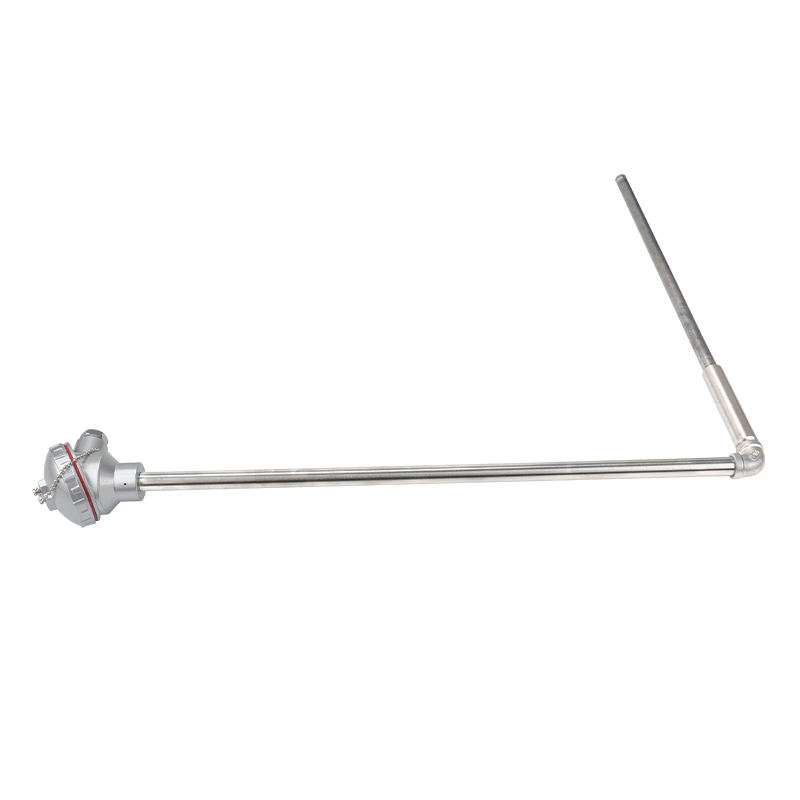
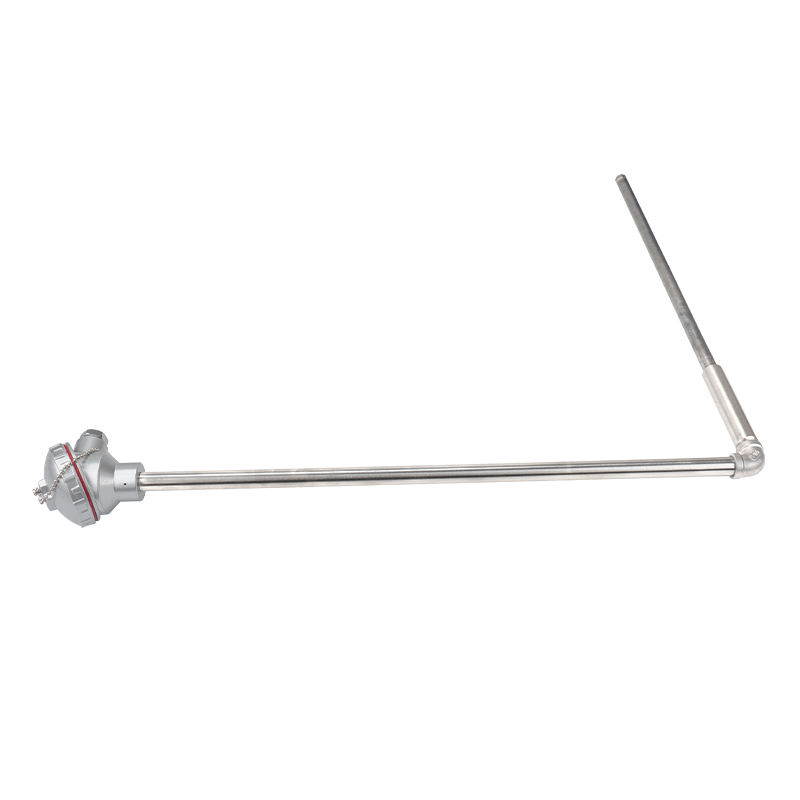
For furnaces, exhaust lines, and high-temperature processes, the Type K element is packed in magnesium oxide and enclosed in a stainless-steel or Inconel sheath. This construction protects the wires from moisture, pressure, and mechanical damage while allowing the probe to be bent to fit restricted spaces. For furnace doors and aluminium contact, an industrial wear-resistant L-type K-type thermocouple adds extra metal thickness at the bend and tip, which significantly extends service life in abrasive environments.
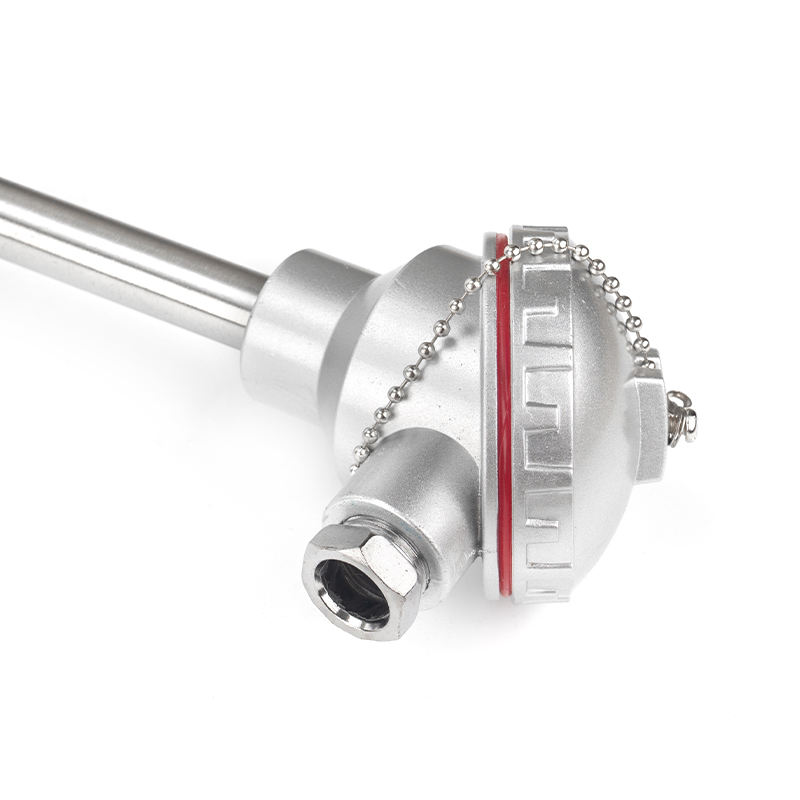 Wholesale Type K thermocouple for industrial wear-resistant L-type thermocouple Jiangsu Zhaolong Electrics Co., Ltd. is China wholesale Type K thermocouple for industrial wear-resistant L-type thermocouple furnace alu...View Product →
Surface Temperature Sensors
Measuring the temperature of a flat surface introduces two problems: the sensor must make firm thermal contact, and it must not conduct heat away from the surface. A self-adhesive surface-mount K-type thermocouple solves both by bonding the measuring junction directly to the object. It is a practical option for pipes, plates, moulds, and electrical equipment where drilling or welding is not allowed.
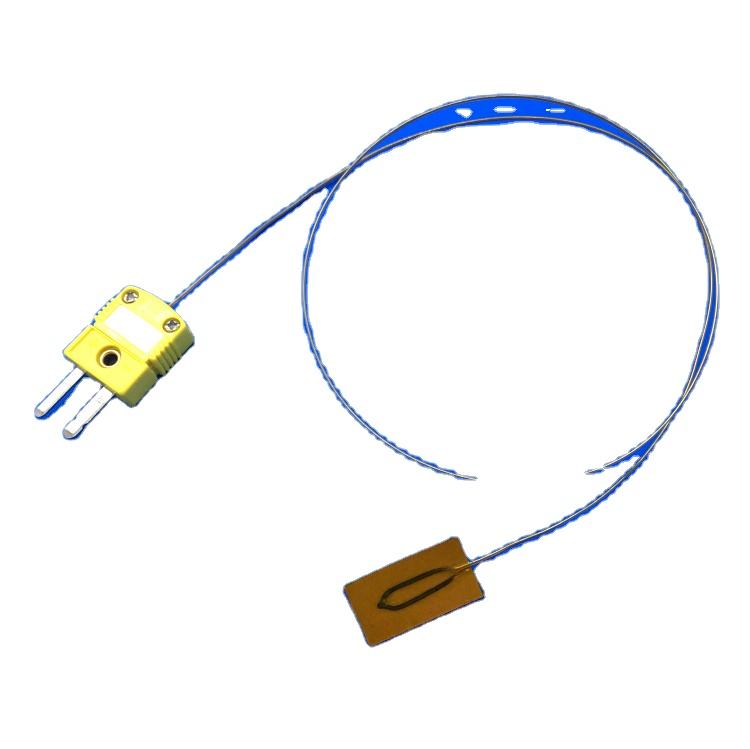 Wholesale High-Precision Surface-Mount Self-Adhesive K-Type Thermocouple for TemJiangsu Zhaolong Electrics Co., Ltd. is China wholesale High-Precision Surface-Mount Self-Adhesive K-Type Thermocouple for Temperature Me...View Product →
Needle and Fast-Response Probes
Thin needle probes are used when the sensor must measure a small mass, a soft product, or a point inside a moving process without removing too much material. Their small diameter gives a fast thermal response, but it also limits the maximum service temperature and makes the probe more fragile than a sheathed type.
Where Type K Thermocouples Are Used
Type K is the default choice in most temperature-sensitive industries because the base alloy cost is low and the range covers common process conditions. Typical applications include:
- Petrochemical and chemical plants – pipe skin temperatures, reactor walls, storage tanks.
- Furnaces, kilns, and heat treatment – chamber and load monitoring up to 1100°C.
- Natural gas and power systems – exhaust gas temperature, burner monitoring, turbine inlet measurements.
- Food machinery – product core temperature, ovens, fryers, and sterilisation lines.
- Analytical instruments – compact probes inside laboratory equipment and sample heaters.
You can find more on the industrial applications overview on this site.
Food Processing Example
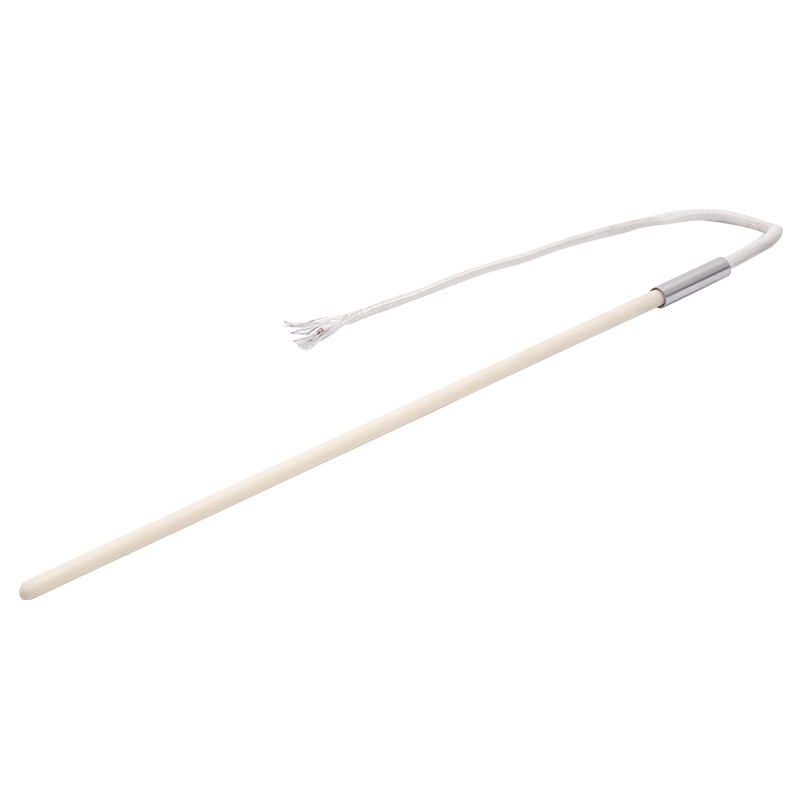
In food production, the sensor must be slim enough to penetrate a product without causing damage, robust enough for frequent cleaning, and fast enough to follow temperature changes during cooking or cooling. A needle-shaped K-type thermocouple applicable to the temperature measurement for food processing is a common solution in this sector.
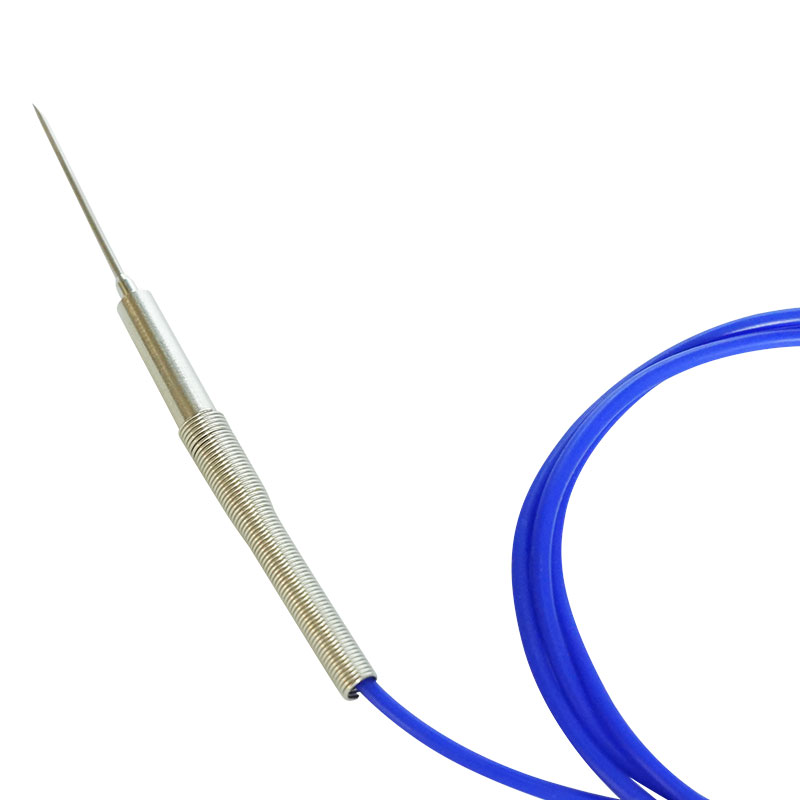 Wholesale Needle-shaped thermocouple (Applicable to the temperature measurement Jiangsu Zhaolong Electrics Co., Ltd. is China wholesale Needle-shaped thermocouple (Applicable to the temperature measurement for food pr...View Product →
Beyond individual probes, the thermocouple must work with a controller or transmitter. The role of industrial temperature sensors in temperature control systems explains how the sensor signal becomes part of a closed control loop, and why sensor placement and signal conditioning matter as much as the probe itself.
How to Choose the Right Type K Thermocouple
Start with the process conditions, not the catalogue. Define the maximum continuous temperature, the atmosphere, the mechanical load, and the space available for mounting. Then narrow the design using these steps:
- Confirm the measured temperature stays within the safe continuous range of Type K.
- Select the junction style: ungrounded for electrically noisy areas, grounded for faster response, exposed only in non-corrosive, non-pressurised locations.
- Choose a sheath material compatible with the process atmosphere and temperature.
- Define the probe diameter, length, and mounting thread, flange, or compression fitting.
- Select an accuracy class and check whether the process tolerance is compatible with Class 1 or Class 2.
- Specify the extension wire: use the correct Type K compensating cable and keep the connection away from moisture and heat.
When in doubt, provide the supplier with the operating temperature, sheath temperature, chemical exposure, and mechanical conditions. Manufacturers such as our factory can then recommend a standard Type K assembly or build a custom probe with the right diameter, probe length, material, and connection head.
Testing and Troubleshooting Type K Thermocouples
Most field problems are found with a simple inspection before any calibration work is attempted.
- Visual inspection – check for cracked or deformed sheaths, discolouration, loose fittings, and damaged insulation.
- Continuity test – disconnect the instrument and measure across the two wires with a multimeter. A healthy Type K probe shows a low resistance value; an open circuit means a broken wire.
- Ice-bath check – place the sensing junction in a mixture of crushed ice and water and monitor the reading. It should settle near 0°C within the sensor tolerance.
- Comparative check – install the probe next to a recently calibrated reference sensor in a stable temperature source and compare the readings.
Common Faults
- Drift – often caused by oxidation, contamination, or selective oxidation of the chromium in the positive leg at high temperature.
- Noisy readings – usually an electrical interference problem or a high-resistance connection; ungrounded junctions reduce ground-loop noise.
- No output – broken wire, loose terminal, or reverse polarity over the extension wire.
Choose the Right Supplier for Your Type K Sensor
Type K thermocouple is the right starting point for most industrial temperature measurements, but the probe construction, materials, and accuracy class must match the application to deliver reliable long-term performance. A clear specification reduces downtime, avoids repeated purchases, and makes the sensor easy to install and maintain. Whether you need a standard stainless-steel probe, a furnace-grade wear-resistant assembly, or a small sensor for food machinery, discussing the process conditions openly with the manufacturer helps get the right design on the first order.
Recommended Products

PRODUCT
CONTACT INFO.
-
 +86-181 1593 0076 (Amy)
-
 +86 (0)523-8376 1478
-
 [email protected]
-
 No. 80, Chang'an Road, Dainan Town, Xinghua City, Jiangsu, China
QR CODE