eng
eng
 English
 русский
 Español
 Français

As industrial facilities worldwide accelerate their transition toward digitized, carbon-neutral operations, high-precision intelligent temperature sensors have emerged as a linchpin technology—bridging the physical world of heat and energy flow with the data-driven intelligence of Industrial IoT.
Temperature is among the most consequential process variables in manufacturing. It governs reaction kinetics in chemical production, metallurgical phase transitions in steelmaking, curing cycles in composite fabrication, and energy consumption across virtually every thermal process. When measured imprecisely or monitored in isolation, temperature data yields limited value. When captured at high accuracy, fused with contextual sensor data, and processed by edge or cloud analytics, it becomes a strategic lever for quality assurance, energy optimization, and emissions reduction simultaneously.
The convergence of MEMS miniaturization, low-power wireless protocols, AI-driven signal processing, and interoperable IIoT platforms has given rise to a new generation of intelligent temperature sensors that far surpass their conventional predecessors in capability. This article examines the technological foundations of these devices, their role within IIoT architectures, the measurable contributions they make to green manufacturing objectives, and the deployment considerations practitioners must navigate.
The Technology Behind High-Precision Intelligent Temperature Sensing
Precision and intelligence are not synonymous attributes in sensor design; each demands separate engineering disciplines. High-precision temperature measurement requires accurate transduction, low-drift reference circuits, noise-immune signal chains, and traceable calibration. Intelligence, by contrast, requires embedded computation, adaptive algorithms, communication stacks, and self-diagnostic capability. Modern devices integrate both.
Sensing Elements: RTDs, Thermocouples, and Beyond
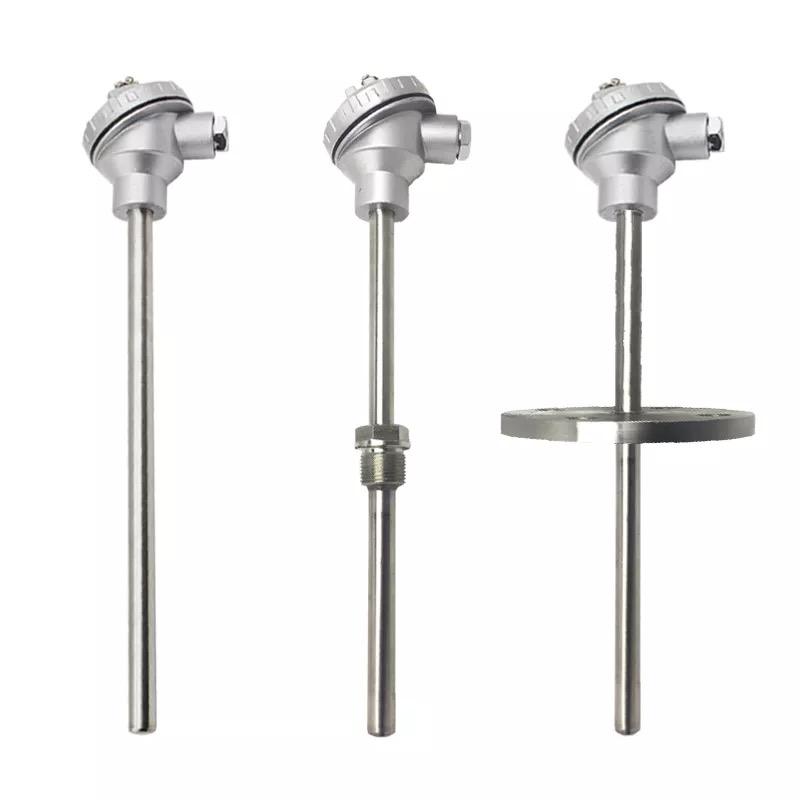
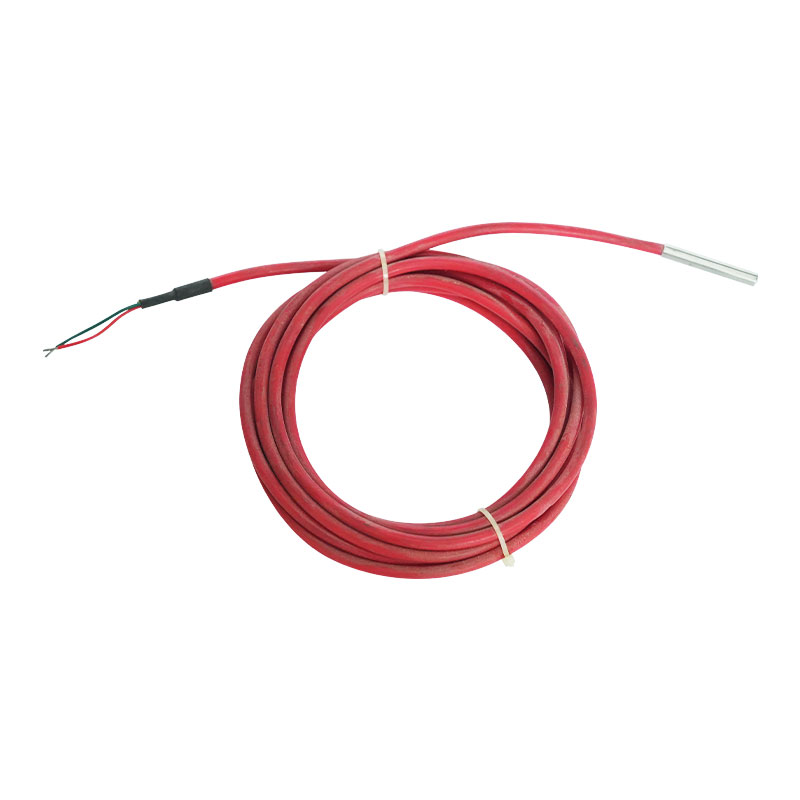
Platinum Resistance Temperature Detectors (PT100 and PT1000 RTDs) remain the gold standard for industrial precision, offering measurement uncertainty below ±0.1°C across the –200°C to +850°C range when implemented with four-wire Kelvin connections and precision reference resistors. Thermocouples extend the upper range to beyond 1600°C for refractory and furnace applications but require cold-junction compensation circuits to maintain accuracy. Thermistors deliver excellent sensitivity in narrow temperature windows, making them ideal for pharmaceutical cold-chain and semiconductor fab environments.
Emerging contenders include fiber-optic distributed temperature sensing (DTS), which resolves temperature along kilometers of fiber with meter-level spatial resolution—uniquely suited to pipeline integrity and large-scale battery thermal management—and infrared array sensors that deliver non-contact two-dimensional thermal maps without disturbing the process.
Embedded Signal Intelligence
The "intelligent" designation refers to processing capabilities resident within the sensor node itself. Modern temperature transmitters incorporate 24-bit sigma-delta analog-to-digital converters, low-power microcontrollers, and firmware libraries that implement:
On-node Linearization
Polynomial or look-up-table correction applied at the source, eliminating host-side computation and latency.
Drift Compensation
Reference junction tracking and self-calibration routines that maintain accuracy over multi-year deployment without manual recalibration.
Anomaly Flagging
Threshold alerts, rate-of-change detection, and statistical outlier identification delivered as structured events alongside measurement data.
Predictive Diagnostics
Sensor health indicators—lead resistance, noise floor, calibration age—transmitted alongside process values for proactive maintenance.
Edge ML Inference
Lightweight TinyML models running directly on ARM Cortex-M cores classify thermal signatures without cloud round-trips.
Secure Communications
Hardware root-of-trust, TLS 1.3, and certificate-based device identity enforced at the sensor level.
Integration into Industrial IoT Architectures
A temperature sensor's value is fully realized only when its data flows reliably into decision-making systems. IIoT architectures provide the connectivity fabric, data management infrastructure, and analytical layers that transform raw measurements into operational intelligence.
Communication Protocols and Connectivity Tiers
Modern plants deploy a layered connectivity model. At the field level, wired protocols—HART, Modbus RTU, PROFIBUS PA, and increasingly IO-Link—provide deterministic, noise-immune data transport from sensors to marshalling panels or edge gateways. For retrofit deployments or locations where cabling is impractical, wireless alternatives including WirelessHART (IEC 62591), ISA 100.11a, and increasingly WIA-PA deliver reliable mesh connectivity rated for hazardous locations.
At the edge tier, industrial gateways aggregate sensor streams, perform protocol translation, and apply local analytics before forwarding curated datasets to plant historians or cloud platforms via OPC-UA or MQTT. This architecture dramatically reduces bandwidth demand and cloud processing costs while enabling sub-millisecond local control loops that cloud latency cannot support.
"The decisive advantage of edge-resident intelligence is not latency alone—it is resilience. A furnace whose temperature controller relies on cloud confirmation cannot tolerate network interruption. A sensor that decides locally can protect the process regardless of upstream connectivity."
Digital Twin Synchronization
High-frequency temperature data from dense sensor arrays feeds digital twin models that replicate thermal dynamics of assets such as kilns, heat exchangers, electric arc furnaces, and injection molding tools. Twin fidelity depends critically on measurement density and accuracy: a ±2°C error in a feed-forward temperature model propagates into process setpoint errors, quality deviations, and wasteful over-processing. Precision sensors with sub-degree uncertainty enable twin models to converge faster and maintain accuracy between calibration cycles.
Bidirectional twin synchronization supports closed-loop optimization: the twin's physics model predicts where the process will drift, the optimizer issues preemptive setpoint adjustments, and the sensor array validates the outcome—completing a feedback loop that reduces both energy input and product variability simultaneously.
Interoperability and Standards Compliance
Enterprise-scale IIoT deployments span assets from multiple vendors across decades of procurement cycles. Interoperability frameworks—notably OPC-UA information models, the Namur Open Architecture (NOA), and RAMI 4.0—provide semantic standards that allow intelligent temperature sensors to be discovered, configured, and integrated without bespoke middleware. Devices compliant with the IO-Link smart sensor profile or the NAMUR NE107 status model communicate not just process values but structured diagnostic and status information that condition monitoring systems can consume without custom integration work.
Industrial Applications Across Key Sectors
The operational impact of high-precision intelligent temperature sensors varies by industry, but the underlying value mechanisms—energy reduction, quality assurance, equipment longevity, and emissions accountability—recur consistently.
| Industry | Application | Sensor Role | Key Benefit |
|---|---|---|---|
| Steel & Metals | Electric arc furnace control | Continuous melt temperature profiling | Reduced tap-to-tap time, lower electricity per ton |
| Chemicals | Reactor temperature management | Multi-point RTD arrays with redundancy | Runaway prevention, yield consistency |
| Semiconductors | Epitaxial growth chambers | Pyrometry + wafer thermocouple fusion | Sub-angstrom layer uniformity control |
| Food & Beverage | Pasteurization & sterilization | Hygienic RTDs with EHEDG-compliant housings | Regulatory compliance, energy-efficient hold times |
| Pharmaceuticals | Lyophilization (freeze-drying) | Wireless thermocouples inside chamber | 21 CFR Part 11-compliant batch records |
| Energy / Power | Transformer & cable monitoring | Fiber-optic DTS along conductor runs | Dynamic rating, hotspot prevention, grid resilience |
| Automotive | Battery thermal management | High-density NTC arrays in cell modules | State-of-health accuracy, fire risk reduction |
| Cement / Ceramics | Rotary kiln shell monitoring | Infrared line-scan with anomaly detection | Refractory lining protection, fuel efficiency |
Enabling Green, Low-Carbon Manufacturing
Industrial thermal processes account for a disproportionate share of global energy demand and direct carbon emissions. Furnaces, dryers, steam systems, and heat treatment processes collectively represent over 20% of total final energy consumption in manufacturing-intensive economies. High-precision intelligent temperature sensing contributes to decarbonization along four intersecting pathways.
Pathway 1: Thermal Process Efficiency
Overheating is the industrial equivalent of running water while brushing your teeth—it is habitual, invisible, and cumulatively enormous. When operators set furnace temperatures conservatively high to guarantee product quality under uncertainty, the excess energy consumed is pure waste. Precision sensors eliminate this uncertainty margin. Studies across automotive paint shops, glass melting furnaces, and industrial bakeries consistently report energy savings of 8–35% when setpoint conservatism is replaced by closed-loop control with accurate, high-frequency feedback.
Furthermore, intelligent sensors detect heat exchanger fouling through characteristic changes in differential temperature signatures before efficiency losses become severe, enabling targeted maintenance that restores optimal heat transfer before cumulative degradation erodes performance.
Pathway 2: Waste and Scrap Reduction
Off-specification product that must be reworked or scrapped embeds all the energy, water, and raw material consumed in its production—none of which delivers value. Temperature non-uniformity is a leading cause of dimensional variation, surface defects, and microstructural inconsistency in thermally processed parts. Dense sensor arrays coupled to real-time SPC (Statistical Process Control) systems identify temperature non-uniformity before batches complete, enabling corrective intervention rather than post-process rejection. The carbon footprint of eliminated scrap often exceeds the direct energy savings attributable to tighter setpoint control.
Pathway 3: Renewable Energy Integration and Demand Flexibility
Electrification of industrial heat—replacing fossil combustion with electric resistance, heat pumps, or inductive heating—is central to deep decarbonization roadmaps. Electric thermal processes can participate in demand response programs: shifting high-energy heating operations to periods of abundant renewable generation lowers both operating cost and grid carbon intensity. Intelligent temperature sensors enable this flexibility by providing the process visibility needed to safely reschedule thermal operations without quality compromise. A kiln operator who can see, in real time, exactly where the product is in its thermal cycle can confidently defer the next firing window when grid signals indicate high carbon intensity.
Pathway 4: Carbon Accounting and Scope 1 Emissions Reporting
Credible emissions reporting under frameworks such as the GHG Protocol, ISO 14064, and emerging regulatory requirements (EU CBAM, SEC climate disclosure rules) requires defensible measurement data. Process temperature histories, correlated with fuel consumption and combustion efficiency models, provide the empirical basis for Scope 1 emissions calculations that withstand third-party verification. Intelligent sensors with tamper-evident audit trails and calibration records embedded in their communication payloads simplify the evidence chain required for credible carbon accounting.
Green manufacturing is not achieved through a single bold technology choice but through the compounding effect of thousands of precise decisions—each one enabled by knowing, accurately and continuously, exactly how energy is flowing through every thermal process in the plant.
AI-Driven Analytics and Predictive Maintenance
The intelligence embedded in modern temperature sensors does not end at the device boundary. When time-series data from arrays of precision sensors flows into plant-level analytics platforms, machine learning models can identify patterns invisible to deterministic rule-based systems.
Thermal Signature Classification
Every piece of rotating or heat-generating equipment develops a characteristic thermal signature under normal operating conditions. Bearing degradation in a motor shifts the heat distribution from the load end to the drive end before vibration anomalies emerge. Fouled heat exchanger tubes create asymmetric temperature profiles detectable days before flow restriction becomes measurable. Trained classification models, fed by dense temperature sensor networks, detect these early signatures and trigger maintenance workflows before equipment failure or quality excursion occurs.
Prescriptive Setpoint Optimization
Reinforcement learning agents trained on historical process data can propose setpoint sequences that minimize energy consumption while satisfying product quality constraints—a multi-objective optimization problem too complex for hand-tuned PID loops. The agent's recommendations are only as trustworthy as the sensor data on which they were trained and validated. Sensor accuracy is therefore not merely an instrumentation specification but a prerequisite for AI reliability: a model trained on biased temperature measurements will recommend setpoints optimized for the wrong objective.
Federated Learning Across Facilities
Manufacturers operating multiple plants can improve model performance through federated learning—a technique in which local models train on facility-specific data and share only model weight updates, not raw process data, with a central aggregator. This approach preserves data sovereignty while accelerating convergence to robust models. Temperature sensors compliant with unified data models (OPC-UA, Asset Administration Shell) facilitate federated deployment by ensuring consistent feature engineering across sites that may use different automation vendors.
Deployment Roadmap: From Pilot to Plant-Wide Scale
Successful IIoT temperature sensing programs progress through recognizable maturity stages. Organizations that attempt full-scale transformation without foundational infrastructure typically encounter integration complexity, data quality issues, and organizational change resistance that stall momentum. A phased approach builds capability and trust systematically.
-
Phase 1 — Foundation
Audit existing temperature measurement infrastructure. Identify critical control loops, legacy devices with inadequate accuracy, and measurement gaps. Establish calibration traceability and a sensor data governance framework. Select pilot processes with clear energy waste or quality variability profiles.
-
Phase 2 — Pilot Deployment
Deploy intelligent temperature sensors with edge gateway infrastructure on two to three selected processes. Integrate with existing DCS or SCADA via OPC-UA. Establish baseline energy and quality KPIs. Validate sensor accuracy against reference standards under production conditions.
-
Phase 3 — Analytics Activation
Connect sensor streams to plant historian and analytics platform. Build thermal process digital twins for piloted assets. Train initial anomaly detection and process optimization models. Quantify energy and quality improvement against baseline and present ROI evidence to stakeholders.
-
Phase 4 — Horizontal Scale
Extend proven architecture across all critical thermal assets. Standardize on interoperable device profiles to simplify procurement and integration. Implement automated sensor health monitoring and calibration scheduling. Connect plant-level carbon accounting to sensor data streams.
-
Phase 5 — Continuous Optimization
Deploy closed-loop AI setpoint optimization on energy-intensive processes. Enable demand-response participation through thermal process scheduling. Extend federated learning across multi-site operations. Embed temperature sensor KPIs into sustainability reporting workflows.
Cybersecurity Considerations
Industrial sensors connected to plant networks and cloud platforms expand the attack surface of operational technology environments. Security-by-design principles—hardware security modules, secure boot, certificate-based authentication, encrypted transport, and firmware update integrity verification—must be specified at procurement, not retrofitted post-deployment. The IEC 62443 standard provides a structured framework for assessing and implementing OT cybersecurity across the sensor-to-cloud stack.
Total Cost of Ownership
Intelligent temperature sensors command a price premium over conventional transmitters, but total cost of ownership analysis consistently favors the investment. Reduced calibration frequency (supported by on-board drift monitoring), elimination of process quality deviations, lower energy consumption, and deferred equipment replacement through predictive maintenance each contribute to payback periods of twelve to thirty-six months in typical industrial applications. The carbon cost savings, increasingly material as carbon pricing mechanisms mature, add a further financial dimension to the business case.
Precision Sensing as a Strategic Decarbonization Asset
High-precision intelligent temperature sensors occupy a uniquely favorable position in the industrial technology landscape: they address operational efficiency, product quality, equipment reliability, and carbon reduction simultaneously, through a single investment category with well-understood deployment pathways and measurable returns.
Their value is amplified dramatically within IIoT architectures that connect device-level intelligence to plant-wide analytics, digital twins, and enterprise sustainability reporting. As industrial organizations face mounting pressure from regulators, investors, customers, and energy markets to demonstrate credible progress toward net-zero operations, the argument for deploying these sensors is no longer purely technical—it is strategic.
The manufacturing facilities of the next decade will be defined not by the thermal processes they operate but by how precisely and intelligently they understand, control, and continuously optimize those processes. High-precision intelligent temperature sensors are the sensory foundation on which that understanding is built.