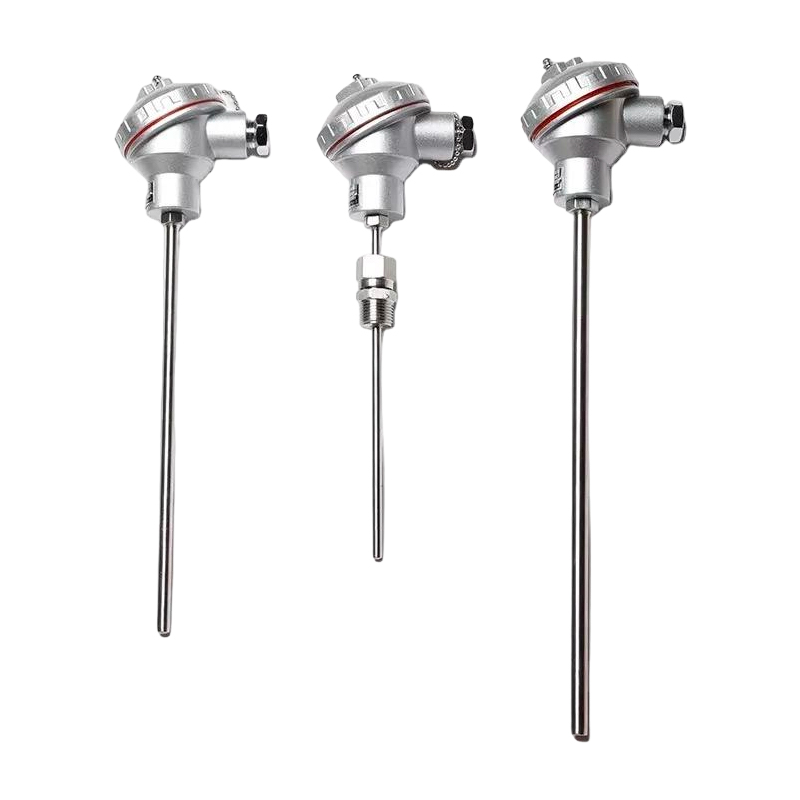
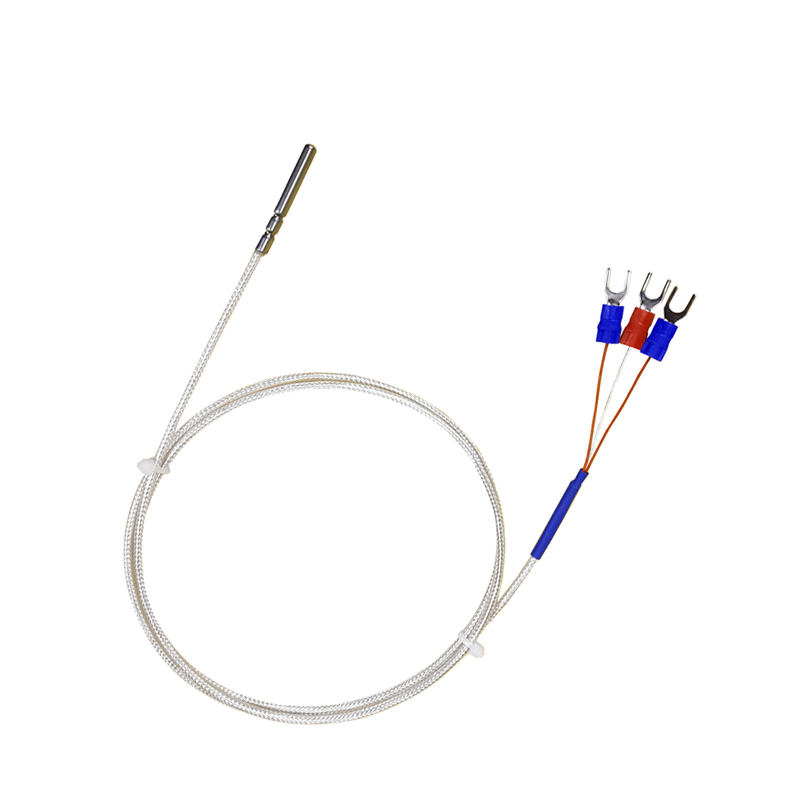
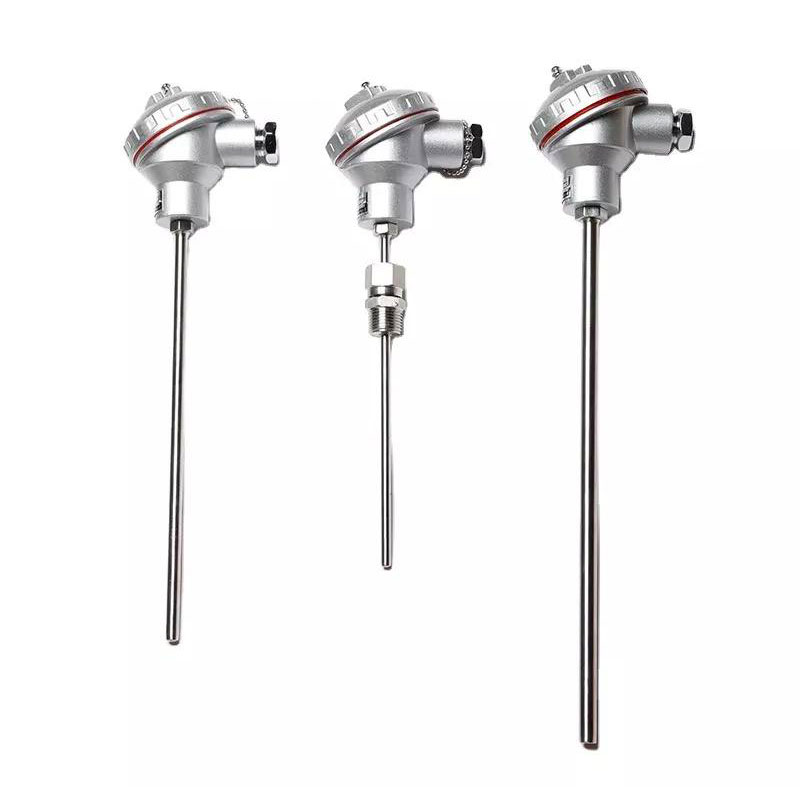
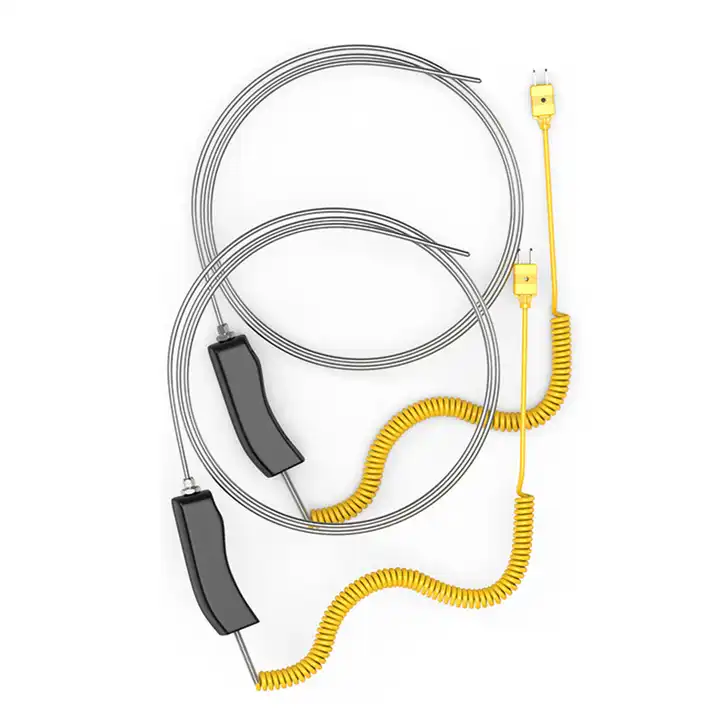
A temperature transmitter is a precision instrument that converts a raw temperature sensor signal into a standardized output — typically a 4–20 mA current loop or a digital signal — that can be reliably transmitted over long distances to a control system, data logger, or SCADA platform. Understanding how it works requires looking at each layer of the process: sensing, signal conditioning, conversion, and transmission.
Everything starts at the sensor. Temperature transmitters are designed to work with a variety of sensing elements, but the two most common types in industrial settings are resistance temperature detectors (RTDs) and thermocouples.
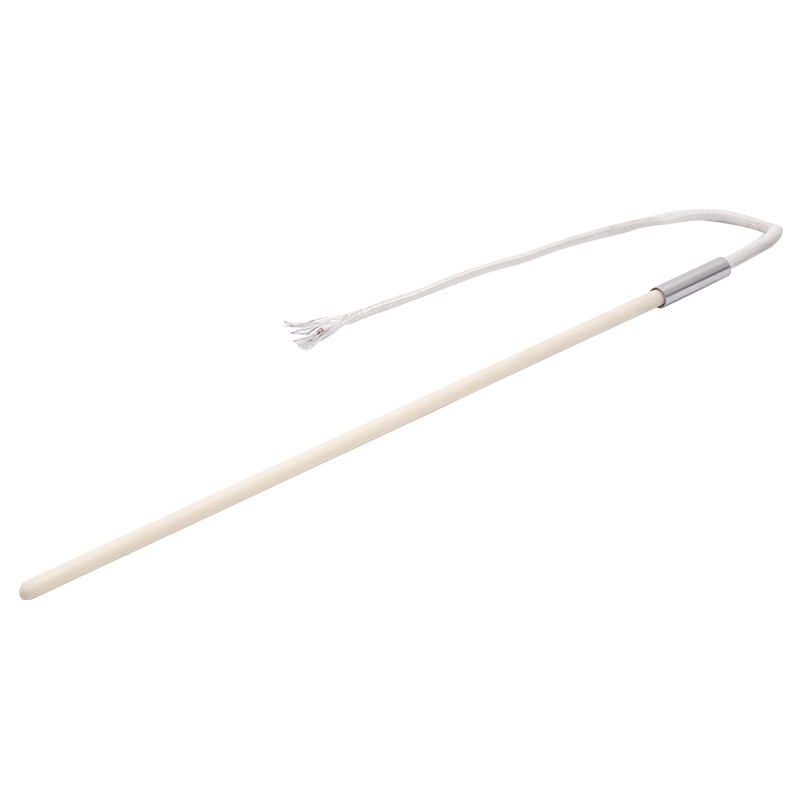
An RTD — most often a Pt100 or Pt1000 platinum element — exploits the predictable relationship between temperature and electrical resistance. As temperature rises, the resistance of the platinum wire increases proportionally. This linearity makes RTDs exceptionally accurate, typically within ±0.1°C across a range of −200°C to +850°C.
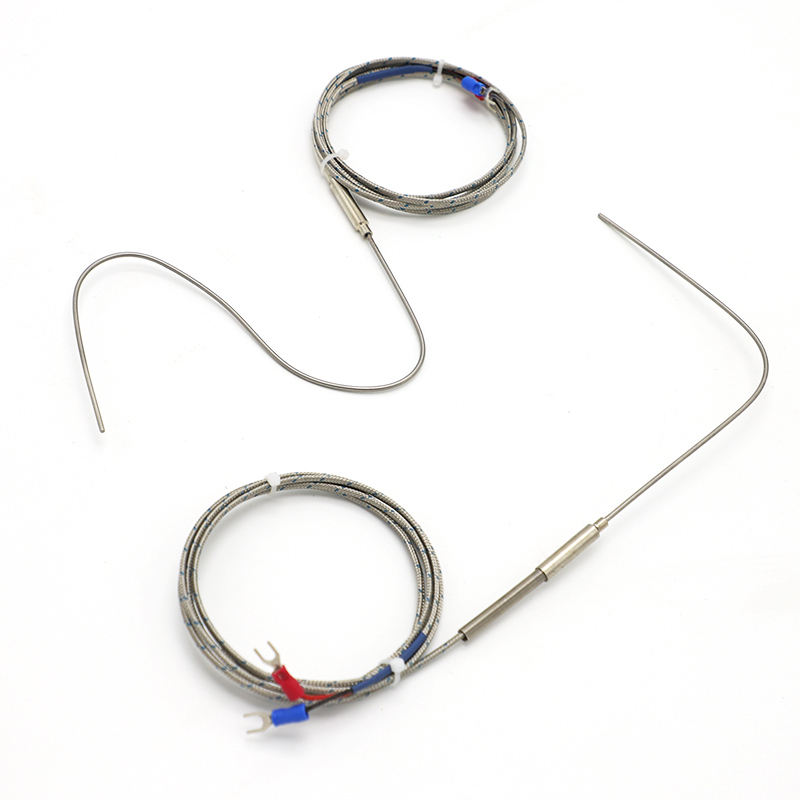
A thermocouple consists of two dissimilar metal wires joined at one end. When the junction is exposed to heat, a small voltage — the Seebeck voltage — is generated. This voltage is proportional to the temperature difference between the measurement junction (the hot end) and the reference junction (the cold end, usually inside the transmitter). Thermocouples can measure a much wider range, up to over 1,700°C, making them preferred for extreme-temperature environments.
Less commonly, transmitters are also designed to accept thermistors, pyrometers, or millivolt inputs from other specialized sensors. The sensor alone, however, cannot drive a signal cable across a factory floor without significant degradation — the transmitter's job is to clean, amplify, linearize, and encode that signal into a form robust enough for industrial environments.
The raw output from a sensor is rarely usable directly. An RTD produces resistance values; a thermocouple produces microvolts. The transmitter's internal circuitry must first convert these physical quantities into a voltage that its analog-to-digital converter (ADC) can process.
For RTDs, the transmitter supplies a precise, low-level excitation current through the sensor and measures the resulting voltage drop using Ohm's law. To eliminate lead wire resistance error, most industrial transmitters use a 3-wire or 4-wire Kelvin sensing arrangement. In a 4-wire setup, two wires carry the excitation current and two separate wires measure the voltage across the element, ensuring that lead resistance has virtually no effect on the reading.
For thermocouples, the transmitter must perform cold junction compensation (CJC). Because the reference junction sits inside the transmitter housing, its temperature fluctuates with ambient conditions. The transmitter uses an internal reference sensor — often a precision thermistor or silicon diode — to continuously measure the temperature at the terminal block and mathematically subtract its contribution from the thermocouple voltage.
In both cases, the analog signal is then amplified and filtered to remove electrical noise before it reaches the ADC. The key conditioning steps are:
Once conditioned, the signal enters a high-resolution ADC. Modern transmitters commonly use 16-bit or 24-bit converters, which convert the continuous analog voltage into a digital number that the transmitter's microprocessor can work with.
The microprocessor then applies linearization — a critical step because sensor outputs are not perfectly linear. The resistance-temperature relationship of platinum follows the Callendar–Van Dusen equation, not a straight line. Thermocouples follow IEC 60584 polynomial equations specific to each thermocouple type (J, K, T, S, R, B, etc.). The transmitter's firmware stores these coefficients and applies them to convert the raw ADC reading into an accurate temperature in engineering units (°C, °F, or K).
This is where much of the transmitter's intelligence resides. A basic instrument applies only a crude linear approximation; a high-accuracy device applies full polynomial correction across its entire calibrated span.
The most common output from an industrial temperature transmitter is the 4–20 milliamp current loop. In this standard, the transmitter acts as a variable current source: 4 mA represents the bottom of the measurement range (e.g., −50°C) and 20 mA represents the top (e.g., +200°C). Any temperature in between maps linearly across the 4 to 20 mA range.
Unlike a voltage signal — which degrades as cable resistance increases — a current signal remains constant along the loop regardless of wire resistance, provided the loop voltage budget is sufficient. Transmitters can typically drive a current loop over hundreds of meters of standard twisted-pair cable without signal degradation.
The 4 mA "live zero" provides a built-in fault detection capability. If the signal falls below 4 mA — often 3.6 mA is used as a fault threshold — the receiving system knows the transmitter has failed or the wire has broken. A signal starting from 0 mA cannot make this distinction. Key loop current reference values are:
Many modern transmitters layer a digital communication protocol on top of the analog output. HART (Highway Addressable Remote Transducer) is the most widely deployed: it superimposes a frequency-shift keyed (FSK) digital signal onto the 4–20 mA loop at 1,200 Hz (mark) and 2,200 Hz (space). Because the FSK signal is AC and the current loop signal is DC, they coexist without interference.
Through HART, a technician can remotely access the transmitter without interrupting the process measurement. This includes:
Fully digital alternatives include FOUNDATION Fieldbus, PROFIBUS PA, and WirelessHART. These replace the analog current loop entirely with a digital bus, enabling multi-drop wiring (multiple transmitters on a single cable pair), higher data throughput, and richer diagnostics. WirelessHART adds a self-organizing mesh radio network, making transmitter installation practical in locations where running a physical cable is prohibitively expensive or impossible.
Temperature transmitters come in two primary physical configurations, each suited to different installation scenarios.
Head-mounted transmitters are compact modules that install directly into the connection head of a thermowell or sensor assembly, sitting at the measurement point. This arrangement minimizes the distance between sensor and transmitter, reducing susceptibility to electromagnetic interference on the millivolt-level sensor signal. They are ideal for field installation where the process connection is physically accessible.
DIN rail-mounted transmitters are housed in panel or cabinet enclosures, separated from the sensor by sometimes tens or hundreds of meters of cable. They are used where multiple transmitters are consolidated in a central control room, or where environmental conditions at the measurement point make local electronics impractical. The tradeoff is that the long thermocouple extension cable or RTD lead is exposed to electromagnetic interference for its full length.
Choosing between the two configurations typically depends on:
A transmitter is only as accurate as its last calibration. Over time, sensor elements drift: the resistance of an RTD changes due to metal grain structure migration; a thermocouple's thermoelectric coefficient shifts due to contamination, oxidation, or physical stress from thermal cycling. The transmitter electronics themselves also drift with age and temperature.
Industrial transmitters are calibrated against reference standards traceable to national metrology institutes — NIST in the United States, PTB in Germany. During calibration, a known temperature or equivalent electrical signal is applied at the input, and the output current is trimmed to match the expected value. Most process plants schedule transmitter calibration annually or semi-annually, with intervals determined by measurement criticality and sensor drift characteristics.
Total system accuracy is the sum of multiple error sources. When reading a transmitter's specification sheet, account for all of the following:
A high-end Pt100 RTD transmitter with a well-matched sensor can achieve a combined system accuracy of ±0.1°C, while a general-purpose thermocouple transmitter is typically specified at ±0.5°C or ±0.1% of the calibrated span.
Temperature transmitters are used across virtually every process industry. Common applications include:
Selecting the right transmitter involves balancing several technical and environmental requirements:
For applications in explosive atmospheres — petroleum refineries, chemical plants, offshore platforms — transmitters must be certified to intrinsically safe (IS) or explosion-proof (Ex d) standards. Intrinsic safety limits the electrical energy in the loop to levels that cannot ignite a flammable atmosphere. Explosion-proof housings contain any internal ignition without propagating it to the surrounding environment. The applicable certification scheme depends on the installation region: ATEX in Europe, IECEx internationally, and NEC in North America.
In essence, a temperature transmitter performs a continuous chain of operations: it excites and reads the sensor, conditions and amplifies the low-level signal, digitizes it with high resolution, applies mathematical linearization, and converts the result into a standardized electrical output that a control system can receive reliably over long cable runs. Each step adds accuracy, robustness, and intelligence to what would otherwise be a fragile, range-limited signal from the sensing element alone.
As industry moves toward IIoT and digital plant architectures, the intelligence embedded in transmitters continues to grow. Today's smart transmitters can perform self-diagnostics, report sensor degradation before it causes a measurement failure, store calibration history, and communicate with asset management software over digital protocols — effectively becoming field-level data nodes in a plant-wide information network.
Understanding the internal mechanisms of a temperature transmitter — from the Seebeck effect at the thermocouple tip to the HART handshake at the DCS input card — gives engineers and technicians the foundation they need to select, install, configure, troubleshoot, and calibrate these instruments with confidence.
Content
Recommended Products
+86-181 1593 0076 (Amy)
+86 (0)523-8376 1478
[email protected]
No. 80, Chang'an Road, Dainan Town, Xinghua City, Jiangsu, China