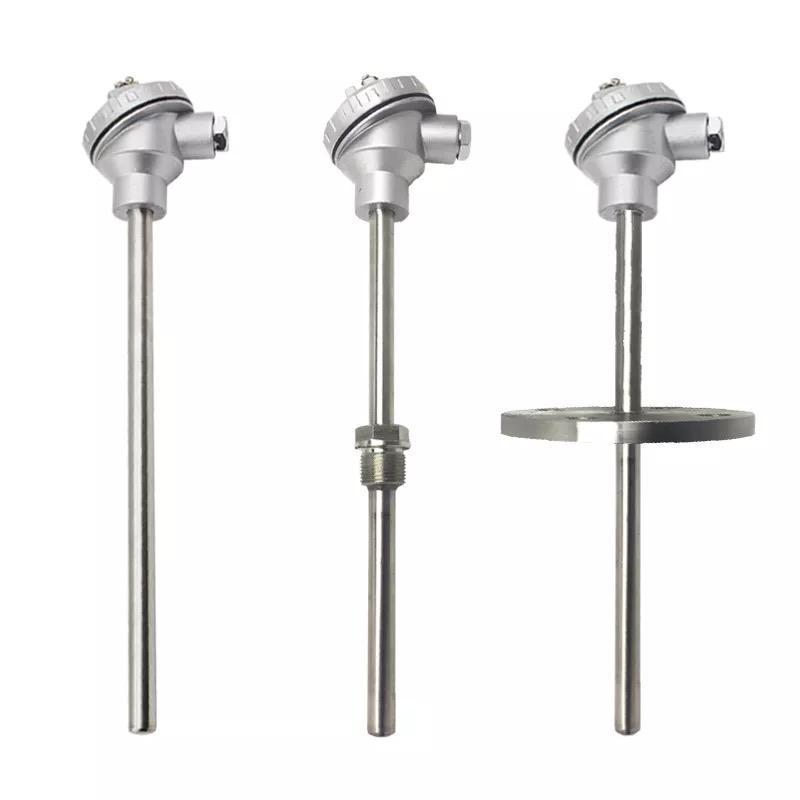
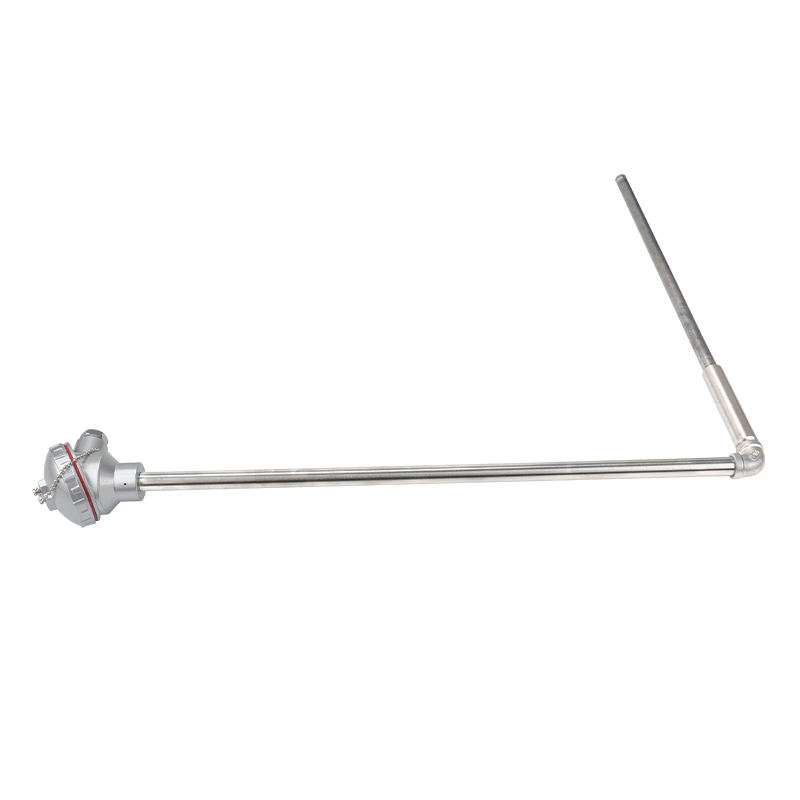
At its core, a bimetallic stemmed thermometer is a mechanical temperature gauge that operates without batteries or electronic components. It consists of a long metal stem (probe) connected to a round dial display, with a sensing element located near the tip of the stem. The word "bimetallic" refers directly to the physics inside: two different metals — typically steel and copper, or steel and brass — are bonded together in a coiled strip. Because each metal expands at a different rate when heated, the coil bends predictably with temperature changes, rotating a needle across a calibrated dial.
The term "stemmed" distinguishes this type from surface, infrared, or oven-mounted thermometers. The stem — typically 5 to 12 inches long — must be inserted into the food or substance being measured, allowing the sensing tip to reach the interior where temperature is most relevant.
Key Principle: The bimetallic coil inside the thermometer converts mechanical movement (thermal expansion) directly into a visual reading on the dial — no electricity required. This makes it rugged, self-contained, and well-suited to high-use environments.
Understanding how this thermometer is built helps explain both why it works and how to use it correctly.
The operating principle relies on a fundamental property of metals: they expand when heated and contract when cooled, but different metals do so at different rates — a property measured by the coefficient of thermal expansion. In a bimetallic thermometer, two metals with very different expansion coefficients are laminated (bonded along their length) into a thin strip, which is then wound into a coil inside the stem.
When the sensing tip is exposed to heat, the two metals try to expand at their respective rates. Because they are bonded together, neither can expand freely, causing the entire strip to bend toward the side of the metal that expands less. The coil either winds tighter or unwinds depending on whether the temperature is rising or falling. This rotational movement is transferred via a simple mechanical linkage to the needle on the dial face, which sweeps across the temperature scale.
The bimetallic strip is an elegant example of physics in everyday use — turning the invisible force of thermal expansion into a readable number with no power source required.
The accuracy of this mechanism depends on the precision of the coil's calibration and the quality of the metals used. Well-manufactured bimetallic thermometers are accurate to within ±2°F (±1°C), which is sufficient for most food safety and culinary applications.
The most common version, featuring a 1–2 inch dial and a stainless steel stem. These are the workhorses of commercial kitchens, used to check the internal temperature of roasts, poultry, casseroles, and other dishes. They are typically not oven-safe — meaning they are designed to be inserted during or after cooking for a quick spot-check, not left in the oven throughout the cooking process.
Some bimetallic stemmed thermometers are specifically designed to remain in food while it cooks inside an oven. These feature a larger, more visible dial (often 2 inches or more) and are constructed to withstand prolonged heat exposure. They are common for roasting large cuts of meat or whole poultry.
These specialized variants extend the temperature range significantly — up to 400°F (200°C) or beyond — to accommodate the high temperatures required for sugar work and frying. They often include a clip to attach to the side of a pot and may display additional reference points (e.g., soft ball, hard crack) directly on the dial.
Beyond food service, bimetallic stemmed thermometers are widely used in industrial and building management contexts to monitor pipe temperatures, HVAC system performance, and process temperatures. These tend to have longer stems, wider measurement ranges, and more rugged casings.
Correct usage is essential for getting accurate readings and preventing foodborne illness. Even the highest-quality thermometer will give misleading results if used improperly.
Calibration is one of the most important — and most overlooked — aspects of thermometer maintenance. A miscalibrated thermometer can render temperature monitoring meaningless. There are two widely used calibration methods:
Fill a container with a mixture of crushed ice and cold water and allow it to sit for a few minutes until it reaches 32°F (0°C). Insert the stem into the ice water, ensuring at least two inches of the tip are submerged and not touching the sides or bottom. Wait 30 seconds for the needle to stabilize. If it does not read exactly 32°F, use a calibration wrench or pliers to turn the calibration nut (located on the back of the dial) until the needle aligns correctly.
Bring a deep pot of water to a full, rolling boil. Insert the thermometer stem at least two inches into the boiling water, avoiding contact with the pot. At sea level, water boils at 212°F (100°C); at higher altitudes, boiling point decreases by approximately 1°F for every 550 feet of elevation. Adjust the calibration nut accordingly.
Food Safety Tip: The USDA and most food safety authorities recommend calibrating thermometers after dropping them, after sudden temperature extremes, and at least once daily in high-volume food service operations.
The enduring popularity of the bimetallic design comes down to its reliability and simplicity. With no battery to die, no circuit board to fail, and no display to crack, these instruments can last for many years with minimal care. They are visually intuitive — anyone can read an analog dial — and the large stem provides a sturdy, comfortable grip even in busy kitchen environments.
From a food safety standpoint, their oven-safe variants allow continuous monitoring without opening the oven and losing heat — a genuine practical advantage. They are also significantly more affordable than high-end digital probes, making them an accessible choice for home cooks and professionals alike.
The most significant limitation is response time. At 15–20 seconds per reading, a bimetallic thermometer is noticeably slower than thermocouple-based digital models, which can be a meaningful inconvenience in a fast-paced kitchen. They also require a minimum insertion depth of about two inches, making them poorly suited to thin cuts like fish fillets, hamburger patties, or chicken breasts — contexts where a thin-tip digital thermometer excels.
Additionally, bimetallic thermometers can be knocked out of calibration by rough handling or thermal shock (such as being placed in ice water immediately after measuring hot food). Regular calibration checks are therefore non-negotiable for anyone relying on them for food safety compliance.
Food safety regulations in most countries require that cooking temperatures for various food categories be verified by a calibrated thermometer — and the bimetallic stemmed thermometer is explicitly listed as an approved instrument by bodies such as the U.S. Food and Drug Administration (FDA) and the USDA's Food Safety and Inspection Service (FSIS).
Key minimum internal temperatures to know when using a bimetallic thermometer include: 165°F (74°C) for poultry and stuffed foods; 160°F (71°C) for ground meats; 145°F (63°C) for whole cuts of beef, pork, lamb, and seafood (with a three-minute rest); and 140°F (60°C) for hot holding of already-cooked foods. Meeting these thresholds reliably is precisely what a properly calibrated bimetallic stemmed thermometer is designed to help achieve.
A bimetallic stemmed thermometer is one of the most durable, dependable, and physically intuitive temperature measurement tools available. By harnessing the predictable differential expansion of two bonded metals, it converts thermal energy into a direct mechanical readout — no electronics, no screen, no batteries. While it is not the fastest or the most versatile thermometer available, it remains a cornerstone instrument in food service, home cooking, and industrial monitoring for good reason: it works consistently, lasts for years, and can be easily maintained and recalibrated on the spot.
Understanding how it works, how to use it correctly, and how to keep it calibrated will ensure that your bimetallic stemmed thermometer continues to deliver safe, accurate temperature readings for the long term.
Content
Recommended Products
+86-181 1593 0076 (Amy)
+86 (0)523-8376 1478
[email protected]
No. 80, Chang'an Road, Dainan Town, Xinghua City, Jiangsu, China