eng
eng
 English
 русский
 Español
 Français

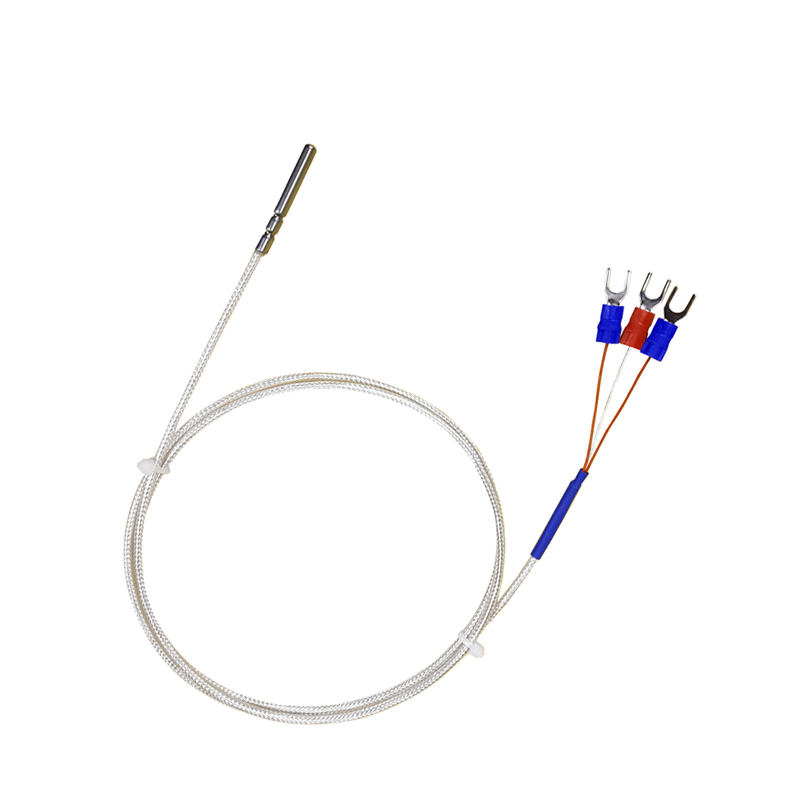
An ambient air temperature sensor measures the temperature of the surrounding air at a specific location and converts that measurement into an electrical signal that a control system, display unit, or data logger can read and act upon. Unlike sensors designed to measure the temperature of a surface, fluid, or object, an ambient air temperature sensor is specifically engineered to sample the free air around it as accurately as possible—minimising the influence of radiant heat, conducted heat from mounting surfaces, and self-heating effects from its own electronics. The resulting data feeds into an enormous range of systems, from the climate control unit inside a car to the weather monitoring networks that underpin modern meteorology.
The Core Function: Translating Air Temperature into an Electrical Signal
At its heart, an ambient air temperature sensor is a transducer—a device that converts one form of energy into another. In this case, it converts thermal energy (the kinetic energy of air molecules) into an electrical quantity, typically a resistance, voltage, or current, that downstream electronics can interpret. The most common sensing elements used for this purpose are negative temperature coefficient (NTC) thermistors, platinum resistance temperature detectors (RTDs), and semiconductor-based integrated circuit sensors, each offering different trade-offs between accuracy, range, response time, and cost.
An NTC thermistor decreases its electrical resistance as temperature rises in a highly predictable, though nonlinear, way. An RTD—commonly platinum wound to a nominal resistance of 100 ohms at 0°C (the Pt100 standard)—changes resistance in a more linear fashion and with high repeatability. A semiconductor IC sensor generates an output voltage or digital code that is directly proportional to temperature and requires no additional signal conditioning circuitry, making it attractive for consumer electronics and automotive applications.
Whatever the sensing element, the output is read by a microcontroller, engine control unit, building management system, or weather station, which applies a calibration curve or lookup table to convert the raw electrical signal into a temperature value in degrees Celsius, Fahrenheit, or Kelvin.
What an Ambient Air Temperature Sensor Does in a Vehicle
In the automotive context, the ambient air temperature sensor—sometimes called the outside air temperature sensor or OAT sensor—serves several critical and interconnected functions. It is typically mounted behind the front bumper, in the front grille, or beneath one of the wing mirrors, positioned to sample outside air before it is warmed by the engine, brakes, or exhaust system.
Informing the Driver
The most visible function is simply displaying the outside air temperature on the instrument cluster or infotainment screen. This gives the driver situational awareness that directly affects safety decisions. Temperatures near or below 3°C to 4°C trigger ice warnings on most modern vehicles, alerting the driver to the potential for black ice on road surfaces even when precipitation is not obvious.
Controlling the Climate System
The ambient air temperature sensor is a key input to the automatic climate control system. When the driver sets a desired cabin temperature, the climate control module compares the outside air temperature with the interior temperature and the target setpoint to calculate the appropriate blend of heating, cooling, and airflow. In hot weather, it signals the air conditioning compressor to engage earlier and run at greater capacity. In cold weather, it modifies the heating strategy and adjusts the defogging logic for windscreens and rear windows.
Without an accurate ambient reading, automatic climate control systems resort to crude defaults and cannot compensate properly for external conditions, resulting in either an overworked compressor in summer or sluggish heating in winter. Many systems also use the ambient reading to decide whether to use recirculated cabin air or draw in fresh outside air—in very cold conditions, recirculation is preferred to prevent freezing of the evaporator.
Supporting Engine Management
The engine control unit (ECU) uses ambient air temperature data alongside the intake air temperature sensor to model the density of air entering the combustion chamber. Denser cold air contains more oxygen and requires a richer fuel mixture for complete combustion; warm air is less dense and requires a leaner mixture. While the intake air temperature sensor measures air after it has entered the intake tract—and been potentially warmed by the engine bay—the ambient sensor provides the baseline reference for conditions before the vehicle is running and immediately after a cold start, when the ECU is establishing its initial fuelling and ignition maps.
In turbocharged engines, ambient temperature data also feeds into intercooler efficiency models. Cooler ambient air improves intercooler performance and allows more aggressive boost and ignition timing, so knowing the true outside temperature allows the ECU to safely extract more power when conditions permit.
Optimising Transmission and Drivetrain Systems
Automatic transmission control units use ambient temperature readings to modify shift strategies in extreme cold, where transmission fluid viscosity is elevated and more time is needed for hydraulic pressure to build before a gear change is executed. Four-wheel drive systems may use ambient temperature as one factor in determining whether low-traction conditions are likely and whether to pre-emptively adjust drivetrain torque distribution.
What an Ambient Air Temperature Sensor Does in HVAC and Building Systems
In heating, ventilation, and air conditioning (HVAC) systems for commercial and residential buildings, ambient air temperature sensors—also called outdoor air sensors or outside air temperature (OAT) sensors in this context—perform analogous but architecturally more complex roles than their automotive counterparts.
Outdoor Reset Control
One of the most energy-efficient strategies in building heating is outdoor reset control, in which the supply water temperature of a hydronic heating system is continuously adjusted based on how cold it is outside. When the outdoor temperature is mild, the boiler supplies cooler water to the heating circuit, reducing fuel consumption and improving the efficiency of condensing boilers. As the outdoor temperature drops, the supply temperature rises proportionally to maintain comfort. The outdoor ambient air temperature sensor provides the real-time reading that drives this continuous optimisation, and the energy savings it enables can be substantial over a heating season.
Economiser Control
Commercial air handling units frequently incorporate an economiser mode in which the system draws in large quantities of cool outside air for free cooling instead of running the mechanical refrigeration circuit. The ambient air temperature sensor determines whether outside air is cool enough to be useful—typically below a set threshold such as 18°C—and triggers the economiser dampers to open when it is. This directly reduces compressor operating hours and electrical energy consumption. Enthalpy-based economiser control adds humidity measurement to the decision logic, but temperature remains the primary trigger.
Freeze Protection
In cold climates, HVAC systems containing water-based heating or cooling circuits must be protected from freezing. Ambient air temperature sensors monitoring outdoor conditions can trigger freeze protection modes—activating circulation pumps to keep water moving, energising trace heating cables on exposed pipework, or closing fresh air dampers—before temperatures drop low enough to cause ice formation inside the system. Acting on predictive ambient data rather than waiting for a pipe temperature sensor to detect actual freezing is far less disruptive and avoids the risk of burst pipework and water damage.
Demand-Controlled Ventilation
In buildings with demand-controlled ventilation systems, ambient air temperature data combines with indoor carbon dioxide levels and occupancy schedules to determine the optimal fresh air intake rate. Bringing in very cold or very hot outside air requires significant energy to condition it before delivery to occupied spaces. By knowing the ambient temperature accurately, the building management system can minimise unnecessary ventilation during extreme weather while still maintaining indoor air quality, reducing heating and cooling loads.
What an Ambient Air Temperature Sensor Does in Weather Monitoring
Meteorological weather stations—whether operated by national meteorological services, airports, road weather networks, or private enthusiasts—rely on ambient air temperature sensors as one of their most fundamental instruments. In professional meteorology, the sensor is housed inside a radiation shield (a louvred white enclosure that blocks direct and reflected solar radiation while allowing free airflow) and mounted at a standard height of 1.25 to 2 metres above a grass surface, as specified by the World Meteorological Organization.
The ambient temperature reading from a weather station feeds into airport operations (affecting aircraft performance calculations for take-off and landing), road gritting decisions (determining when salt or grit should be applied to prevent ice formation), agricultural frost warnings (alerting growers to protect vulnerable crops), and the numerical weather prediction models that underpin short- and medium-range forecasts. A network of accurate ambient air temperature observations is the backbone of any reliable weather forecasting system.
In automatic weather stations deployed in remote or harsh environments—mountain peaks, polar research stations, ocean buoys—ambient air temperature sensors operate autonomously for months or years, transmitting data via satellite links to central processing systems. The robustness and low power consumption of modern NTC thermistor and platinum RTD sensors make them well suited to these demanding unattended deployments.
What an Ambient Air Temperature Sensor Does in Consumer Electronics
Smartphones, tablets, and smart home devices increasingly incorporate ambient temperature sensing, though often with significant caveats. Dedicated indoor weather stations and smart thermostats use high-quality thermistor or semiconductor sensors to measure room air temperature accurately and feed that data into home automation systems. A smart thermostat that knows the current indoor ambient temperature can modulate heating and cooling precisely, learning occupancy patterns and adjusting schedules to minimise energy use without sacrificing comfort.
Some smartphones include ambient temperature sensors, but these are typically positioned too close to heat-generating components such as the processor and battery to measure true air temperature accurately without significant correction. Wearable devices face similar challenges. Dedicated compact weather stations avoid this problem by positioning the sensor away from heat sources and, in some cases, using active ventilation to draw air across the sensing element.
How Placement and Design Affect What the Sensor Actually Measures
An ambient air temperature sensor can only report what its sensing element actually experiences. If the sensor is poorly located—exposed to direct sunlight, positioned near a heat source such as an engine, exhaust, or electrical panel, or mounted on a surface that conducts heat to the sensor body—it will report a temperature that does not reflect true ambient air conditions. This is known as solar loading or thermal offset, and it is the primary source of inaccuracy in real-world ambient temperature measurement.
In vehicles, solar loading is managed by positioning the sensor in shaded, well-ventilated locations and, in some designs, by using a small aspirated housing that draws moving air over the element. In weather stations, radiation shields serve this purpose. In HVAC systems, sensors are mounted on north-facing walls away from roof edges, air conditioning units, and exhaust vents. In all cases, the goal is to ensure that the sensor measures the free air temperature of interest rather than the temperature of its immediate surroundings or the radiation environment it is exposed to.
Response time is another design consideration. A sensor with a large thermal mass responds slowly to temperature changes, smoothing out rapid fluctuations but potentially missing rapid temperature drops that are safety-relevant—such as the onset of freezing conditions on a road surface. Sensors designed for rapid response use small-diameter sensing elements with minimal encapsulation to minimise thermal mass, at the cost of greater sensitivity to localised disturbances.
Common Faults and What Happens When the Sensor Fails
In automotive applications, a faulty ambient air temperature sensor typically causes the displayed outside temperature to show an implausible value—either fixed at a maximum or minimum, fluctuating erratically, or missing entirely. The climate control system may default to a fixed operating strategy that is less efficient and less comfortable than normal automatic operation. In some vehicles, a failed ambient sensor triggers a warning light and a fault code stored in the ECU, detectable during routine diagnostic scanning.
In HVAC systems, a failed outdoor ambient sensor causes outdoor reset and economiser functions to fail, reverting the system to fixed-setpoint operation. Energy consumption typically rises, and occupant comfort may be affected. Freeze protection logic dependent on the outdoor sensor may be compromised in cold weather, creating a risk of pipework damage if backup protection strategies are not in place.
In weather stations, a faulty ambient sensor produces erroneous data that, if not detected and flagged, can corrupt weather records and lead to incorrect forecasts or road weather decisions. Automated quality control algorithms that compare readings from neighbouring stations are used by meteorological networks to identify and isolate suspect sensors before their data affects downstream products.
Summary
An ambient air temperature sensor measures the temperature of the air in its immediate environment and converts that measurement into a signal used by control systems, displays, and data loggers across an exceptionally wide range of applications. In vehicles it informs drivers of icy road risk, enables precise automatic climate control, and optimises engine management. In buildings it drives energy-efficient heating strategies, free cooling, freeze protection, and ventilation control. In meteorology it underpins weather forecasting, airport operations, and road safety decisions. In consumer electronics it enables smart home automation and personal comfort management. The accuracy of what the sensor reports depends critically on where it is placed, how it is shielded from non-ambient heat sources, and how well it is maintained—making correct installation and periodic verification as important as the quality of the sensor itself.