eng
eng
 English
 русский
 Español
 Français

The Role of Temperature Control in Modern Manufacturing
Across virtually every manufacturing sector, temperature deviations of even a few degrees can cascade into scrap rates, dimensional non-conformance, batch failures, or equipment damage. Traditional control approaches relied on fixed PID controllers that maintained setpoints without awareness of upstream conditions, adjacent process zones, or predictive demand. Smart manufacturing reframes temperature control as a dynamic system property rather than an isolated instrument loop.
The convergence of affordable industrial sensors, high-speed fieldbus networks, edge computing hardware, and machine learning platforms has made it practical to deploy temperature control architectures that adapt in real time to raw material variability, ambient conditions, equipment aging, and production schedule changes. The result is measurable improvement in yield, energy consumption, cycle time, and equipment longevity across industries from aerospace components to food processing.
The economic case for smart temperature control has become compelling across mid-size and large manufacturers. A semiconductor fab operating furnaces at tighter thermal uniformity reduces die yield loss. An automotive stamping plant with predictive die temperature management reduces lubricant consumption and extends tooling life. A pharmaceutical batch reactor with closed-loop temperature profiling compresses validation cycles and reduces out-of-specification batch investigations. These are not marginal gains but structural improvements in process economics.
System Architecture: How Smart Temperature Control Is Structured
Smart manufacturing temperature control systems operate across multiple interconnected layers, from physical sensing at the process level to analytical platforms at the enterprise level. Understanding this architecture is essential to evaluating vendors, specifying upgrades, and diagnosing performance gaps.
Field Layer: Sensing and Actuation
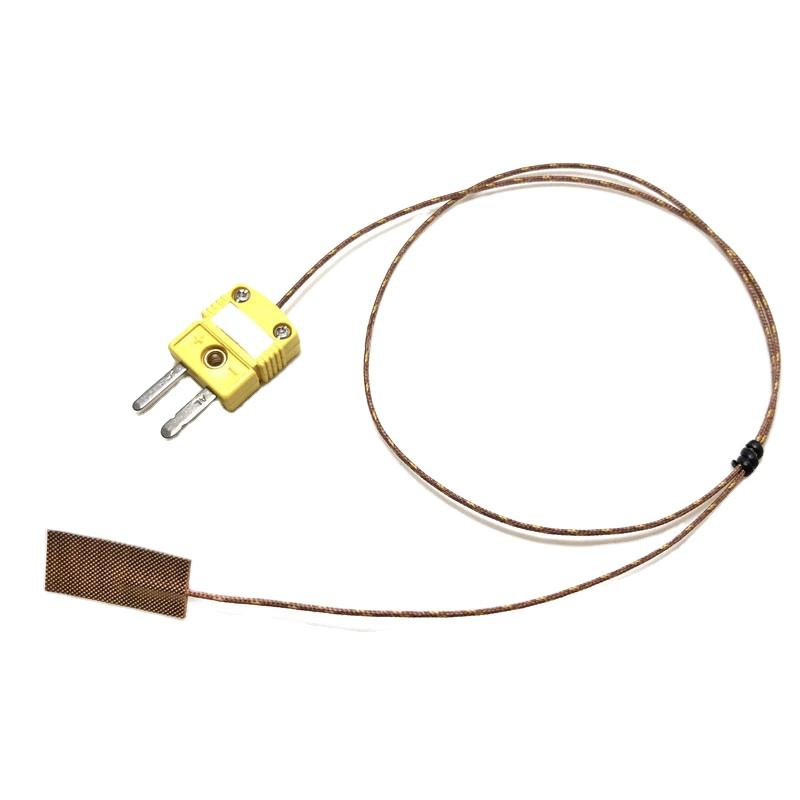
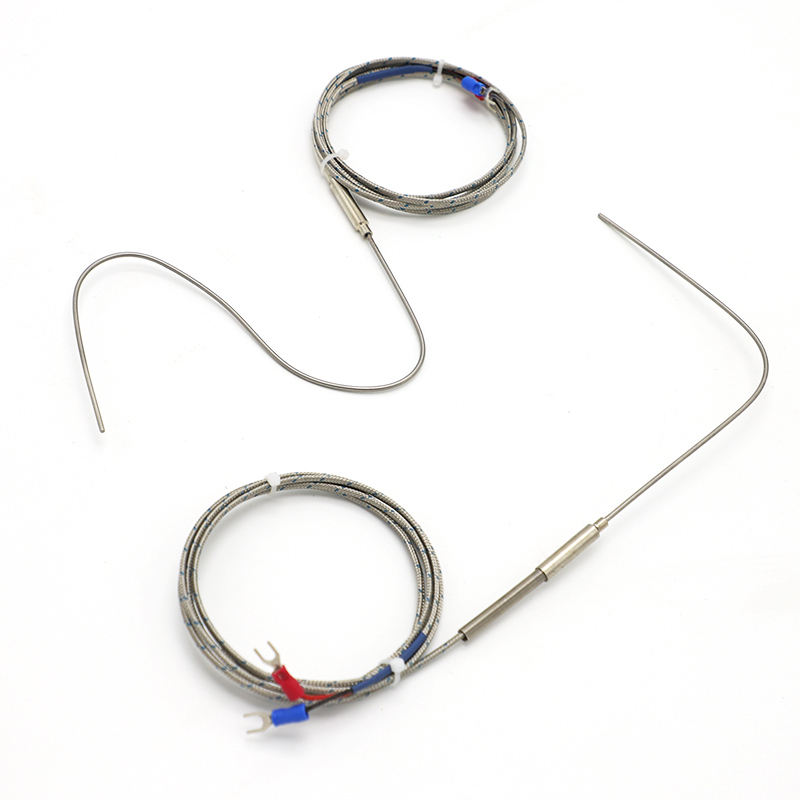
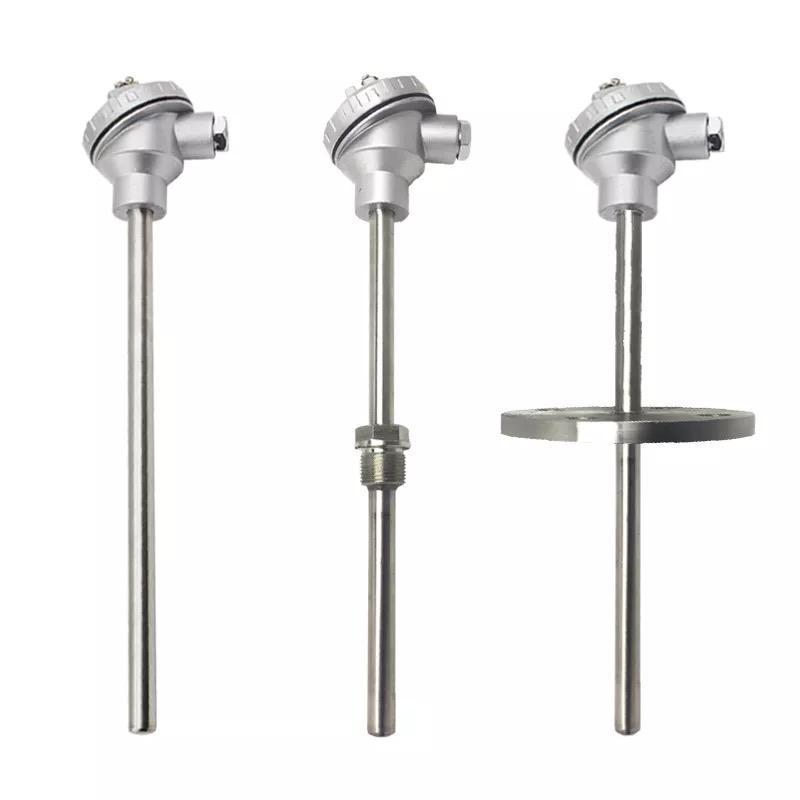
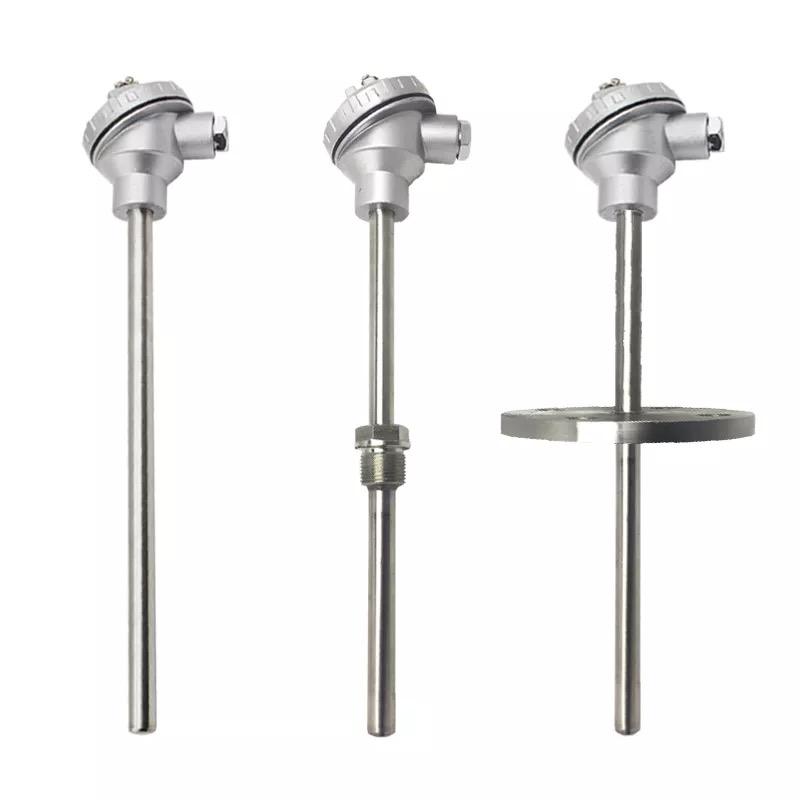
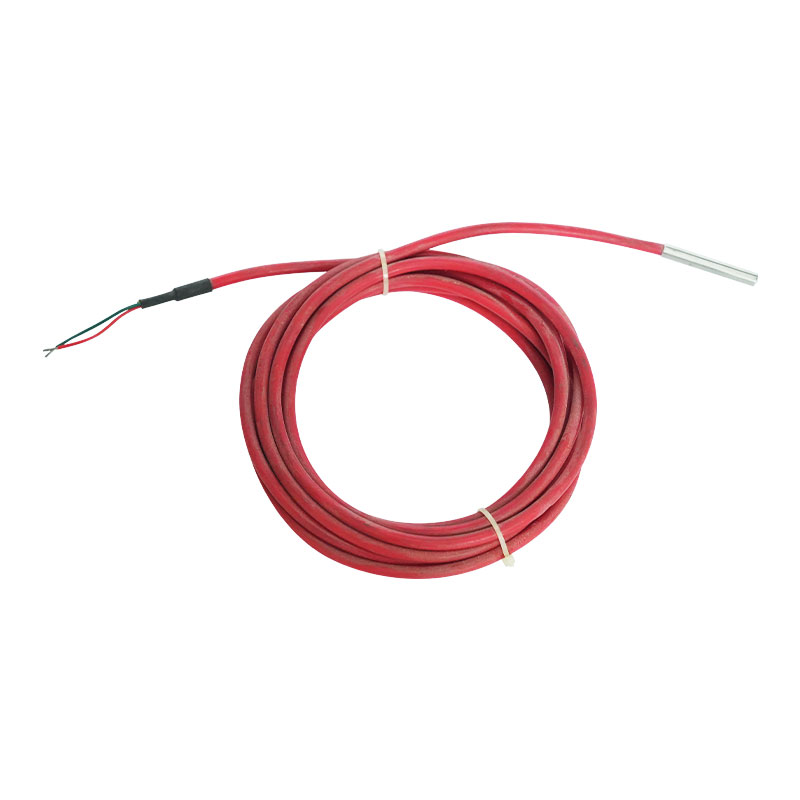
At the foundation, temperature measurement relies on thermocouples, resistance temperature detectors (RTDs), infrared thermometers, and thermal imaging cameras depending on the measurement context. Thermocouples cover the widest temperature range, from minus 270 to above 1,750 degrees Celsius, making them standard in high-temperature metallurgical and ceramic processes. RTDs provide superior accuracy and stability in the minus 200 to 850 degrees Celsius range and are preferred in pharmaceutical, food, and semiconductor applications where calibration traceability is mandated. Infrared pyrometers and thermal cameras enable non-contact measurement of moving surfaces, molten materials, and hazardous environments.
Edge Layer: Real-Time Control Logic
Edge controllers execute control loops at millisecond to sub-second scan rates without dependence on cloud connectivity, ensuring deterministic response even when upstream network conditions degrade. Modern programmable logic controllers (PLCs) and dedicated temperature controllers run PID algorithms as their baseline, with higher-tier systems implementing model predictive control (MPC), fuzzy logic, or neural network-based setpoint optimisation directly on edge hardware. The edge layer is also where safety interlock logic executes, triggering automated shutdowns or rate reductions when temperature exceedances approach equipment protection or product quality limits.
IIoT and Analytics Layers
Data from the edge is aggregated through industrial communication protocols including OPC-UA, MQTT, and Modbus TCP/IP to time-series historians and IIoT platforms. At this layer, data from multiple process zones, multiple shifts, and multiple product types can be correlated. Machine learning models trained on historical temperature profiles identify subtle drift patterns that precede equipment failures, product non-conformances, or energy efficiency degradation invisible to per-loop monitoring.
Sensing Technologies for Smart Temperature Monitoring
Sensor selection determines the accuracy, response speed, and reliability of the entire control system. Smart manufacturing environments demand sensors that combine measurement performance with digital communication capability and self-diagnostic functions.
Platinum resistance elements (PT100, PT1000) offer accuracy to plus or minus 0.1 degrees Celsius with excellent long-term stability. Preferred in regulated industries. Available with HART or IO-Link digital output for smart integration.
Broadest temperature range and lowest cost per point. Type K covers minus 200 to 1,260 degrees Celsius. Signal conditioning in smart transmitters provides cold-junction compensation and drift detection.
Non-contact measurement of surfaces, melts, and moving targets. Emissivity calibration is critical. Modern units embed Ethernet connectivity and alarm outputs directly in the sensor head.
Two-dimensional temperature mapping across surfaces or products. Used in printed circuit board inspection, furnace uniformity verification, and food processing line monitoring. Integrates with vision system platforms.
Distributed temperature sensing (DTS) along a single fiber enables measurement at hundreds of points per cable. Used in long continuous furnaces, cable trays, and battery manufacturing where point sensors are impractical.
WirelessHART and ISA100.11a-compliant sensors eliminate cable runs in retrofits and rotating equipment. Suitable for supplementary monitoring; latency considerations preclude use in primary fast-response control loops.
Smart Transmitters and IO-Link Integration
The shift from 4-20 mA analogue signals to digital communication standards is among the most consequential developments in modern temperature instrumentation. HART-enabled transmitters allow process variable and diagnostic data to coexist on the same two-wire loop. IO-Link, operating over standard unshielded cables at up to 230 kbps, provides bidirectional parameter access, enabling remote calibration, range adjustment, and alarm configuration without physical intervention at the sensor. These capabilities reduce calibration labour costs and enable centralised documentation of instrument configuration across thousands of measurement points in large facilities.
Advanced Control Strategies in Smart Temperature Systems
Moving beyond single-loop PID control is the defining step from conventional to smart temperature management. Several control strategies contribute to the performance improvements attributed to smart manufacturing systems.
Model Predictive Control (MPC)
MPC uses a mathematical model of the process thermal dynamics to predict future temperature trajectories and compute optimal actuator moves over a rolling time horizon. Unlike PID, which responds only to current error, MPC anticipates the effect of current control actions on future states, naturally handling process dead time and thermal inertia. In a continuous casting line or a polymer extrusion barrel, where temperature changes at one zone affect temperatures downstream with a measurable time delay, MPC outperforms PID by a margin that translates directly to yield and energy metrics.
Cascade and Feedforward Control
Cascade control places a secondary inner loop, typically heating element surface temperature, inside a primary outer loop controlling product temperature. The inner loop responds to disturbances in heating power before they propagate to the product. Feedforward control layers on top of this by measuring known disturbances, such as changes in raw material inlet temperature or production rate, and adjusting the setpoint of the inner loop proactively before an error develops. The combination of cascade and feedforward control reduces temperature variance by 50 to 80 percent compared to single-loop PID in disturbance-heavy environments.
Adaptive and Self-Tuning PID
Process thermal characteristics change as equipment ages, product grades change, or ambient conditions shift seasonally. Fixed PID parameters optimised at commissioning degrade in performance over months of operation. Adaptive PID algorithms continuously re-identify process gain, time constant, and dead time and update controller tuning parameters accordingly. Self-tuning functions are now embedded in many industrial temperature controllers and PLCs, reducing the specialist knowledge required for field tuning and maintaining performance without scheduled retuning interventions.
Machine Learning Enhanced Control
Reinforcement learning and neural network models trained on operational data are beginning to supplement and in some cases replace conventional control logic in high-value processes. A deep learning model trained on thousands of heat treatment cycles can predict the optimal temperature ramp profile for a new alloy composition based on its elemental analysis, reducing trial-and-error qualification runs. Gaussian process regression models provide uncertainty estimates alongside temperature predictions, flagging when process conditions have drifted outside the training distribution and a human review is warranted before the model's recommendations are applied.
IIoT Integration and Data Infrastructure
Temperature data becomes genuinely actionable at scale when it is contextualised with product identity, equipment status, energy consumption, and quality outcomes. This contextualisation requires integration across systems that historically operated in isolation.
OPC-UA as the Integration Standard
OPC Unified Architecture has emerged as the dominant communication standard for smart manufacturing data integration. It provides a vendor-neutral, platform-independent framework for exposing process data with semantic context, meaning that a temperature reading from a furnace zone arrives at the analytics platform already tagged with equipment identity, units, quality status, and alarm state. OPC-UA companion specifications for specific industries, including machinery, plastics, and batch processing, accelerate integration by defining common information models that automation vendors implement consistently.
Time-Series Historians
Temperature data is inherently time-stamped and high-frequency. Relational databases designed for transactional workloads are poorly suited to storing and querying millions of readings per day across hundreds of measurement points. Dedicated time-series historians such as OSIsoft PI, InfluxDB, and Timescale provide compression algorithms that reduce storage requirements by 90 percent or more compared to raw data while preserving the fidelity needed for regulatory audit trails and process investigations. Contextualisation engines layer equipment hierarchies, product genealogy, and event logs onto the raw temperature streams.
Digital Twin Integration
A digital twin of a thermal process, whether a furnace, extruder, heat exchanger, or reactor, uses real-time temperature data as inputs to a physics-based or data-driven simulation that runs in parallel with the physical process. The twin enables what-if analysis, operator training without production risk, and comparison of actual thermal profiles against ideal profiles to quantify process deviation in terms of predicted product properties rather than raw temperature error. Digital twin platforms from major automation vendors now include pre-built thermal process templates that reduce implementation time from months to weeks.
Industry-Specific Applications of Smart Temperature Control
The principles of smart temperature control apply universally, but the implementation priorities, sensor choices, regulatory requirements, and achievable benefits differ significantly by industry.
| Industry | Critical Process | Temperature Range | Primary Control Challenge | Key Benefit of Smart Control |
|---|---|---|---|---|
| Semiconductor | Diffusion furnaces, CVD | 300 to 1,200 C | Within-batch uniformity | Yield improvement, reduced rework |
| Automotive / Metal | Heat treatment, stamping dies | 150 to 950 C | Part-to-part consistency | Reduced scrap, longer tooling life |
| Pharmaceutical | Bioreactors, lyophilisers | minus 80 to 150 C | Regulatory compliance, 21 CFR 11 | Batch release speed, audit readiness |
| Food and Beverage | Pasteurisation, retorts, ovens | 60 to 180 C | Food safety CCP management | Automated HACCP records, energy savings |
| Plastics / Polymer | Extrusion barrel zones | 150 to 380 C | Melt consistency, dead time | MPC reduces colour change downtime |
| Glass | Float line, annealing lehr | 600 to 1,600 C | Thermal gradient uniformity | Breakage reduction, throughput |
| Additive Manufacturing | Build chamber, print bed | 20 to 500 C | Layer adhesion, warpage | In-process quality control |
| Battery Manufacturing | Formation cycling, drying | 60 to 200 C | Electrode moisture uniformity | Cell-to-cell consistency, safety |
Semiconductor Fabrication: Tightest Tolerances
Diffusion furnaces and chemical vapour deposition chambers in semiconductor fabrication require temperature uniformity across the wafer load to within plus or minus 0.5 degrees Celsius or better. Smart multi-zone temperature control using model predictive algorithms, combined with wafer-level temperature profiling using thermocouple-equipped monitor wafers, enables real-time detection of zone drift before it affects product. Predictive maintenance models trained on heating element resistance data forecast element failures weeks before they occur, enabling planned maintenance during scheduled idle periods rather than unplanned outages.
Pharmaceutical Bioreactors: Regulatory Context
Temperature control in pharmaceutical bioreactors operates within a framework of regulatory obligation as well as process performance. FDA 21 CFR Part 11 and EU GMP Annex 11 require that electronic temperature records be attributable, legible, contemporaneous, original, and accurate. Smart temperature control systems that generate audit trails with electronic signatures, alarm acknowledgement records, and calibration certificates directly from the control system reduce the administrative burden of batch record compilation and accelerate release timelines.
Predictive Maintenance Through Temperature Analytics
Temperature data is among the most sensitive early indicators of equipment degradation across manufacturing systems. Smart temperature monitoring systems generate the historical baseline and real-time comparison capability needed to transform temperature anomaly detection into actionable maintenance intelligence.
Heating Element Degradation
Resistance heating elements in industrial ovens, furnaces, and moulding machines exhibit predictable resistance increases as they age, requiring progressively more voltage to maintain setpoint. Smart controllers tracking power draw versus setpoint deviation build a continuous efficiency profile that identifies elements approaching end of life. Replacing elements during a planned shutdown based on this data typically costs 30 to 50 percent less than an emergency replacement following an unplanned failure, before accounting for the production loss avoidance.
Heat Exchanger Fouling Detection
Fouling on heat exchanger surfaces increases thermal resistance, requiring higher operating temperatures or reduced throughput to maintain product quality targets. Smart temperature monitoring systems calculate overall heat transfer coefficients continuously from inlet and outlet temperature measurements and flow data. Trending of this coefficient against a clean baseline identifies fouling rates, enables optimised cleaning schedules, and predicts when performance will fall below the minimum threshold required for production, allowing cleaning to be scheduled at the earliest production break rather than at crisis point.
Thermal Runaway Prevention in Battery Manufacturing
Lithium-ion cell formation processes generate significant heat as electrodes are activated. Abnormal heat generation, whether from internal short circuits, electrode defects, or process deviations, can lead to thermal runaway events. Smart temperature monitoring systems with cell-level granularity and statistical process control logic flag cells deviating from population thermal behaviour in real time, enabling removal from the formation line before a safety event propagates across the fixture.
Energy Management and Sustainability
Thermal processes account for 70 to 80 percent of industrial energy consumption globally. Smart temperature control represents one of the highest-leverage interventions available to manufacturers pursuing energy efficiency and carbon reduction targets.
Energy Saving Strategies
- Dynamic setpoint reduction during non-production periods
- Load-shifting to off-peak tariff windows using thermal mass
- Zone-by-zone setback when production demand is partial
- Feedforward control eliminating overshoot energy waste
- Real-time efficiency KPI dashboards driving operator behaviour
- Predictive pre-heating aligned to production scheduling
Measurement and Reporting
- Energy-per-unit-produced tracking against targets
- Scope 2 emissions calculation from thermal energy data
- ISO 50001 energy management system data feeds
- Heat recovery opportunity identification from exhaust data
- Carbon footprint attribution to product lines and SKUs
- Regulatory reporting automation for EU ETS and similar schemes
Demand response programmes, in which industrial energy users agree to reduce consumption during grid stress events in exchange for capacity payments, become practical when smart temperature control systems can accurately predict the thermal inertia available in furnaces, ovens, and heated tooling. A facility with real-time visibility of thermal mass across its production equipment can participate in demand response with confidence that product quality will not be compromised during short consumption curtailments.
Implementing Smart Temperature Control: A Practical Roadmap
Transitioning from conventional to smart temperature control is best approached as a phased programme that delivers measurable value at each stage rather than a single large-scale replacement project.
-
Baseline audit and instrumentation review. Map every temperature measurement point, its sensor type, age, calibration status, and current control strategy. Identify measurement gaps where temperature affects quality but is not currently monitored. Quantify the cost of temperature-related non-conformances, scrap, and unplanned downtime using maintenance and quality records from the previous 12 to 24 months.
-
Sensor and transmitter upgrade to digital. Replace analogue-output transmitters with HART or IO-Link smart devices on the highest-priority measurement points identified in the audit. Establish a calibration programme with electronic records and automated due-date tracking. This step alone often reduces process variability by 10 to 15 percent by eliminating signal noise and enabling detection of sensor drift that was invisible with analogue outputs.
-
Edge control modernisation. Upgrade or reconfigure PLC and temperature controller logic to implement cascade, feedforward, or MPC strategies on the highest-impact control loops. Engage process engineers with data from the baseline audit to validate control models before deployment. Commission with tight change management protocols to avoid unintended interactions between upgraded and legacy control loops.
-
Data infrastructure and historian deployment. Connect smart transmitters and upgraded controllers to a time-series historian via OPC-UA or MQTT. Define the tag naming convention and equipment hierarchy that will provide context for all temperature data. Establish data retention policies aligned with regulatory requirements and quality system obligations.
-
Analytics and dashboarding. Deploy process monitoring dashboards that present temperature KPIs in the context of production throughput, quality outcomes, and energy consumption. Implement statistical process control charts for the highest-impact temperature parameters. Build predictive models for the maintenance scenarios identified in the audit, starting with the cases where historical data is richest.
-
Continuous improvement programme. Establish a monthly review cycle in which process engineers, maintenance, quality, and energy management teams review temperature analytics output and agree on improvement actions. Track the financial value of improvements attributable to the smart control programme to maintain investment justification for subsequent phases.
Common Implementation Pitfalls
- Deploying analytics before the underlying sensor infrastructure is reliable, producing dashboards that reflect instrument noise rather than genuine process variation.
- Implementing MPC or advanced control on loops where the process model has not been adequately validated, leading to setpoint hunting and operator loss of confidence in the system.
- Failing to include maintenance technicians in training programmes, so advanced diagnostic data is visible but not acted upon because the intended users do not know how to interpret it.
- Selecting IIoT platforms without evaluating OPC-UA compatibility with existing automation vendor equipment, leading to costly custom integration work.
- Setting overly tight alarm thresholds on newly monitored parameters, generating alarm floods that operators suppress rather than address.
- Neglecting cybersecurity architecture when connecting previously air-gapped process control systems to enterprise networks as part of IIoT integration.
Standards, Calibration, and Regulatory Compliance
Smart temperature control systems in regulated manufacturing environments must satisfy requirements that go beyond process performance, encompassing measurement traceability, data integrity, and audit readiness.
Calibration and Measurement Traceability
Temperature measurements used for product release decisions, process validation, or regulatory submission must be traceable to national measurement standards through an unbroken chain of calibrations. ISO/IEC 17025 accredited calibration laboratories provide certificates that establish this traceability for industrial thermometers and reference standards. Smart transmitters with embedded calibration history and automated due-date alerts reduce the administrative burden of managing calibration programmes across large numbers of instruments.
NIST Traceable Reference Standards
In the United States, temperature measurements critical to product quality must ultimately trace to the National Institute of Standards and Technology (NIST) fixed-point scales. International equivalents include PTB in Germany and NPL in the United Kingdom. Smart calibration management systems log the calibration certificate reference, uncertainty, and expiry date for each instrument and generate reports for quality auditors automatically.
Industry-Specific Regulatory Requirements
- Pharmaceutical manufacturing: FDA 21 CFR Parts 11 and 211 require electronic temperature records to be secure, attributable, and protected against modification without detection. Temperature mapping studies for storage areas and process equipment must be documented and retained for the product's shelf life plus one year.
- Food safety: HACCP plans identify critical control points where temperature is the primary food safety control. Smart monitoring systems that automatically record CCP temperature data, generate alerts for exceedances, and produce HACCP records satisfy FSMA preventive controls documentation requirements.
- Aerospace: AMS 2750 (Pyrometry) specifies calibration, instrumentation, and thermal processing equipment qualification requirements for heat treating aerospace parts. Smart temperature control systems must produce documentation packages compatible with AMS 2750 audit requirements.
- Automotive: CQI-9 (Special Process Heat Treat System Assessment) provides a framework for heat treatment quality management that increasingly references smart monitoring and digital record-keeping as best practice implementation.