eng
eng
 English
 русский
 Español
 Français
Bimetallic thermometer Manufacturers
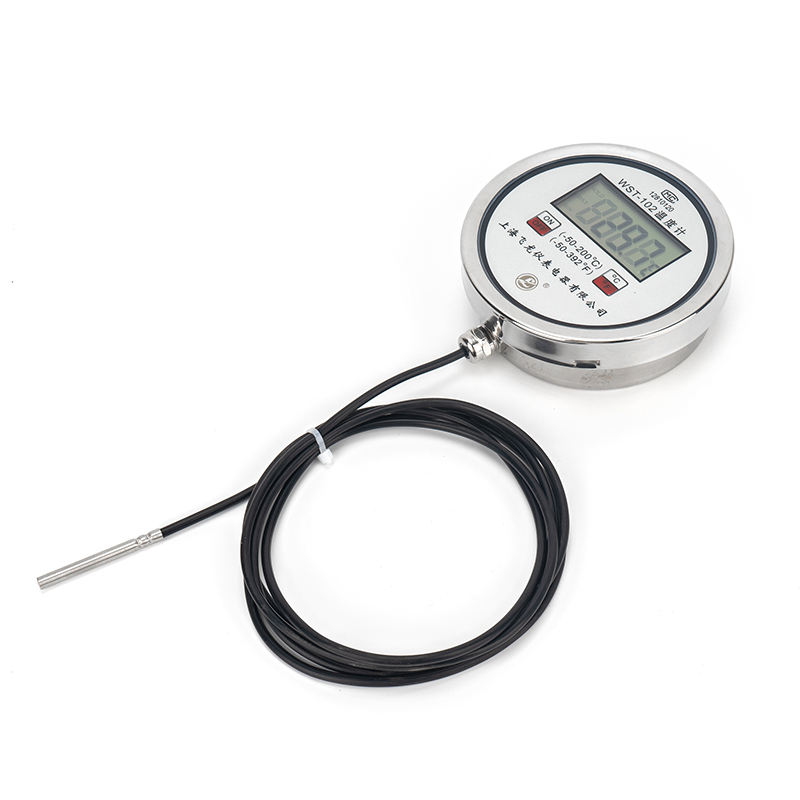
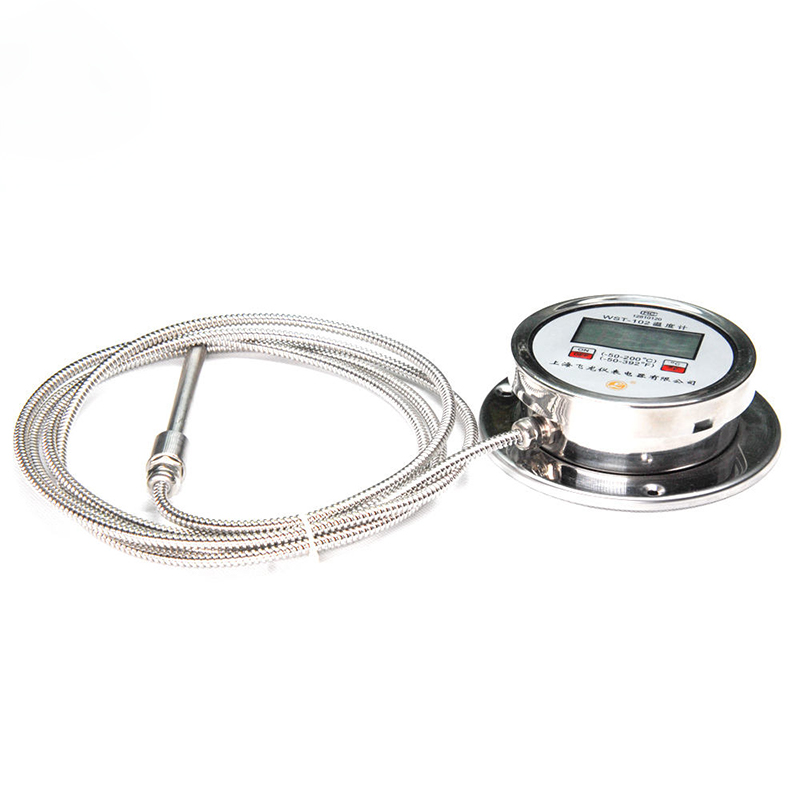
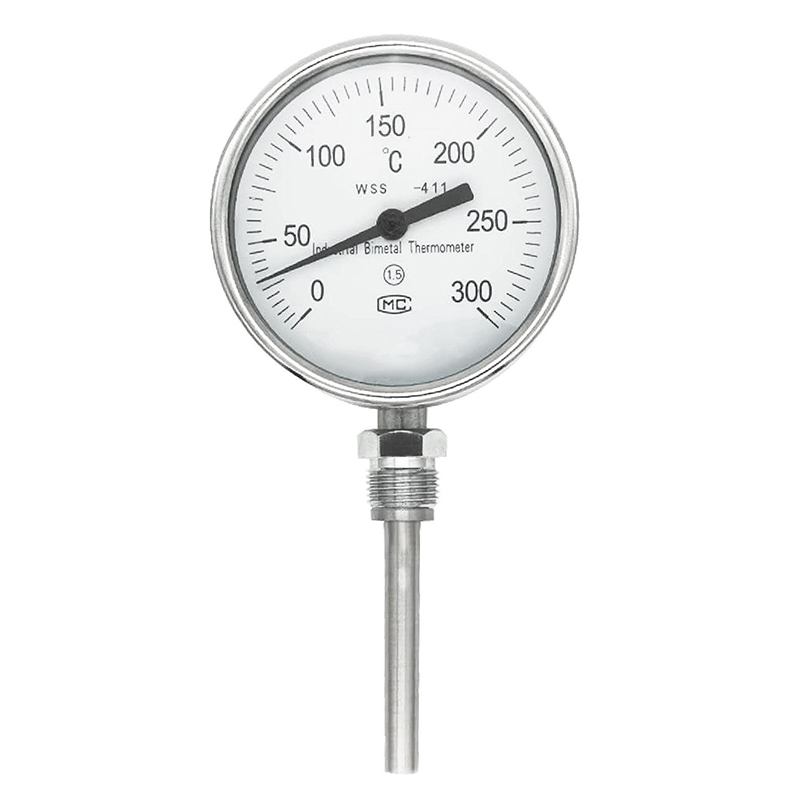
The bimetallic thermometer is a temperature-measuring device that uses two different metal strips with varying rates of thermal expansion.
About
Jiangsu Zhaolong Electrics Co., Ltd.
As China Bimetallic thermometer Manufacturers and Industrial Bimetallic Thermometer Factory, Jiangsu Zhaolong Electrics Co., Ltd. is a regional high-tech enterprise and a production base of temperature sensors and temperature control instruments. We have jointly developed and produced a series of thermocouples (thermal resistances) and temperature control electronics with numerous R&D institutions and academies in Shanghai. These products are salable throughout the country and the world, offering an advantage in cost performance. Our products have a renowned reputation in the market and win customers' trust due to their excellent performance, attractive appearance, high reliability, advanced technology, and good cost performance.
With strong technical development team and patent results, we can undertake business for normal and special specifications, and can design & install various large-scale and small-scale automatic temperature control boxes and temperature control rooms and remote monitoring temperature control systems for customers.
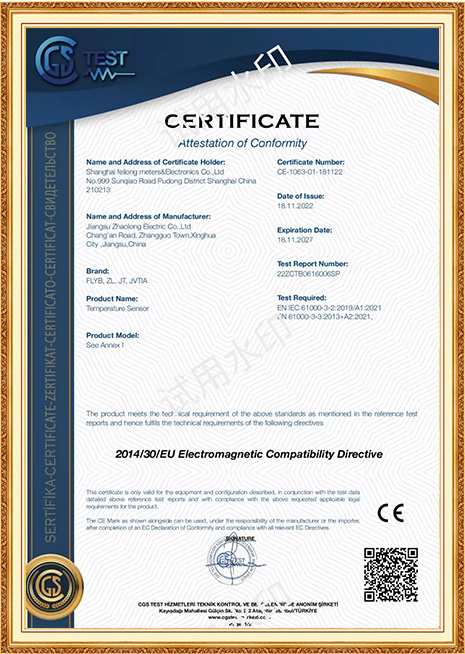
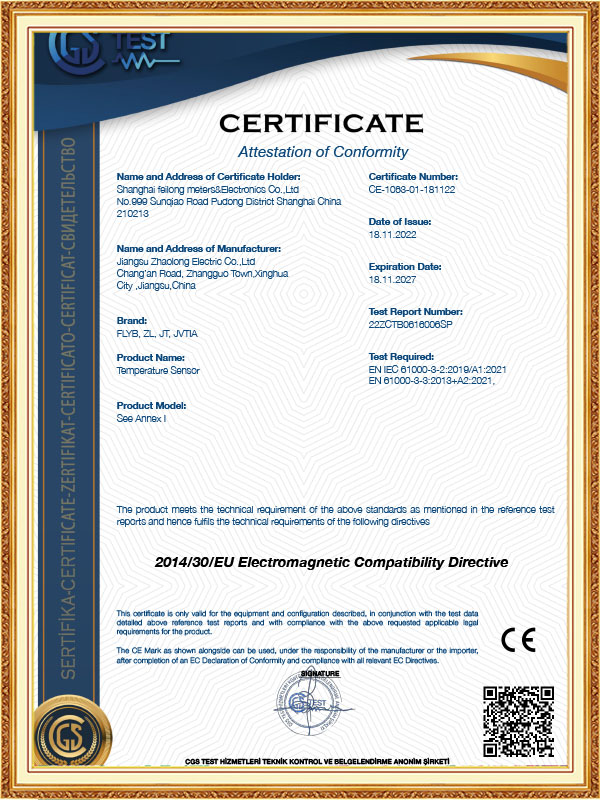
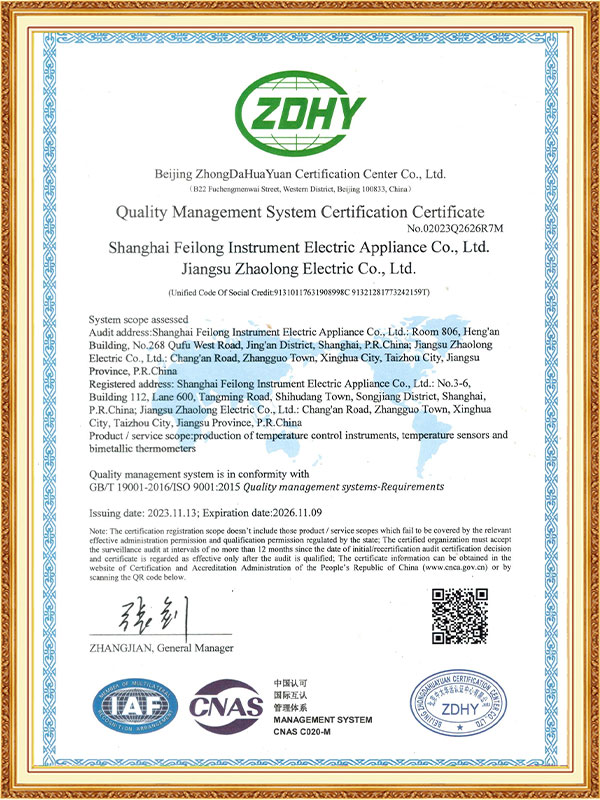
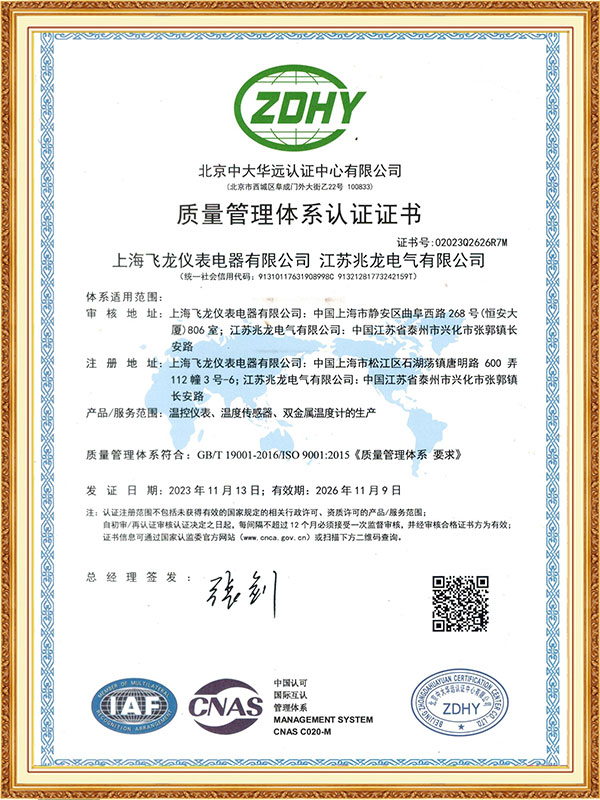
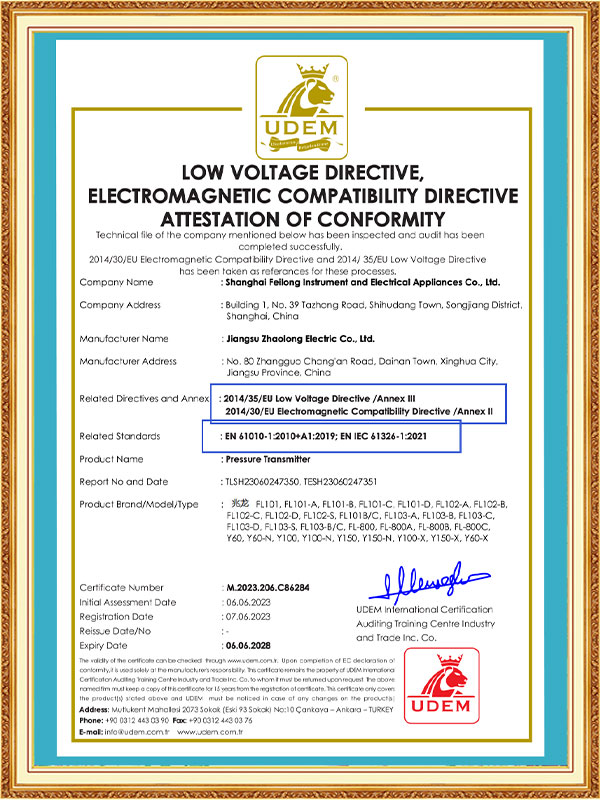
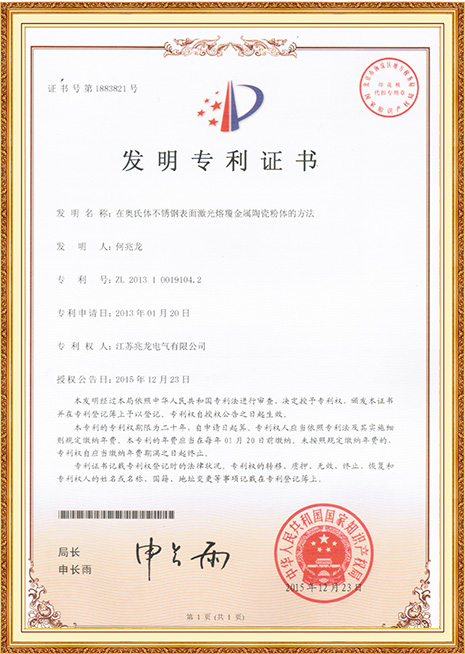
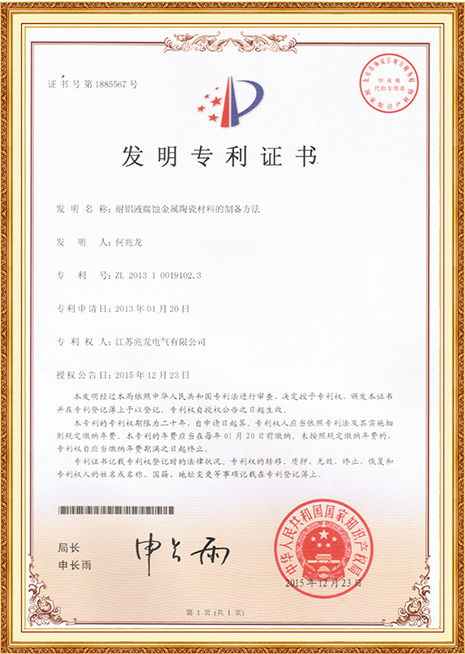
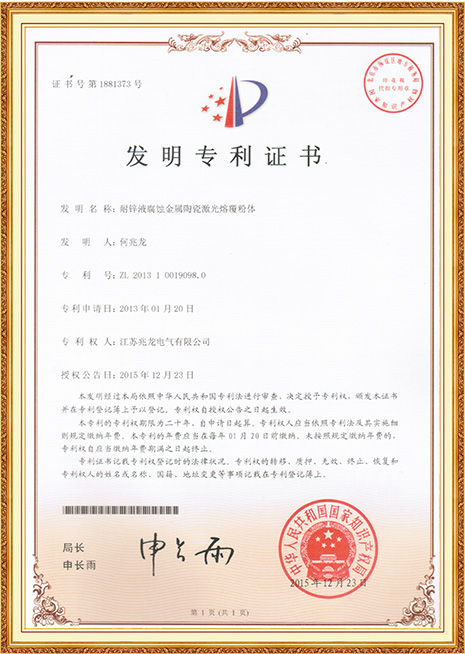
Certificate Of Honor
News
-
What Is a Temperature Controller? The Core Definition: A Closed-Loop System, Not Just a Measuring Device A temperature controller is a device that reads the current temperature of a process or environment through a senso...
READ MORE -
What Is a Temperature Transmitter and How Does It Work? A temperature transmitter works by receiving the electrical output from a temperature sensing element, processing it through internal signal conditioning and linear...
READ MORE -
How Industrial Temperature Sensors Drive Precision in Temperature Control Systems Industrial temperature sensors are at the heart of temperature control systems in modern industrial processes. These sensors play a critic...
READ MORE -
The 7th Taizhou International Electric Heating Technology and Equipment Exhibition came to a perfect end. The exhibition gained a lot, and many terminal manufacturers communicated and exchanged questions with us. We did ...
READ MORE
Industry knowledge
Bimetallic Thermometers in Industrial Temperature Monitoring: Simple Structure, Durable Design, and Practical Applications
Temperature measurement is an important part of many industrial processes. In manufacturing plants, pipelines, heating systems, and storage equipment, temperature conditions often need to be observed to keep operations stable. When temperature changes are detected in time, operators can adjust equipment settings and maintain appropriate working conditions.
Among many temperature measuring devices, the bimetallic thermometer is widely used because of its simple mechanical structure and convenient installation. Unlike electronic sensors, it does not rely on power supply to display temperature readings. This makes it suitable for locations where a clear and direct temperature indication is needed.
In modern industrial environments, reliable temperature instruments are usually supported by experienced manufacturers who focus on temperature measurement and control technologies. Our company is a regional high-tech enterprise with a dedicated production base for temperature sensors and temperature control instruments. By cooperating with several research institutions and academic organizations in Shanghai, we have jointly developed and produced a range of thermocouples, thermal resistances, and temperature control electronic devices. These products are supplied to customers across the country and to international markets, offering practical performance and balanced cost efficiency.
With continuous technical development, we also provide temperature measuring instruments such as bimetallic thermometers, which are widely used in industrial equipment, pipelines, and heating systems.
1. Mechanical Structure: A Practical Method for Temperature Measurement
The working principle of a bimetallic thermometer is based on the expansion characteristics of two different metals. When temperature changes, the metals expand at different rates, causing the bimetal strip to bend. This movement drives the pointer on the dial and displays the temperature reading.
Because the measurement process is mechanical, the instrument can operate without electrical components.
Clear and Direct Temperature Display
One of the main advantages of a bimetallic thermometer is its easy-to-read dial display.
Important benefits include:
Immediate visual observation
The dial allows operators to read the temperature directly on site. This is useful for equipment inspections, maintenance checks, and process monitoring where quick visual confirmation is needed.
No external power requirement
Since the thermometer operates through mechanical expansion, it does not require batteries or electrical connections. This simplifies installation and reduces maintenance tasks related to power supply.
Suitable for many industrial locations
The simple design allows the thermometer to be installed on pipelines, tanks, or machinery surfaces, making it practical for routine temperature monitoring in many environments.
2. Durable Construction for Industrial Environments
Industrial temperature instruments often operate in conditions where vibration, humidity, or dust may be present. A well-designed bimetallic thermometer is built to handle these environments while maintaining stable performance.
Protective Housing and Robust Materials
The structure of the thermometer is designed to protect the internal sensing element and maintain measurement stability.
Key characteristics include:
Metal protective casing
The outer casing helps shield the internal components from physical impact and environmental factors. This makes the instrument suitable for installation in workshops, mechanical equipment, and processing facilities.
Sealed dial window
The dial window is usually sealed to reduce the influence of dust or moisture, helping the display remain clear during long periods of use.
Reliable sensing element
The internal bimetal strip responds to temperature changes in a consistent way. With appropriate materials and manufacturing methods, the instrument can provide stable readings during daily operation.
3. Practical Applications in Industrial Temperature Monitoring
Bimetallic thermometers are widely used because they provide simple temperature readings without complex installation or electronic systems. They are often installed in places where operators need to check temperature conditions directly.
Pipeline and Equipment Temperature Observation
In many industrial systems, pipelines carry liquids or gases whose temperature needs to be monitored.
Typical advantages include:
Convenient installation on pipelines
The thermometer can be mounted through threaded or flange connections, allowing it to measure the temperature of flowing media inside the pipeline.
Clear monitoring during equipment operation
Operators can easily check whether the temperature remains within the expected range by observing the dial during routine inspections.
Support for equipment maintenance
Regular temperature readings help technicians understand the operating condition of equipment and identify possible changes during operation.
Heating and Energy Systems
Heating systems and energy equipment often rely on stable temperature conditions to maintain efficient operation.
Practical uses include:
Monitoring heating equipment temperature
Bimetallic thermometers can be installed on boilers, heat exchangers, or heating pipelines to provide visible temperature readings.
Observing system working conditions
By checking the dial, operators can quickly see whether the temperature is increasing or decreasing during system operation.
Supporting daily equipment checks
During routine maintenance, technicians often rely on simple instruments that provide direct readings without connecting to electronic devices.
Support from Professional Temperature Instrument Manufacturing
Reliable temperature instruments are usually developed by manufacturers with experience in both sensors and control technology.
Our company has established a production base dedicated to temperature sensors and temperature control instruments. Through cooperation with research institutions and academic groups in Shanghai, we have jointly developed thermocouples, thermal resistances, and temperature control electronics. These products are widely supplied to domestic and international markets and are recognized for their balanced cost performance.
In addition to these products, we also manufacture temperature measuring instruments such as bimetallic thermometers, designed to meet common industrial monitoring requirements. The company continues to focus on practical engineering solutions and provides instruments suitable for different installation environments.

PRODUCT
CONTACT INFO.
-
 +86-181 1593 0076 (Amy)
-
 +86 (0)523-8376 1478
-
 [email protected]
-
 No. 80, Chang'an Road, Dainan Town, Xinghua City, Jiangsu, China
QR CODE